Vitamin D is crucial for skin health and managing skin diseases.
 January 2022 in “Springer eBooks”
 The book explains causes and treatments for common hair loss, its psychological effects, related health risks, and emphasizes early screening and lifestyle changes.
54 citations
,
April 2007 in “Gastroentérologie clinique et biologique” This review highlights that bariatric surgery can increase nutritional deficiencies in morbidly obese patients, with particular emphasis on the risks of deficiency due to reduced food intake and malabsorption.
 2 citations
,
September 2023
2 citations
,
September 2023 This study found that among Inner Mongolian cashmere goats, body weight gain during the non-growing period positively correlated with increases in cashmere yield, staple length, and secondary hair follicle activity, suggesting that nutritional interventions may enhance cashmere production.
2 citations
,
November 2014 in “Pharmaceutical Patent Analyst” This article provides an update on several international patent cases, including a decision that could change Japan's patent term extension practice, but it reports no new research results.
January 2026 in “University of Science and Technology Institutional Repository (University of Science and Technology, Sana’a, Yemen)” This study found that adult males in Taiz, Yemen with dermatological disorders had significantly lower serum zinc and hemoglobin levels compared to healthy controls, highlighting the importance of assessing micronutrient status in skin disease management.
 April 2024 in “Food science & nutrition”
 This study assessed malnutrition among 657 internally displaced school-aged children in Cameroon, finding high rates of stunting (27.1%), wasting (23%), thinness (21.6%), underweight (20.1%), anemia (30%), low serum iron (44.5%), and poor protein status (35.7%), highlighting the urgent need for nutrition interventions.
November 2023 in “Animals” This study found that cashmere goats with greater fasted live-weight gain during the non-growing period had increased cashmere yield and staple length, likely due to higher secondary hair follicle activity.
January 2009 in “Electronic Theses of LMU Munich (Ludwig-Maximilians-Universität München)” This study found that the food supplement Haarpower® did not significantly reduce excessive shedding in dogs compared to placebo.
 239 citations
,
July 2002 in “Clinical and Experimental Dermatology”
239 citations
,
July 2002 in “Clinical and Experimental Dermatology” This review explores the role of nutritional factors in hair loss, noting that iron and l-lysine supplementation may benefit some individuals, while excessive supplements can lead to hair shedding.
 207 citations
,
April 2006 in “Journal of The American Academy of Dermatology”
207 citations
,
April 2006 in “Journal of The American Academy of Dermatology” This review discusses the complexities of diagnosing and treating iron deficiency related to nutritional anemia and hair loss, concluding that routine screening and supplementation for hair loss are not yet supported by sufficient evidence.
170 citations
,
May 1979 in “The journal of pediatrics/The Journal of pediatrics” This report describes two sisters with rickets and alopecia unresponsive to high doses of vitamin D2, where oral phosphorus supplements led to significant clinical improvement.
 158 citations
,
May 1968 in “The journal of nutrition/The Journal of nutrition”
158 citations
,
May 1968 in “The journal of nutrition/The Journal of nutrition” This study found that severe zinc deficiency induced in weanling rats led to growth retardation, hair issues, and dermal lesions, all of which were completely reversed by zinc supplementation.
 114 citations
,
October 2009 in “Gastroenterology”
114 citations
,
October 2009 in “Gastroenterology” This review discusses zinc's role as an essential trace element in human nutrition, particularly its importance in total parenteral nutrition, and reports no new clinical results.
 112 citations
,
July 2008 in “Dermatologic Therapy”
112 citations
,
July 2008 in “Dermatologic Therapy” This review outlines the diagnosis and management of folliculitis decalvans, an inflammatory scalp disorder, and highlights Staphylococcus aureus and immune response deficiencies as key factors in its development.
 105 citations
,
January 2010 in “Mediators of Inflammation”
105 citations
,
January 2010 in “Mediators of Inflammation” This article reviews the role of skin surface lipid in mediating environmental stressors and discusses potential therapeutic interventions, reporting no new experimental findings.
 82 citations
,
August 2017 in “Cell Reports”
82 citations
,
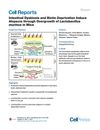
August 2017 in “Cell Reports” This study found that antibiotic-induced gut dysbiosis, particularly overgrowth of Lactobacillus murinus, can lead to hair loss in mice by depleting biotin.
79 citations
,
January 2000 in “Annals of Clinical Psychiatry” This review discusses the potential for mood stabilizers, antidepressants, and some antipsychotic and antianxiety drugs to induce alopecia and reports no clinical results.
 78 citations
,
January 2017 in “Skin appendage disorders”
78 citations
,
January 2017 in “Skin appendage disorders” This review discusses the use of biotin for hair and nail growth, noting clinical improvement in cases with existing pathologies, but concludes there is insufficient evidence supporting its benefits for healthy individuals.
 74 citations
,
August 2006 in “Journal of clinical gastroenterology”
74 citations
,
August 2006 in “Journal of clinical gastroenterology” This report describes a case of acute liver injury in a woman following the use of Shen-Min, a herbal hair growth supplement, highlighting a potential link to acute hepatitis.
 73 citations
,
January 2013 in “Annals of Dermatology”
73 citations
,
January 2013 in “Annals of Dermatology” This study observed that patients with various types of hair loss had significantly lower serum zinc levels compared to healthy controls, suggesting zinc disturbance may play a role in the condition.
 71 citations
,
January 2016 in “International Journal of Trichology”
71 citations
,
January 2016 in “International Journal of Trichology” This study found that 38% of women with hair loss had a biotin deficiency, suggesting oral biotin supplementation should be based on confirmed biotin deficiency rather than as a general treatment.
 70 citations
,
January 2015 in “Journal of Clinical and Diagnostic Research”
70 citations
,
January 2015 in “Journal of Clinical and Diagnostic Research” This review discusses the various triggers and diagnostic challenges in determining the cause of telogen effluvium-related hair loss, without providing new clinical results.
 70 citations
,
June 2010 in “Clinics in Dermatology”
70 citations
,
June 2010 in “Clinics in Dermatology” This review discusses how changes in hair and skin may indicate underlying vitamin deficiencies and emphasizes the need to identify populations at risk for these deficiencies; it reports no new results.
 63 citations
,
March 2016 in “International Journal of Molecular Sciences”
63 citations
,
March 2016 in “International Journal of Molecular Sciences” This review discusses the pathophysiology of sleep disturbance in children with atopic dermatitis and highlights the need for further research on management strategies, but provides no new clinical results.
 61 citations
,
October 2010 in “Postgraduate Medical Journal”
61 citations
,
October 2010 in “Postgraduate Medical Journal” This study found that dermatological issues, such as xerosis and pigmentation, are common in chronic kidney disease patients and increase with the severity and duration of the disease, indicating that dialysis often exacerbates these conditions.
 56 citations
,
January 2013 in “International journal of trichology”
56 citations
,
January 2013 in “International journal of trichology” This case report suggests that zinc supplements may be necessary to improve hair loss in hypothyroidism patients being treated with thyroxine.
 54 citations
,
August 2017 in “Gynecological Endocrinology”
54 citations
,
August 2017 in “Gynecological Endocrinology” This review discusses treatments for polycystic ovary syndrome, including lifestyle changes, oral contraceptives, and various medications, and reports no new clinical findings; the authors highlight the potential of statins and inositol for managing symptoms.
 53 citations
,
October 1978 in “Archives of dermatology”
53 citations
,
October 1978 in “Archives of dermatology” This study reports two cases of acquired zinc deficiency presenting with skin symptoms such as hair loss and acrodermatitis, suggesting these manifestations may help in diagnosing zinc deficiency in humans.
52 citations
,
July 2015 in “International Journal of Dermatology” This study found that patients with alopecia areata had significantly lower serum zinc levels, which correlated inversely with disease severity, duration, and resistance to therapies, suggesting zinc assessment as a marker of disease status.