 March 2019 in “Journal der Deutschen Dermatologischen Gesellschaft”
 This clinical letter identifies Rothmund-Thomson syndrome type 2 as a rare cause of chronic wounds, but provides no new experimental findings.
 January 2017 in “Springer eBooks”
 This article reviews the classification, pathogenesis, and treatment options for cutaneous lupus erythematosus and reports no new clinical findings.
 April 2016 in “JAMA Dermatology”
 This commentary highlights the importance of additional sun protection for individuals with alopecia, noting that common headwear like baseball caps may provide insufficient photoprotection for the scalp.
 April 2014 in “Journal of evolution of medical and dental sciences”
 This article reviews the skin and hair changes associated with menopause due to hormonal shifts and reports no new clinical results.
This article discusses the cosmetic potential of grapefruit, particularly its skin conditioning and hair growth benefits, but reports no new research findings.
 July 2002 in “Australasian Journal of Dermatology”
 This announcement in the Australasian Journal of Dermatology provides no new research findings or study results.
August 2026 in “Acta Innovations” This study found that Eclipta alba (L.) Hassk herbal oil formulated with VCO demonstrated enhanced antioxidant, anti-inflammatory, and antibacterial activities, and provided UV protection, with EHO-18 identified as the best-performing version.

This study found that a combination of photoprotector and nighttime formulations with essential oils improved skin barrier function and structural characteristics in young men's oily, acne-prone, and photoaged skin.
September 2017 in “The journal of investigative dermatology/Journal of investigative dermatology” The researchers found that SPF50+ sunscreens provided the highest DNA protection against solar-simulated radiation in a reconstituted human epidermis model, with formulation type not affecting efficacy for a given SPF.
 20 citations
,
August 2016 in “International Journal of Cancer”
20 citations
,
August 2016 in “International Journal of Cancer” This study reports that male-pattern baldness may be linked to an increased risk of skin cancer, particularly for tumors located on the scalp.
 4 citations
,
January 2023 in “Experimental dermatology”
4 citations
,
January 2023 in “Experimental dermatology” This study suggests that both age and photoexposure may decrease maximum viable epidermis thickness and impact the dermal-epidermal junction in women with Fitzpatrick skin types II-III.
 4 citations
,
July 2022 in “International Journal of Health Sciences”
4 citations
,
July 2022 in “International Journal of Health Sciences” This review discusses rosemary's potential health benefits, including improved scalp circulation and skin protection, but reports no new clinical findings and highlights the need for better regulation and safety data on herbal medicines.
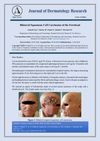
A 70-year-old man with skin cancer on both sides of his forehead was treated with surgery and cryotherapy, highlighting the need for early detection and prevention.
 16 citations
,
July 2012 in “Current pharmaceutical biotechnology”
16 citations
,
July 2012 in “Current pharmaceutical biotechnology” This review discusses the pathogenesis of common sebaceous gland diseases and their molecular pathways, but it reports no new clinical findings.
 9 citations
,
February 2014 in “Tissue Engineering and Regenerative Medicine”
9 citations
,
February 2014 in “Tissue Engineering and Regenerative Medicine” This study found that conditioned media from human amniotic fluid-derived stem cells may enhance skin regeneration by promoting cell proliferation and migration, and by modulating gene expressions altered by UV irradiation.
 3 citations
,
October 2007 in “Expert Review of Dermatology”
3 citations
,
October 2007 in “Expert Review of Dermatology” This review discusses the biological and cosmetic aspects of hair aging and reports no new clinical results; it highlights current treatments and future research directions to address both aging factors.
 December 2022 in “Journal of Tropical Pharmacy and Chemistry”
 This study evaluated a hair tonic formulated from oil palm leaf extract, finding it demonstrated very strong antioxidant activity and could prevent hair decolorization from sun exposure, with effective concentrations ranging from 25 to 200 ppm.
8 citations
,
July 2020 in “Clinical, cosmetic and investigational dermatology” This review hypothesizes that excessive facial photo-protection may contribute to frontal fibrosing alopecia by disrupting immunological homeostasis through the aryl hydrocarbon receptor-kynurenine pathway, but it reports no new clinical results.
February 2023 in “مجلة التراث والتصميم” This study found that choosing appropriate fabrics for hats and caps enhanced protection against sun damage and air pollution for hair in construction and manufacturing workers.
24 citations
,
January 2009 in “International Journal of Trichology” This review discusses the mechanisms by which sunlight exposure aggravates hair aging and highlights the role of hair pigments in providing photochemical protection, reporting no new results.
 3 citations
,
May 2011 in “Practice nursing”
3 citations
,
May 2011 in “Practice nursing” As skin ages, it gets thinner, paler, and more wrinkled, and protection and care like sunblock and moisturizers are important.
 March 2022 in “JAMA Dermatology”
 In 2021, JAMA Dermatology published significant findings on skin conditions post-COVID vaccination, melanoma surveillance, atopic dermatitis treatments, and confirmed that sun protection does not harm bone health.
September 2014 in “Emergency Medicine News” This case report describes the diagnosis of pseudoporphyria in a hemodialysis patient, highlighting the importance of discontinuing causative medications and advising patients on sun protection to manage this photosensitive condition.
 195 citations
,
January 2008 in “Photochemistry and Photobiology”
195 citations
,
January 2008 in “Photochemistry and Photobiology” This review discusses the effects of visible light on human skin, highlighting its role in pigmentation, thermal damage, and the treatment of several skin conditions, while noting limited sunscreen protection against it; no new clinical results are reported.
 349 citations
,
January 2005 in “The FASEB journal”
349 citations
,
January 2005 in “The FASEB journal” This review discusses the cutaneous serotoninergic/melatoninergic system's potential role in skin function and resilience against environmental and internal stresses, but does not report new experimental findings.
7 citations
,
May 1985 in “Archives of dermatology” This review discusses the metabolism of vitamin D in the body, highlighting its conversion to biologically active forms and involvement in calcium regulation, without presenting new clinical findings.
 99 citations
,
June 2005 in “Journal of Cosmetic Dermatology”
99 citations
,
June 2005 in “Journal of Cosmetic Dermatology” This article reviews factors influencing hair aging and available treatments like minoxidil and finasteride for androgenetic alopecia but reports no new clinical results.
 24 citations
,
January 2006 in “Dermatologic clinics”
24 citations
,
January 2006 in “Dermatologic clinics” This review discusses the chemical effects of UV radiation on hair, hair photoaging, and photoprotective measures, and calls for more focused research in hair photoprotection as a field.
 87 citations
,
March 2000 in “American Journal of Clinical Dermatology”
87 citations
,
March 2000 in “American Journal of Clinical Dermatology” Alpha-hydroxy acids, like glycolic acid, safely improve skin issues and work on all skin types.
 26 citations
,
June 2018 in “Australasian Journal of Dermatology”
26 citations
,
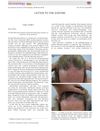
June 2018 in “Australasian Journal of Dermatology” Stopping sunscreen use on the forehead led to hair regrowth in a woman with frontal fibrosing alopecia.