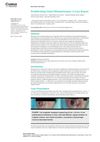
In this case report, researchers detailed a giant proliferating pilomatrixoma in a 36-year-old woman, emphasizing the importance of complete excision to prevent recurrence or potential malignant transformation, distinguishing it from malignancies like angiosarcoma or melanoma.
 May 2025 in “Journal of Food and Nutrition Research”
 In this study, black wolfberry ferment was found to promote hair regrowth in mice with androgenetic alopecia by increasing hair weight, follicle count, and skin thickness, potentially through PI3K/AKT, NF-kappa B, and MAPK signaling pathways.
 April 2025 in “Ukrainian Journal of Veterinary and Agricultural Sciences”
 This study observed that feeding ewes a water-soluble complex of fatty acids increased primary hair follicle bulb diameter and mitotic activity, suggesting a positive correlation with wool growth.
 April 2025 in “International Journal of Ayurvedic Medicine”
 This review reports the potential therapeutic effects of Semecarpus anacardium Linn. (Bhallataka), noting its compounds like anacardic acid may have anti-inflammatory, antioxidant, and anticancer properties, but emphasizes that further research is necessary to confirm these effects and determine safety due to inconsistent study methods.
 April 2025 in “WORLD JOURNAL OF PLASTIC SURGERY”
 This study reported that stem cells derived from semi-solid bone marrow improved the healing of diabetic incision wounds in rats by increasing epidermal thickness and blood vessel growth, and reducing hair follicle destruction, cellular penetration, diffuse fibrosis, and necrosis compared to control groups.
 March 2025 in “GSC Biological and Pharmaceutical Sciences”
 In this review, the authors examined the potential benefits of using wood tar in dermatology and cosmetics in Sub-Saharan Africa, based on its historical application in skin care and its worldwide usage.
 January 2025 in “International Journal For Multidisciplinary Research”
 In this study, the researchers developed and evaluated eco-friendly poly-herbal soap strips using plant extracts from Lantana camara, Moringa Oleifera, and Corn silk, finding that the strips exhibited superior physicochemical properties and significant anti-fungal activity compared to conventional anti-fungal soaps.
 January 2025 in “Acta Dermatovenerologica Alpina Pannonica et Adriatica”
 In this study, oral minoxidil treatment significantly increased serum VEGF levels and improved hair growth measures compared to a control group, suggesting its potential as an effective approach for promoting hair regrowth in androgenetic alopecia.
 January 2025 in “Advances in Dermatology and Allergology”
 This study found that the Polish version of the AA-QLI questionnaire is a reliable and internally consistent tool for assessing health-related quality of life in Polish-speaking patients with alopecia areata.
 January 2025 in “International Journal of Advanced Biochemistry Research”
 This research proposes to investigate the incidence of skin diseases in dogs from North-eastern India linked to deficiencies in alpha-linolenic and linoleic acids, as these essential fatty acids have anti-inflammatory and immunomodulatory benefits potentially aiding inflammatory skin disease therapy.
 October 2024 in “Hippocrates Medical Journal”
 In this review, dermatological symptoms associated with various eating disorders, such as anorexia nervosa, bulimia nervosa, binge eating disorder, and pica, were examined, highlighting the potential role of dermatologists and psychiatrists in early diagnosis and interdisciplinary treatment approaches.
 September 2024 in “African Journal of Biomedical Research”
 This study found that individuals with alopecia areata had significantly lower blood levels of vitamin D and slightly lower serum copper levels compared to healthy controls, suggesting the potential importance of assessing these factors in the chemical evaluation of patients with this condition.
 September 2024 in “Archives of Medical Science”
 Alopecia areata is linked to immune system differences, with specific biomarkers like CXCL9 and CXCL10 being key for diagnosis and potential treatment targets.
 June 2024 in “Kushtia Medical College Journal”
 This observational study conducted at Kushtia Medical College explored the socio-demographic and clinical profiles of 100 women with PCOS, highlighting that a significant number of these patients experienced infertility, dysmenorrhea, and metabolic abnormalities, suggesting a need for timely therapeutic interventions.
 April 2024 in “Indian Scientific Journal Of Research In Engineering And Management”
 This review discusses the prevalence and contributory factors of polycystic ovarian syndrome and reports no new clinical findings; the authors emphasize the importance of early detection through screening.
 March 2024 in “International Journal of Drug Delivery Technology”
 This study reviews the potential of electrospun nanofiber mats as innovative drug delivery systems for wound healing, emphasizing their ability to enhance drug release, improve cell adhesion, and promote tissue regeneration by incorporating antibiotics, growth hormones, or stem cells.
 March 2024 in “Nevşehir Hacı Bektaş Veli Üniversitesi SBE Dergisi”
 In this study, a child with Alopecia Areata underwent art therapy, leading to reduced anxiety and stress levels and improved emotional expression and motivation for treatment, suggesting art therapy as a suitable psychosocial intervention for this condition.

This study investigated the effects of ethanol leaf extracts from Ziziphus jujuba and Eclipta alba on cognitive impairments in diabetic rats, finding significant improvements in learning and memory with these treatments, along with decreased blood glucose levels over 21 days.
 March 2024 in “Revista Agraria Academica”
 This review reported that the dwarf palm (Chamaerops humilis) is traditionally used in North Africa for treating diabetes and gastrointestinal diseases, and identified a need for more research on its pharmacological and ethnobotanical properties, particularly in relation to its potential cancer-fighting uses.
 February 2024 in “International Journal of Research in Dermatology”
 In this study, researchers examined thyroid function and autoantibody levels in patients with alopecia areata and vitiligo, finding similar rates of thyroid dysfunction and autoantibody presence in both groups, with no significant differences based on ethnicity or gender.
 February 2024 in “Bangladesh pharmaceutical journal”
 This study measured the amounts of thiamine and riboflavin in Bogura's Geographical Indication branded yogurt and whey, finding them rich in these vitamins, which are beneficial for health.
 January 2024 in “Dermatology practical & conceptual”
 In this study, researchers evaluated factors influencing alopecia areata recurrence and identified male gender and a family history of the condition as independent predictors for disease recurrence among the 100 patients analyzed.
 January 2024 in “Journal of applied biological chemistry”
 This study found that Glehnia littoralis and Andrographis paniculata may support hair growth by protecting against oxidative stress and increasing VEGF and Wnt/β-catenin signaling in human hair follicle dermal papilla cells, with enhanced effects when combined.
 January 2024 in “RSC pharmaceutics”
 This source discusses using stratum corneum ablation as a promising method to enhance transdermal drug delivery by temporarily removing the skin's outermost barrier to improve medication absorption.
 January 2024 in “Journal of Natural Remedies”
 This study found that the petroleum ether extract of Solanum nigrum may promote hair regrowth in testosterone-induced hair loss in rats, as indicated by increased follicle density and anagen/telogen ratio.
 January 2024 in “International journal of pharmaceutical sciences review and research”
 This review paper critically evaluates the pharmacological and toxicological effects of Ziziphus mauritiana, a plant with traditional medicinal use, highlighting its anxiolytic, antioxidant, antimicrobial, anti-cancer, anti-diabetic, and anti-ulcer properties attributed to its rich phytochemical composition.
 January 2024 in “Academic Journal of Medicine & Health Sciences”
 This study highlights a novel herbal tea blend that may improve hair health and provide anti-aging benefits, though its efficacy requires further scientific validation.
 January 2024 in “International Journal of Advanced Biochemistry Research”
 In this study investigating canine pyoderma, the researchers found that Staphylococcus species isolated from 57 dogs were most sensitive to the antibiotic Linezolid, with a 100% sensitivity rate, followed by other antibiotics like Doxycycline hydrochloride and Cefpodoxime.
 January 2024 in “Pediatria Polska”
 This study found that long-COVID symptoms in children with multisystem inflammatory syndrome did not differ significantly across SARS-CoV-2 variants, with factors like age being more impactful.
 December 2023 in “Journal of nutritional science and vitaminology”
 This study in mice found that a zinc-deficient diet suppressed body weight gain and increased kidney and cecum tissue weight without decreasing serum alkaline phosphatase activity. Additionally, zinc deficiency caused alopecia and intestinal changes in C57BL/6J mice, potentially affecting nutritional status.