 1 citations
,
December 2006 in “Annals of the New York Academy of Sciences”
1 citations
,
December 2006 in “Annals of the New York Academy of Sciences” Green algae can break down finasteride, reducing environmental harm.
 May 2026 in “International Journal of Research Publication and Reviews”
 This study evaluated a polyherbal powder shampoo composed of natural ingredients like Neem and Amla, finding it to have good stability, cleansing ability, and no irritation, offering a safe alternative to synthetic shampoos for regular use in hair care.
 April 2026 in “Journal of Pharmaceutical Innovation”
 In this study, the researchers developed and optimized a curcumin nanocrystal gel to enhance skin permeability, reporting improved dissolution properties and antiproliferative effects on cell lines, suggesting it as a promising topical delivery system.
 February 2026 in “Nature Synthesis”
 In this study, researchers introduced a visible-light-mediated intramolecular cycloaddition method that selectively forms 6-azabicyclo[3.1.1]heptanes, suggesting these structures could offer promising new scaffolds for drug discovery and medicinal chemistry.
 January 2026 in “Drug Delivery and Translational Research”
 This study investigated the integration of crystal engineering and microneedle technology for androgenetic alopecia treatment, finding that microneedles loaded with newly developed Kopexil multicomponent crystals reduced drug diffusion rates in vitro compared to standard formulations.

This study highlights that azelaic acid, initially recognized for skin hypopigmentation, shows potential in treating various skin conditions due to its complex mechanisms, even though these are not yet fully understood, indicating a need for further research.
 September 2025 in “Journal of Science Innovations and Nature of Earth”
 This source reviews the health benefits and challenges of using anthocyanins, noting their antioxidant, anti-inflammatory, and other protective effects, while also highlighting stability issues that need addressing for wider food and nutraceutical application.
 June 2025 in “INTERANTIONAL JOURNAL OF SCIENTIFIC RESEARCH IN ENGINEERING AND MANAGEMENT”
 This study assessed a herbal dry shampoo comprising natural ingredients like Shikakai and Reetha, finding it effectively passed physicochemical tests but highlighted the need for more research to optimize product quality and safety.

This study formulated an herbal anti-dandruff shampoo powder using Nyctanthes arbortristis as the main ingredient, and found that it exhibited significant anti-dandruff properties, beneficial physicochemical characteristics, and promising in-vitro results compared to a marketed medicated product.
This study tested a novel cryo-carboxy dispensing device for treating androgenetic alopecia in six volunteers and found an unexpectedly rapid and positive response, with significant hair regrowth observed by day 90, prompting early conclusion of the trial.
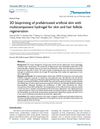 February 2025 in “Theranostics”
 In this study, researchers used 3D bioprinting with skin stem cells and specific hydrogels to create artificial skin that successfully promoted complete wound healing and the regeneration of skin structures, including hair follicles and blood vessels, in mice.

This study focused on developing a nanoemulsion-based gel for delivering minoxidil, aiming to enhance its contact time with the scalp and potentially improve skin absorption compared to conventional topical solutions.

This study developed a topical dutasteride-loaded Insitu-emulgel for treating androgenetic alopecia, finding it effectively controls drug release, enhances skin penetration, and may improve patient compliance compared to traditional topical treatments, though further clinical research is underway.
 February 2024 in “Research Square (Research Square)”
 In this study, researchers applied Strat-M® membrane to assess the in vitro transdermal properties of collagen peptides, finding a high correlation with results from mouse skin and suggesting that Strat-M® can effectively replace excised mouse skin in transdermal experiments.
 January 2024 in “International Journal of Biochemistry and Molecular Biology”
 This study found that Iraqi women with PCOS who carry the reference wild type alleles of OCT1 had a significant hormonal and metabolic response to metformin, unlike those with mutant alleles.
 December 2023 in “International Journal of Advanced Research in Science, Communication and Technology”
 This study developed and validated a precise and rapid HPLC method to simultaneously determine Minoxidil and Finasteride in pharmaceuticals, demonstrating successful application for routine quality control without interference from excipients.
 December 2023 in “Biological & pharmaceutical bulletin”
 This study found that combining lecithin reverse wormlike micelles with isopropyl myristate enhanced the skin permeability of a model hydrophilic drug, facilitated by interactions with sebum in hair follicles.
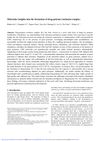
This study reports that carbamazepine can self-assemble into stable channel structures without guest polymers, while griseofulvin relies on guest molecules for structural stability in drug-polymer inclusion complexes.

This study investigated the molecular mechanisms behind the formation of drug-polymer inclusion complexes and found that carbamazepine can self-assemble into stable channel structures without guest polymers, unlike griseofulvin, which requires guest molecules for structural stability.

This research elucidates the molecular mechanisms underlying carbamazepine and griseofulvin's inclusion complex channel formations with polymers, revealing why carbamazepine forms stable channels independently, while griseofulvin requires polymeric support due to weaker interactions.
 October 2023 in “JOJ dermatology & cosmetics”
 This study concluded that thiocyanate promotes new cell formation and hair growth in animals and humans, with therapeutic effects seen in 51% of human alopecia areata cases after treatment, attributed to diverse biological mechanisms.
 June 2023 in “International Journal for Research in Applied Science and Engineering Technology”
 This research highlights the potential of emulgel as an advanced topical drug delivery system, offering improved efficacy for hydrophobic medications in treating dermatological conditions and a range of ailments with its dual release control mechanism of gel and emulsion.
 September 2022 in “Research Square (Research Square)”
 This study found that caffeic acid treatment mitigated the negative effects of acrylamide toxicity in Wistar rats by normalizing tissue and serological indices.
 August 2022 in “Scholars academic journal of pharmacy”
 This study involved formulating an invasome gel loaded with clotrimazole for treating fungal infections and assessed its various properties like spreadability and in vitro drug diffusion.
 March 2021 in “Clin-Alert”
 This abstract lists a range of drugs and treatment agents like Abatacept, Amiodarone, and Remdesivir, but does not report any study results or findings.
 January 2021 in “Journal of cosmetology & trichology”
 This study suggests that L-(+)-Tartaric Acid may support hair growth by up-regulating certain genes in human Dermal Papilla cells, making it a potentially useful additive in minoxidil formulations.

This Ph.D. project aims to evaluate the self-assembling potential of hair keratin extracts and study the cellular response to both crude and purified keratins, highlighting their potential applications from biomedical to water remediation.
 January 2018 in “Elsevier eBooks”
 This article reviews the mechanisms and uses of minoxidil for hypertension and androgenetic alopecia, without presenting new clinical findings.

The document explains how certain drugs block hormones to treat cancers like breast and prostate cancer.
This chapter reviews the structure, pharmacokinetics, and clinical applications of PEGylated liposomes and reports no new research findings.