 July 2020 in “IP International Journal of Maxillofacial Imaging/International journal of maxillofacial imaging/IP International journal of maxillofacial imaging”
 The authors concluded that mesotherapy is a new, effective, and safer dermatologic treatment option for conditions like alopecia, skin rejuvenation, and hyperpigmentation due to its efficiency and reduced treatment time.
 August 2019 in “Aesthetic Surgery Journal”
 PRP can boost hair growth and thickness, especially in early stages of hair loss, but its effectiveness varies and there's no set method or treatment frequency. Stem cells also show promise for increasing hair density.
 April 2019 in “International research journal of pharmacy”
 This study found that a 50% ethanolic extract of Adiantum capillus had significant analgesic and anti-inflammatory effects in animals, particularly at the highest tested dose of 300 mg/kg.
 February 2019 in “bioRxiv (Cold Spring Harbor Laboratory)”
 This study found that Prss53-mutated rabbits exhibited curved hair and skeletal dyskinesia, suggesting a link between Prss53 loss and these traits, potentially involving disrupted calcium metabolism.
 February 2019 in “Neoreviews”
 This case report details the diagnosis and management of argininosuccinate lyase deficiency in an infant, emphasizing initial symptoms, treatment strategies, and subsequent liver transplant leading to recovery.
 December 2018 in “Progress in Medical Sciences”
 This study observed that methanol extract of Phoenix dactilifera improved kidney function in rats at 4 and 8 mg/kg doses, but a 16 mg/kg dose may impair kidney function by affecting urea and potassium excretion.
 July 2018 in “Kidney international”
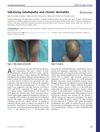
 This case study describes a 9-year-old girl with a homozygous EGFR gene mutation, presenting with tubulopathy and chronic dermatitis, whose ongoing symptoms and management offer insights into this rare genetic condition.
 April 2017 in “Our Dermatology Online”
 This case study identified a 22-year-old patient with multiple autoimmune syndrome type 3, involving lupus erythematosus, autoimmune thyroiditis, alopecia areata, and vitiligo.
 January 2017 in “IMC Journal of Medical Science”
 This case report describes a 26-year-old man from Bangladesh diagnosed with autoimmune polyendocrine syndrome type 1, a rare endocrine disorder involving adrenocortical insufficiency, hypoparathyroidism, and mucocutaneous candidiasis.
 January 2017 in “Springer eBooks”
 The document explains various skin conditions and their treatments.
 January 2017 in “Rasayan journal of Chemistry”
 This paper describes a new scalable synthesis method for Dutasteride, highlighting its potential for large-scale commercial production.
 April 2015 in “Journal of Nutritional Therapeutics”
 This study found that a more liberal intake of restricted amino acids in patients with methylmalonic acidemia resulted in improved growth and fewer illness episodes.
 February 2015 in “Dermatologic Surgery”
 This article discusses various affiliations of the authors with no reference to new research findings.
 February 2014 in “Revista Argentina de Cardiología”
 In this study, testosterone was found to increase the risk of arrhythmias in a rat heart model, while finasteride reduced this arrhythmogenic effect.
 January 2013 in “Transactions of the Materials Research Society of Japan”
 In this study, carboxymethylalanyl disulfide keratin was shown to effectively prevent hair damage during repeated bleaching and permanent waving treatments.
 January 2012 in “Journal of Investigative Dermatology”
 Small molecule DMF improves psoriasis and multiple sclerosis, adult skin cells can be made to grow new hair, certain skin cells initiate hair growth, IL-17C controls gut health and can cause skin inflammation, and skin cells produce IL-17 that can lead to psoriasis.
 September 2011 in “Clinical Biochemistry”
 The demineralized bone matrix scaffold is better for cell attachment than the mineralized bone allograft.

The document concludes that scientists created various steroids with different properties, including a more effective semi-synthetic vitamin D.
 September 2010 in “International Society of Hair Restoration Surgery”
 This article reviews various proprietary methods for local anesthesia in hair surgery but reports no new clinical findings.
 June 2010 in “Journal of Chemical Crystallography”
 This study determined the crystal structure and conformation of synthesized 17x-Acetoxy-pregn-4,6-diene-3,20-dione, revealing specific molecular interactions and structural details in an orthorhombic crystal system.

This study observed that, after 90 hours of light exposure, Finasteride retained 57% of its concentration, whereas Diclofenac and Naproxen retained only 12% and 9%, respectively.
 January 2007 in “Sen'i Gakkaishi”
 This study found that Mf-rich-fiber in human hair underwent significantly greater degradation by proteases than Ma-rich-fiber, especially when treated with Proteinase K.
 March 2005 in “Journal of The American Academy of Dermatology”
 Mycophenolate mofetil improved skin condition in a man with nephrogenic fibrosing dermopathy.
 March 2005 in “Journal of The American Academy of Dermatology”
 Itch is a common symptom in patients with chronic venous insufficiency, often accompanied by burning and pain.
 March 2005 in “Journal of The American Academy of Dermatology”
 Diphencyprone treatment protocols could be simplified as no harm occurred despite not fully following them.
 March 2005 in “Journal of The American Academy of Dermatology”
 This article highlights the lack of research on the prevalence and characteristics of pain and itch in early stages of mild to moderate varicose vein disease, without reporting new findings.
 January 2003 in “American Journal of Clinical Dermatology”
 In 2002, various skin reactions were reported due to different drugs, including allergies, hair loss, skin lesions, and other skin conditions.
 October 2001 in “WORLD SCIENTIFIC eBooks”
 This compilation on contact and occupational dermatology in the Asia-Pacific region discusses various allergens and irritants without reporting new clinical findings.
 November 1995 in “Journal of Pediatric Health Care”
 Most hair loss in kids and teens is due to common conditions, and hair usually grows back within 6 months.
 August 1994 in “Drugs & Therapy Perspectives”
 Some drugs can cause hair loss or growth, but hair usually returns to normal after stopping the drug.