 January 2023 in “Bioorganičeskaâ himiâ”
 This study found that a new deoxycholic acid derivative may offer a similar prostatoprotective effect to finasteride with lower toxicity in rat models.
This study introduces a novel pro-drug formulation of all-trans retinoic acid that reduces skin inflammation and achieves sustained drug release over several days compared to traditional methods.
81 citations
,
March 2006 in “Journal of Investigative Dermatology” Mutations in the DSG4 gene cause specific hair and scalp issues.
 6 citations
,
August 2017 in “Physiological Research”
6 citations
,
August 2017 in “Physiological Research” This study suggests that setipiprant's inhibitory effect on aldose reductase may contribute to its anti-inflammatory properties, adding a possible mechanism beyond its known action on the prostaglandin D2 receptor.
This study found that anti-keratin antibody from immunized cow milk increases the resistance of damaged hair to stretching and inhibits fracture from excessive brushing.
 159 citations
,
July 2006 in “Endocrine Reviews”
159 citations
,
July 2006 in “Endocrine Reviews” This article discusses the influence of estrogens on hair follicle growth and metabolism, suggesting a significant role alongside androgens in hair growth control but reports no new clinical results.
This study found that 2-hydroxy-1,4-naphthoquinone was the most effective inhibitor of steroid 5α-reductase, showing stronger inhibition than avicequinone C in HaCaT cell assays.
119 citations
,
September 2000 in “Journal of Biological Chemistry” This study found that the K19 promoter is active in certain gastrointestinal cancer cells and its activity is influenced by the interaction between GKLF and Sp1 transcription factors.
 83 citations
,
December 2001 in “Journal of Investigative Dermatology”
83 citations
,
December 2001 in “Journal of Investigative Dermatology” Minoxidil boosts hair growth by targeting adenosine and possibly sulfonylurea receptor 2B.
 38 citations
,
November 2005 in “Epilepsia”
38 citations
,
November 2005 in “Epilepsia” This study discusses levetiracetam's role as an alternative treatment for idiopathic generalized epilepsies, highlighting its potential effectiveness, especially for patients unsuitable for valproate.
32 citations
,
December 2019 in “The Journal of clinical investigation/The journal of clinical investigation” This study found that EGFR and MEK inhibitors may induce acneiform skin toxicities by interacting with the skin bacterium Cutibacterium acnes to increase IL-36γ and IL-8 production in keratinocytes.
18 citations
,
August 2020 in “bioRxiv (Cold Spring Harbor Laboratory)” This study suggests that two approved drugs may inhibit the SARS-CoV-2 helicase based on significant activity in laboratory models, offering hope for potential COVID-19 treatments.
 6 citations
,
February 2020 in “Journal of Natural Products”
6 citations
,
February 2020 in “Journal of Natural Products” In this chemical investigation, cyclospongiaquinone 1 from the sponge Verongula cf. rigida showed strong steroid 5α-reductase inhibitory activity, comparable to that of finasteride.
 June 2025 in “Mağallaẗ ʻulūm al-rāfidayn”
 This study found that certain pyrazole derivatives may serve as effective 5α-reductase inhibitors with potential use in the treatment of androgenetic alopecia, based on molecular docking analyses.
This study reports that a specific transporter protein in Staphylococcus hominis is responsible for transporting a malodour precursor, thereby playing a key role in human body odor production.
December 2022 in “International Journal of Molecular Sciences” This study used machine learning to identify FDA-approved drugs afatinib, neratinib, and zanubrutinib as potential KRASG12C inhibitors for resistant non-small-cell lung cancer, highlighting the potential of AI in drug repurposing.
 11 citations
,
May 2010 in “Journal of Medicinal Chemistry”
11 citations
,
May 2010 in “Journal of Medicinal Chemistry” This study introduced a novel nonsteroidal androgen receptor antagonist that effectively controls sebum production in the golden Syrian hamster ear model through targeted follicular delivery.
 3 citations
,
July 2020 in “Synthetic and Systems Biotechnology”
3 citations
,
July 2020 in “Synthetic and Systems Biotechnology” This study found that the cytochrome P450 enzyme CYP-sb21 can hydroxylate cyclosporine A at multiple positions, reducing its immunosuppressive effects but retaining its hair growth-promoting side-effect, and suggests modifications to improve regioselectivity for commercial use.
3 citations
,
April 2016 in “Research and reports in urology” In a cell-free test setting, this study found that a novel saw palmetto extract effectively inhibited the 5α-reductase type II enzyme, showing promising bioactivity comparable to finasteride for promoting prostate health.
2 citations
,
April 2016 in “DOAJ (DOAJ: Directory of Open Access Journals)” This study found that a novel saw palmetto supercritical CO2 extract effectively inhibits 5α-reductase type II in vitro, suggesting its potential for promoting prostate health in benign prostatic hyperplasia.
 6 citations
,
January 2015 in “Biochemical Society Transactions”
6 citations
,
January 2015 in “Biochemical Society Transactions” This review discusses the role of Ysc84/SH3yl1 proteins in linking actin regulation to membrane morphology changes but reports no new experimental results.
 58 citations
,
June 2000 in “The Journal of Steroid Biochemistry and Molecular Biology”
58 citations
,
June 2000 in “The Journal of Steroid Biochemistry and Molecular Biology” This study found that Atlantic croaker nuclear androgen receptors AR1 and AR2 have different binding affinities for androgens, suggesting that they may mediate distinct physiological actions in teleosts.
 16 citations
,
February 2018 in “BMC Genomics”
16 citations
,
February 2018 in “BMC Genomics” This paper reviews genome-based personalized medicine developments using Web services for analyzing SNPs in reproductive potential but reports no new clinical findings.
 5 citations
,
July 2014 in “Acta Crystallographica Section D-biological Crystallography”
5 citations
,
July 2014 in “Acta Crystallographica Section D-biological Crystallography” This study reports that mutations in human L-PGDS affect the entrance and exit of ligands in its binding cavity, suggesting these residues play a role in ligand interaction processes.
 5 citations
,
January 2005 in “Journal of Enzyme Inhibition and Medicinal Chemistry”
5 citations
,
January 2005 in “Journal of Enzyme Inhibition and Medicinal Chemistry” This study found that certain steroidal compounds, especially 10a–10c, demonstrated strong antiandrogenic activity by binding to the androgen receptor and reducing prostate weight in a hamster model.
 277 citations
,
July 2002 in “Molecular Endocrinology”
277 citations
,
July 2002 in “Molecular Endocrinology” In this study, homozygous VDR null mutant mice exhibited nonfunctional vitamin D receptors, leading to growth abnormalities and revealing the limited physiological importance of vitamin D pathways outside the classical receptor.
 91 citations
,
May 2005 in “The Journal of Clinical Endocrinology & Metabolism”
91 citations
,
May 2005 in “The Journal of Clinical Endocrinology & Metabolism” In this study, a novel mutation in the glucocorticoid receptor gene was identified in a young woman, impairing glucocorticoid signaling and leading to generalized glucocorticoid resistance.
 72 citations
,
June 2001 in “Journal of Investigative Dermatology”
72 citations
,
June 2001 in “Journal of Investigative Dermatology” This study suggests that S100A4 and S100A6 proteins may play key roles in activating stem cells for hair follicle regeneration in mice.
 29 citations
,
January 2010 in “Methods in Enzymology”
29 citations
,
January 2010 in “Methods in Enzymology” This review discusses five genetic fate mapping methods used to study cell behaviors during development and regeneration, detailing the necessary tools and considerations without reporting new experimental results.
 24 citations
,
July 2017 in “Structure”
24 citations
,
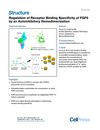
July 2017 in “Structure” In this study, researchers found that ligand homodimerization controls the receptor binding specificity of the FGF9 subfamily, preventing off-target activation of FGFR "b" isoforms.