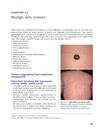
This chapter classifies various benign skin tumors and discusses their characteristics, treatment indications, and potential for recurrence, but reports no new clinical findings.
 July 2016 in “American Journal of Dermatopathology”
 The meeting showcased rare skin disease cases, highlighting the need for accurate diagnosis and treatment.
 April 2016 in “Plastic and reconstructive surgery. Global open”
 This article from the PRS Global Open and ASPS Education Network does not present any new research findings; it likely serves as an introductory or descriptive overview.

Modern hair restoration techniques can effectively treat hair loss and provide natural-looking results.
 January 2016 in “Springer eBooks”
 The document concludes that there are various causes and treatments for hair loss, with hair transplantation being a notable option.
 January 2016 in “Georg Thieme Verlag eBooks”
 Facelift surgery has evolved to focus on natural results and safety, with patient selection and postoperative care being key to success.

This study found a direct correlation between IL6 and insulin, glucose, and cholesterol serum levels in patients with oral lichen planus, suggesting a potential increased cardiovascular risk.
 October 2015 in “Elsevier eBooks”
 Aldesleukin can treat certain cancers and increase HIV patient CD4+ counts but often causes severe side effects.
 May 2015 in “Journal of The American Academy of Dermatology”
 A heart transplant patient developed a skin condition called epidermodysplasia verruciformis after taking immune-suppressing drugs.
 May 2015 in “Journal of The American Academy of Dermatology”
 A woman was injured by a hedgehog falling on her, causing skin lesions but no disease.
 January 2015 in “Dermatology online journal”
 This case report reviews a 67-year-old man with both alopecia totalis and lichen planus of the nails, suggesting a possible autoimmune link between these rare concurrent conditions, but presents no new clinical data.

This presentation reviews the role and implementation of journal clubs in physical medicine and rehabilitation but reports no new research findings.
 March 2014 in “Journal of The American Academy of Dermatology”
 The document lists various dermatology topics, treatments, and diagnostic methods.
 December 2013 in “Research Portal (King's College London)”
 This article discusses the anatomical and biological aspects of hair follicle stem cells in the bulge region but reports no new research findings.

This article provides a reference guide for various dermatological terms, treatments, and conditions, but reports no new clinical findings.
 November 2012 in “South African Family Practice”
 This article describes the phases of the hair cycle in detail but reports no new clinical findings or results related to alopecia.
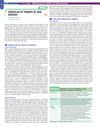
Use the least toxic, most specific treatments for skin diseases, considering side effects and individual patient needs.
 October 2011 in “Dermato-endocrinology”
 Hormones significantly affect skin health, with vitamin D playing a key role.

This study reviewed and reclassified 37 cases of primary scarring alopecia using histological methods to achieve more accurate diagnoses within subtypes like lupus erythematosus and lichen planopilaris.
 January 2011 in “Journal of The American Academy of Dermatology”
 A man developed a painful skin condition after multiple heart procedures involving radiation.
 January 2011 in “Journal of The American Academy of Dermatology”
 Treating generalized granuloma annulare is difficult, with PUVA being the most effective option, but relapses are common.
 August 2010 in “The Journal of Dermatology”
 The document concludes that low-dose acne treatment is most suitable for moderate acne, with high patient satisfaction and low relapse rates.
 July 2010 in “Journal of Investigative Dermatology”
 Scientists found gene mutations that affect hair loss, skin stem cells, and skin disorders, and identified drugs that may help treat blood vessel and skin conditions.
 May 2010 in “Dermatologic Clinics”
 The document concludes that new treatments for skin conditions are complex but effective, including spironolactone for female hair loss and propranolol for infantile hemangiomas.
 February 2010 in “Journal of The American Academy of Dermatology”
 Surgery on a baby with a skin disorder improved eyelid position and eye health.
 February 2010 in “Journal of The American Academy of Dermatology”
 A woman's nail separation was likely caused by poor blood flow, and a treatment for similar conditions might help.
 February 2010 in “Journal of The American Academy of Dermatology”
 Mimicking growth factors in a topical solution can prolong hair growth phase and reduce hair loss without side effects.
 November 2009 in “Medical & surgical dermatology”
 This study found that haploinsufficiency of SPINK5 can lead to Netherton syndrome when a single null mutation combines with homozygous G1258A polymorphisms, suggesting it acts as a genuine mutation affecting LEKTI function.
 January 2009 in “Springer eBooks”
 The document concludes that treating skin conditions should include psychological care and a multidisciplinary approach is essential for effective management.
 January 2009 in “Springer eBooks”
 The document concludes that managing skin conditions during pregnancy is important and requires specialized care.