 September 2017 in “Journal of Dermatology & Cosmetology”
 This study reports a case of frontal fibrosing alopecia associated with hepatitis C treatment involving interferon and ribavirin.
1 citations
,
May 2024 in “Skin Appendage Disorders” In this study, researchers analyzed trichoscopy findings in black patients with FFA to aid in precise diagnosis and treatment, highlighting the importance of understanding disease characteristics to improve hair care in this group.
 February 2024 in “Skin research and technology”
 The researchers in this study identified molecular mechanisms involved in frontal fibrosis alopecia, highlighting immune response and fatty acid metabolism, and developed a four-gene diagnostic model showing high accuracy in distinguishing affected individuals from controls.
4 citations
,
December 2017 in “Journal of zoo and wildlife medicine” This study proposes that seasonal alopecia and reproductive changes in six female fossas at the San Diego Zoo may be linked to hormonal changes associated with reproductive activity.
 February 2024 in “International journal of medical science and clinical research studies”
 This article reviews the clinical features, pathogenesis, and treatment strategies for Central Centrifugal Cicatricial Alopecia, emphasizing the need for enhanced understanding and early diagnosis, but reports no new research findings.
 December 2025 in “Clinical Cosmetic and Investigational Dermatology”
 In this report, a unique female presentation of IFAP syndrome is described, featuring musculoskeletal contractures but no photophobia, highlighting the importance of early detection and multidisciplinary care to improve outcomes and prevent disability.
October 2025 in “Frontiers in Toxicology” This study found that a human relevant potency threshold for estrogen receptor alpha agonism may serve as a health-protective screening tool, and highlights inference performance as essential for scientific confidence frameworks.
January 2016 in “e-Oftalmo CBO Revista Digital de Oftalmologia” This review discusses central serous chorioretinopathy, detailing its etiology, associated factors, diagnostic imaging, and therapeutic options, but provides no new clinical findings.
November 2025 in “Contact Dermatitis” In this case study, a 34-year-old woman experienced facial allergic reactions to SPF-containing products, and patch tests identified sensitization to salicylates, which when avoided, stabilized her symptoms and her existing frontal fibrosing alopecia, highlighting a possible link to investigate further.
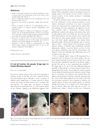 39 citations
,
July 2015 in “British Journal of Dermatology”
39 citations
,
July 2015 in “British Journal of Dermatology” This article discusses the pseudo 'fringe sign' in frontal fibrosing alopecia, highlighting that it is not solely related to traction, and it reports no new clinical results.
3 citations
,
February 2020 in “DOAJ (DOAJ: Directory of Open Access Journals)” This review discusses the challenges of managing intraoperative floppy iris syndrome during cataract surgery and highlights the importance of preoperative risk assessment and multidisciplinary collaboration, reporting no new clinical results.
 4 citations
,
May 2021 in “Biomedicines”
4 citations
,
May 2021 in “Biomedicines” This review explores the potential role of caveolin-1 in cicatricial alopecia, particularly frontal fibrosing alopecia, and discusses possibilities for targeted therapies without providing new research results.
January 2016 in “Indian dermatology online journal” This case report describes a 50-year-old woman with frontal fibrosing alopecia who showed no improvement despite multiple treatments, including intralesional triamcinolone and topical glucocorticoids.
 March 2024 in “Frontiers in genetics”
 This review discusses the insights gained from single-cell RNA sequencing of fibroblasts in various cancers and wound healing, highlighting differences in gene expression and novel interactions.
 3 citations
,
July 2020 in “International Journal of Molecular Sciences”
3 citations
,
July 2020 in “International Journal of Molecular Sciences” This study reported that molecules from Zebrafish embryo cell differentiation can counteract neurodegeneration, regenerate tissues, and potentially reverse hair follicle damage in androgenetic alopecia.
This review discusses central centrifugal cicatricial alopecia and emphasizes the need for more research to understand and manage the disease, while also suggesting initiatives like educating hairstylists for early detection.
2 citations
,
January 2016 in “Dermatology online journal” This case report describes a 46-year-old man diagnosed with frontal fibrosing alopecia, a condition primarily affecting postmenopausal women, highlighting its rare occurrence in men.
2 citations
,
June 2021 in “RECERCAT (Consorci de Serveis Universitaris de Catalunya)” Clear definitions and strategies are needed to manage long-term COVID-19 symptoms effectively.
28 citations
,
June 1995 in “The Journal of Dermatology” This study reports that flaky skin mice exhibit skin and nail features that closely resemble human psoriasis vulgaris, suggesting they may serve as a natural model for this condition.
21 citations
,
March 2015 in “Neurological Sciences” This study reports that a novel frameshift mutation in the HTRA1 gene in a CARASIL pedigree led to reduced HTRA1 protein and increased TGF-β1 expression, potentially causing severe CARASIL and peripheral small arterial disease.
6 citations
,
April 2025 in “Food Bioscience” This study found that fish scale collagen peptide significantly promoted wound healing in mice, with the <1 kDa fractions enhancing collagen synthesis and reducing inflammation, suggesting potential clinical benefits.
5 citations
,
March 2005 in “Pediatric dermatology” Keratosis Follicularis Spinulosa Decalvans is a rare genetic disorder causing skin and hair issues, often inherited through the X chromosome.
April 2025 in “International Journal of Dermatology” This article proposes renaming frontal fibrosing alopecia to frontal fibrosing alopecia syndrome to better reflect its varied presentations and enhance understanding and treatment approaches.
1 citations
,
June 2025 in “Journal of Clinical Medicine” This study reported that frontal fibrosing alopecia predominantly affects postmenopausal women and identified potential risk factors like frequent β-blocker use and sunscreen application, indicating the need for further research.
 July 2018 in “Elsevier eBooks”
 This review discusses the evolving understanding of frontal fibrosing alopecia as a generalized skin condition with diverse manifestations, and reports no new clinical results.
September 2017 in “The journal of investigative dermatology. Symposium proceedings/The Journal of investigative dermatology symposium proceedings” This study emphasizes the genetic component of central centrifugal cicatricial alopecia, highlighting an atypical case involving an adolescent male within an African-American family.
12 citations
,
October 2001 in “British Journal of Ophthalmology” This paper suggests intralesional cidofovir as a potentially effective treatment for SCC with no systemic toxicity observed, but surgical excision remains the standard for its curative outcomes and thorough evaluation.
35 citations
,
January 2008 in “American Journal of Clinical Dermatology” This case report further supports the association of keratosis follicularis spinulosa decalvans with acne keloidalis nuchae and tufted hair folliculitis.
 February 2020 in “International Journal of Current Microbiology and Applied Sciences”
 This study found that canine hair follicle stem cells in vitro expressed markers associated with multipotency, suggesting their potential role in the hair cycle.
June 2025 in “Journal of Ultrasound in Medicine” This study reports that high-frequency ultrasound can characterize frontal fibrosing alopecia by assessing dermal atrophy, hair follicle changes, and subclinical inflammation.