This study suggests that incorporating exogenous melatonin in the treatment of certain skin disorders, like psoriasis and eczema, can improve treatment efficiency, normalize immune parameters, and reduce disease relapses.
September 2014 in “Archives of disease in childhood” This case report describes a 12-year-old boy who developed severe shingles with skin erosion and hair loss despite early aciclovir treatment after a stem-cell transplant for relapsed acute myeloid leukemia.
 January 2011 in “Journal of The American Academy of Dermatology”
 Treating generalized granuloma annulare is difficult, with PUVA being the most effective option, but relapses are common.
51 citations
,
July 2003 in “Annals of the Rheumatic Diseases” This case study reports a successful use of co-trimoxazole in treating a 13-year-old girl with symptoms suggestive of autoimmune disorders and relapsing polychondritis.
 November 2025 in “Reumatismo”
 In this study, the choice between Belimumab and Anifrolumab for treating Systemic Lupus Erythematosus was mainly influenced by the clinical features of the disease, such as chronic-active or relapsing-remitting courses and specific manifestations like cutaneous involvement or arthritis.
 November 2025 in “DOAJ (DOAJ: Directory of Open Access Journals)”
 This study observed that the choice between using Belimumab and Anifrolumab for treating active Systemic Lupus Erythematosus was mainly based on clinical phenotype, with Anifrolumab linked to chronic-active disease and Belimumab associated with relapsing-remitting disease.
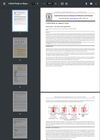 April 2024 in “International Journal of Research Publication and Reviews”
 This source highlights that alopecia areata is a complex autoimmune disorder leading to patchy, nonscarring hair loss with variable treatment responses, reflecting unmet clinical needs. Advances in genetic research are improving understanding, yet current treatments often lead to persistent relapses.
 November 2023 in “Dermatologica sinica/Zhōnghuá pífūkē yīxué zázhì”
 In this case report, upadacitinib was used to treat a 21-year-old female with severe alopecia areata, resulting in significant hair regrowth; however, rapid hair loss recurred soon after discontinuing the drug, illustrating its potential efficacy as well as the risk of relapse upon stopping treatment.
89 citations
,
August 2018 in “JAMA Dermatology” This study found that the level of expected therapeutic regrowth significantly affected hair regrowth outcomes in contact immunotherapy for alopecia areata, suggesting implications for patient education and adherence.
15 citations
,
October 2003 in “Annals of Oncology” Hair loss can occur as a side effect of certain breast cancer treatments, but minoxidil can help regrow hair.
2 citations
,
January 2022 in “JAAD Case Reports” This case report describes a 69-year-old woman who developed drug-induced acquired ichthyosis related to ponatinib therapy, which improved upon stopping the medication.
July 2026 in “Expert Review of Clinical Immunology” This review highlights that alopecia areata is characterized by three immune endotypes, and while JAK inhibitors offer temporary control, upcoming multi-omics diagnostics and immune reprogramming strategies may achieve longer-lasting remission, according to this analysis.
 June 2026 in “Wiener klinische Wochenschrift”
 This review highlights advancements in the understanding and treatment of alopecia areata, noting that the approval of oral Janus kinase inhibitors like baricitinib and ritlecitinib marks a significant development in managing severe cases of this autoimmune condition.
33 citations
,
March 2018 in “Italian Journal of Dermatology and Venereology” This article reviews clinical and histopathological aspects of cutaneous lupus erythematosus and its treatment, emphasizing the importance of photoprotection and outlining current therapies, but reports no new experimental results.
 September 2024 in “Skin Appendage Disorders”
 This case report describes a 21-year-old woman with circumscribed alopecia areata incognita, who experienced a sustained positive response to treatment with oral tofacitinib after conventional treatments frequently failed to provide lasting effects.
 September 2023 in “SKIN The Journal of Cutaneous Medicine”
 This case report documented a 74-year-old female with alopecic patches and other skin issues during talquetamab therapy for multiple myeloma, suggesting that the drug may cause skin-related adverse effects due to reactivity to GPRC5D-expressing structures.
2 citations
,
September 2019 in “Serbian Journal of Dermatology and Venerology” In this study, a 63-year-old male with chronic acne necrotica achieved complete clinical remission using topical erythromycin and benzoyl peroxide.
 December 2023 in “Journal of Multiple Sclerosis and Neuroimmunology”
 Teriflunomide can cause hair thinning.
34 citations
,
July 2013 in “Clinical Cosmetic and Investigational Dermatology” This study observed that while topical drug therapy for erosive pustular dermatosis rarely leads to complete resolution, surgery may achieve remission in male patients.
7 citations
,
March 2023 in “European Journal of Dermatology” Using Selenium Disulfide shampoo weekly helps prevent scalp dermatitis flare-ups.
6 citations
,
August 2024 in “Biomacromolecules” This study introduces a novel in vitro model for clubfoot fibrosis to enable high-throughput drug screening and found that while the model increased collagen deposition, the antifibrotic drug minoxidil effectively inhibited the expression of collagen cross-linking enzymes.
5 citations
,
April 2025 in “Journal of the European Academy of Dermatology and Venereology” The EADV Task Force on Hair Diseases reviewed existing literature and clinical experience to propose diagnostic and therapeutic recommendations for managing folliculitis decalvans, highlighting oral antibiotics, glucocorticosteroids, isotretinoin, and various systemic and topical therapies as key options for managing inflammation and preventing further hair loss.
3 citations
,
March 2021 in “Indian Journal of Rheumatology” This study presents a case where telemedicine allowed for early detection of a dermatomyositis flare during the COVID-19 pandemic using simple patient-reported measures, despite challenges in remote assessment.
 3 citations
,
January 2010 in “Elsevier eBooks”
3 citations
,
January 2010 in “Elsevier eBooks” The document describes various skin conditions, their features, and treatments but lacks detailed study size information.
January 2026 in “Skin Health and Disease” This study conducted a survey among consultant dermatologists in Ireland to explore their use of JAK inhibitors for treating alopecia areata, acknowledging challenges posed by the lack of global guidelines and long-term safety data.
 November 2022 in “The journal of investigative dermatology/Journal of investigative dermatology”
 This study reported that IL-15 promotes human hair growth and protects hair follicle immune privilege, potentially stabilizing alopecia areata treatment outcomes when selectively stimulating IL-15Rα signaling.
 253 citations
,
April 2014 in “Drugs”
253 citations
,
April 2014 in “Drugs” This review discusses the preclinical and clinical data on teriflunomide for multiple sclerosis, highlighting its selective action on immune cells without causing clinical immune suppression, and provides no new clinical results.
 126 citations
,
January 2001 in “World Journal of Surgery”
126 citations
,
January 2001 in “World Journal of Surgery” This review discusses current treatment options for liver hydatidosis, noting the potential benefits and limitations of chemotherapy and highlighting the need for more clinical trials to prevent recurrent disease; it reports no new findings.
 71 citations
,
March 2009 in “Seminars in cutaneous medicine and surgery”
71 citations
,
March 2009 in “Seminars in cutaneous medicine and surgery” This review discusses evidence for alopecia areata treatments, highlighting their ability to stimulate hair growth but noting limited data on long-term efficacy and impact on quality of life.
52 citations
,
July 1998 in “Urology” This study found that liarozole is more effective than cyproterone acetate for improving PSA response and survival in metastatic prostate cancer after first-line endocrine therapy, while maintaining quality of life.