 August 2024 in “Anatomía Digital”
 This study reviewed literature on reconstructive surgery, highlighting its role in restoring form and function after significant damage, and discussed common techniques, technological advancements like 3D printing, and challenges, including ethical and psychological considerations, emphasizing the importance of comprehensive patient care and expectation management.
 January 2024 in “Editora Científica Digital eBooks”
 This study highlights the therapeutic benefits of photobiomodulation, which uses light exposure to facilitate tissue repair and prevent inflammation and apoptosis, in treating conditions like arthritis, reumatism, and inflammatory pain, with its complex mechanisms potentially leading to future discoveries and treatments.
 9 citations
,
January 2014 in “Postepy Dermatologii I Alergologii”
9 citations
,
January 2014 in “Postepy Dermatologii I Alergologii” This study evaluated the Polish version of Skindex-29, demonstrating its reliability and validity as a tool to measure quality of life in dermatology patients.
 8 citations
,
September 2021 in “bioRxiv (Cold Spring Harbor Laboratory)”
8 citations
,
September 2021 in “bioRxiv (Cold Spring Harbor Laboratory)” This study found that women, younger individuals, and those with a low body mass index were more likely to develop long COVID symptoms, and even mild COVID-19 cases often experienced long-term residual symptoms.
 February 2013 in “Archives of Disease in Childhood: Education & Practice”
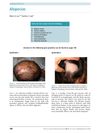
 Different types of alopecia in children require specific diagnoses and treatments.
 June 2001 in “Journal of The American Academy of Dermatology”
 The exam tested knowledge on various skin-related topics for CME credit.
14 citations
,
June 2022 in “British Journal of Dermatology” This study found that the Alopecia Areata Symptom Impact Scale (AASIS) is a better tool than the Alopecia Areata Quality of Life Index (AA-QLI) for assessing patient-reported outcomes in alopecia areata.
1 citations
,
December 1913 in “Biochemical Journal” This article reviews the historical discovery and validation of isocholesterol, confirming its identity as a distinct sterol but reports no new research findings.
 October 2014 in “Journal of the Portuguese Society of Dermatology and Venereology”
 This paper presents a therapeutic approach with excellent results in a case of lichen planopilaris overlapping with dermatomyositis and scleroderma, although broader applicability is not discussed.
In this randomized controlled trial at Bolan Medical Complex Hospital, researchers observed that liquid nitrogen cryotherapy increased hair regrowth by 60% in alopecia areata patients, significantly outperforming alternative treatments, which achieved 40% regrowth.
January 2015 in “Hair transplant forum international” This abstract introduces a historical perspective on Dorothy Osborn's research about the hereditary nature of common baldness but reports no new study results.
 2 citations
,
December 2017 in “Journal of The American Academy of Dermatology”
2 citations
,
December 2017 in “Journal of The American Academy of Dermatology” This article highlights the need for dermatologists to define evidence-based standards to provide high-value care and reduce unnecessary testing, as recommended by the American Academy of Dermatology.
 January 2026 in “Ciencia Latina Revista Científica Multidisciplinar”
 This study reports on a 14-year-old male with refractory diffuse alopecia areata who achieved full hair density restoration after three monthly sessions of microneedling combined with triamcinolone, dutasteride, and synthetic exosome treatment, highlighting exosomes' potential for enhancing traditional therapies in autoimmune hair loss cases.
 April 2017 in “Journal of Investigative Dermatology”
 Psoriasis patients experience moderate functional impairment related to disease severity and less satisfaction.
 101 citations
,
January 2012 in “Annals of Dermatology”
101 citations
,
January 2012 in “Annals of Dermatology” In this study, researchers found that androgenetic alopecia significantly harms quality of life, particularly in younger patients, those with more severe or long-term alopecia, and those who have sought non-medical hair care.
100 citations
,
December 2002 in “Journal of biological chemistry/The Journal of biological chemistry” This study identified a domain on human chromosome 21q22.1 containing various high glycine-tyrosine and high sulfur keratin-associated protein genes, revealing their diverse expression in hair-forming cells.
89 citations
,
March 1990 in “PubMed” This study found that shaving was the most helpful and commonly used temporary hair removal method among women with facial hirsutism.
 17 citations
,
July 2017 in “International Journal of Behavioral Medicine”
17 citations
,
July 2017 in “International Journal of Behavioral Medicine” This study validated the Egyptian Arabic version of the Skindex-16 and found that skin conditions significantly impacted patients' quality of life, particularly in the emotional domain.
 13 citations
,
January 2018 in “Annals of Dermatology”
13 citations
,
January 2018 in “Annals of Dermatology” Alopecia areata and androgenetic alopecia affect quality of life similarly.
8 citations
,
September 2020 in “British Journal of Dermatology” This study explored whether bald characters are disproportionately portrayed as villains in Hollywood films but reports no new empirical results; the authors suggest this pattern may reflect a societal bias associating alopecia with immorality.
 8 citations
,
June 2020 in “Dermatologic Therapy”
8 citations
,
June 2020 in “Dermatologic Therapy” This study reports that patients with androgenetic alopecia had lower quality of life scores across all measured domains compared to controls, with disease severity worsening the impact, particularly socially for those under 30.
7 citations
,
October 2012 in “Anais Brasileiros de Dermatologia” This case report highlights the simultaneous presence of white piedra, identified as T. inkin, and pediculosis capitis in one patient to emphasize their clinical distinctions.
 3 citations
,
November 2009 in “BMC dermatology”
3 citations
,
November 2009 in “BMC dermatology” This study found that dermatologists in the southeastern U.S. often offer less frequent treatment for children with alopecia areata compared to adults, with more treatment also recommended for more advanced stages of hair loss.
 2 citations
,
November 2023 in “Revista Ibero-Americana de Humanidades, Ciências e Educação”
2 citations
,
November 2023 in “Revista Ibero-Americana de Humanidades, Ciências e Educação” This review discusses the use of platelet-rich plasma in aesthetic treatments, emphasizing its benefits and potential as a promising and safe alternative for enhancing appearance and self-confidence, without presenting new clinical results.
 1 citations
,
April 2025 in “Revista científica FACS.”
1 citations
,
April 2025 in “Revista científica FACS.” This study explored the potential use of natural ingredients in managing alopecia areata, investigating their safety and efficacy as alternatives to conventional chemical treatments.
 1 citations
,
May 2018 in “Psychology, Health & Medicine”
1 citations
,
May 2018 in “Psychology, Health & Medicine” In this study, researchers found that the original four-factor model of causal illness attributions in the IPQ-R did not fit a Chinese sample, and instead identified a two-factor model focusing on psychological attributions and risk factors.
 May 2026 in “Nursing Reports”
 This study found that Slovak breast cancer survivors experience moderate overall quality of life, with variations across domains linked to treatment types and sociodemographic factors, pointing to the need for tailored supportive care.
July 2024 in “Journal of Investigative Dermatology” Alopecia areata causes negative emotions and stress due to hair loss and emotional triggers.
May 2024 in “International journal of medicine and psychology.” This study in Khakassia reported that extroverts were more prevalent than introverts among secondary school students, with significant variations observed based on age, gender, and nationality.
 December 2023 in “Advances in economics, management and political sciences”
 This study found that consumers do not prefer anti-hair loss products over regular hair care products, suggesting that companies should focus on factors like purchase willingness instead of the specific causes of hair loss.