19 citations
,
August 2018 in “Journal of the American Academy of Dermatology” In this study, the researchers found that the picosecond pulsed alexandrite laser (PSAL) may be as effective and safe as the Q-switched alexandrite laser (QSAL) for treating freckles in Chinese patients.
 May 2017 in “Journal of The American Academy of Dermatology”
 Combining microneedling with Q-switched laser treatment for tattoo removal did not improve results and caused more pain.
 1 citations
,
November 2020 in “Journal of Cosmetic Dermatology”
1 citations
,
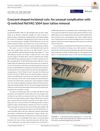
November 2020 in “Journal of Cosmetic Dermatology” This letter to the editor discusses an unusual complication, crescent-shaped incisional cuts, observed with Q-switched Nd:YAG 1064 laser tattoo removal and reports no new clinical results.
 February 2009 in “Journal of The American Academy of Dermatology”
 Fractional infrared technology is effective and safe for treating cervical laxity.
294 citations
,
August 1999 in “Journal of the American Academy of Dermatology” This study observed that the majority of side effects from laser-assisted hair removal were associated with ruby and alexandrite lasers, particularly in patients with tanned or darker skin types.
 February 2026 in “Cureus”
 In this case report, a 38-year-old woman experienced progressive lightening of a blue-green eyebrow tattoo treated with a QS ruby laser, but eyebrow hair density reduction was noted as a potential adverse effect.
68 citations
,
January 2012 in “Lasers in surgery and medicine” This study found that combining microdermabrasion, a topical regimen, and low-fluence QS Nd:YAG laser treatment effectively cleared melasma in women, with 81% of participants achieving over 75% clearance and minimal side effects.
September 1998 in “Journal of the European Academy of Dermatology and Venereology” 53 citations
,
October 2012 in “Journal of dermatological treatment” This study found that low-fluence 1064 nm Q-switched Nd:YAG laser treatment effectively improved melasma in Asian patients without serious side effects, achieving an average improvement rate of 50-74%.
36 citations
,
June 2016 in “Journal of dermatological treatment” This study found that a combination of low-fluence Q-switched 1064 nm Nd:YAG laser, hydroquinone cream, and oral tranexamic acid showed promising results for Riehl’s melanosis in Asian patients, with no serious adverse events reported.
7 citations
,
June 2024 in “Skin Research and Technology” Combining treatments significantly reduces dark circles and wrinkles better than nanofat alone.
54 citations
,
November 2014 in “JEADV. Journal of the European Academy of Dermatology and Venereology/Journal of the European Academy of Dermatology and Venereology” This study found that combining low-fluence Q-switched Nd: YAG laser and intense pulsed light led to faster and more effective melasma treatment compared to using the laser alone, though recurrence still occurred.

This study found that 1064 nm QS Nd:YAG laser treatment effectively lightens hair and improves skin appearance in Indian subjects with minimal adverse effects, offering a safer alternative to chemical lightening products.
 July 2021 in “British Journal of Dermatology”
 Laser treatment for skin conditions VEN and ILVEN is effective and liked by patients.
8 citations
,
May 2004 in “Facial plastic surgery clinics of North America” This review discusses advancements in laser hair removal technologies and the potential role of radiofrequency for certain hair types, but it reports no new clinical results.
 7 citations
,
August 2018 in “South African Medical Journal”
7 citations
,
August 2018 in “South African Medical Journal” This article provides a comprehensive overview of tattoo-related issues for clinicians, covering various aspects such as tattoo types, medical relevance, removal methods, complications, and South African legislation, but reports no new research findings.
 September 2023 in “Curēus”
 This case study describes a 21-year-old male diagnosed with Becker's nevus, characterized by hyperpigmented and hypertrichotic lesions that developed over several years.
 September 2024 in “Journal of Cosmetic Dermatology”
 Follow these guidelines to safely and effectively use energy-based devices in aesthetic treatments.
 August 2025 in “Journal of Cosmetic Dermatology”
 In this systematic review, researchers examined various treatments for axillary hyperpigmentation, finding that Q-switched Nd:YAG laser and intense pulsed light showed significant improvement with minimal adverse effects; desonide and Cyperus rotundus oil were also notably effective among topical treatments.
 1 citations
,
January 2018 in “Journal of Cosmetic and Laser Therapy”
1 citations
,
January 2018 in “Journal of Cosmetic and Laser Therapy” The editorial introduces various topics on laser and cosmetic treatments in a medical journal.
 May 2017 in “Journal of The American Academy of Dermatology”
 Finasteride 1 mg/day effectively treats hair loss in men aged 18-41 and over 41; DEET lotion works better than herbal insect repellents; combined tattoo removal technique shows no extra benefits.
 31 citations
,
April 1999 in “Dermatologic Clinics”
31 citations
,
April 1999 in “Dermatologic Clinics” This article reviews the use of the Nd:YAG laser for hair removal and reports no new research findings.
 73 citations
,
April 1999 in “Dermatologic Clinics”
73 citations
,
April 1999 in “Dermatologic Clinics” This article reviews patient selection and treatment protocols for various light-based hair removal systems but presents no new clinical results.
 3 citations
,
April 2017 in “Dermatologic Surgery”
3 citations
,
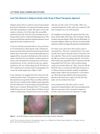
April 2017 in “Dermatologic Surgery” Laser hair removal can be an effective last-resort treatment for men with stubborn Alopecia Areata who want to be uniformly bald.
 4 citations
,
April 1999 in “Dermatologic Clinics”
4 citations
,
April 1999 in “Dermatologic Clinics” This study found that the long-pulsed ruby laser effectively delays hair growth and has the potential for permanent hair removal with minimal pain and side effects, offering an advantage over traditional hair removal methods.
 4 citations
,
January 2002 in “Journal of Cosmetic Dermatology”
4 citations
,
January 2002 in “Journal of Cosmetic Dermatology” This study found that long-pulsed ruby laser treatment effectively reduced hair density on the beard and chest of male-to-female transsexuals, achieving a 50–90% reduction maintained over six months.
 3 citations
,
March 2008 in “Medical laser application”
3 citations
,
March 2008 in “Medical laser application” This review highlights recent advances in laser treatments for skin disorders, including the optimization of vascular lesion treatment and improved safety for hair removal, but reports no new results.
 1 citations
,
January 2020 in “ARC Journal of Dermatology”
1 citations
,
January 2020 in “ARC Journal of Dermatology” This study observed that five cases of primary cicatricial alopecia showed an excellent response to a combination of oral zinc and long-pulsed Nd:YAG 1064-nm laser treatment, suggesting this approach may be beneficial for certain types of this condition.
 April 2024 in “Cognizance journal”
 In this study, treatment of unwanted hair with 755 nm alexandrite laser in 14 patients showed a decrease in excess hair at the armpit and thigh areas, with a 75% accuracy rate in hair density estimation using Monte Carlo modeling.
 20 citations
,
December 2003 in “Journal of Cosmetic and Laser Therapy”
20 citations
,
December 2003 in “Journal of Cosmetic and Laser Therapy” This study found that an 800-nm diode laser was effective for reducing pigmented hair and extending hair plucking intervals, with most patients tolerating the procedure well without anesthetics.