 May 2024 in “Indian journal of animal sciences/Indian Journal of Animal Sciences”
 In this study, researchers collected and analyzed morphometric data from 207 Janwal Pashmi dogs in Maharashtra, finding distinct physical traits such as color and ear length, with adult males generally larger in several traits compared to females.
September 2023 in “Zenodo (CERN European Organization for Nuclear Research)” This study at Sree Ramakrishna Medical College in Tamil Nadu found that young females experiencing hair loss also report disturbed sleep, depression, and irritability, suggesting a need for increased awareness about health, nutrition, hair care, personal hygiene, and sleep among this population.
This research highlights the intricate relationship between the skin and gut microbiome, emphasizing the necessity for a deeper understanding of the "gut–skin" axis to develop new treatments for skin diseases. Results are not reported in the abstract.
 March 2023 in “Медицинский совет”
 This review discusses various types of hair loss associated with COVID-19 and vaccinations, highlighting acute telogen hair loss as the most common form, but reports no new clinical results.
 June 2020 in “IP Indian journal of clinical and experimental dermatology”
 This observational study reported that primary ageing dermatoses were more common than non-ageing dermatoses among elderly patients, especially among those with pre-existing skin conditions.
 80 citations
,
April 2011 in “Plant physiology”
80 citations
,
April 2011 in “Plant physiology” This study suggests that the GPX-PDE1 and GPX-PDE2 genes in white lupin enhance root hair development and contribute to Pi limitation acclimation by facilitating glycerophosphodiester degradation.
 27 citations
,
June 2023 in “Nature”
27 citations
,
June 2023 in “Nature” In this study using genetic mouse models, researchers discovered that senescent melanocytes in nevi secrete osteopontin, which activates hair stem cells, enhancing hair growth; this process is mirrored in human hairy nevi, suggesting a potential therapeutic target for regenerative disorders.
 3 citations
,
January 2017 in “International journal of research - granthaalayah”
3 citations
,
January 2017 in “International journal of research - granthaalayah” In this study, thirty participants applied a paste made from Elaeocarpus serratus and Psidium guajava leaves on their scalps, resulting in significant improvements in dandruff symptoms, with over 40% achieving complete remission and no adverse effects reported.
 April 2020 in “Journal of the Endocrine Society”
 This case report details a post-menopausal woman with hirsutism and virilization due to rare Leydig cell tumors in both ovaries, underscoring the challenge of detecting such tumors with standard imaging.
256 citations
,
March 2019 in “Journal of the American Academy of Dermatology” This review provides graded evidence and a therapeutic algorithm for managing hidradenitis suppurativa, but does not present new clinical results.
 64 citations
,
March 2017 in “Nature communications”
64 citations
,
March 2017 in “Nature communications” This study identified 63 genetic loci associated with male-pattern baldness, uncovering genes and pathways that may help develop treatments and suggesting its connection to other human conditions.
 60 citations
,
August 2008 in “Human molecular genetics online/Human molecular genetics”
60 citations
,
August 2008 in “Human molecular genetics online/Human molecular genetics” This study suggests that a position effect disrupting TRPS1 expression may be linked to hypertrichosis in both Ambras syndrome in humans and a similar phenotype in Koa mice.
 36 citations
,
May 2011 in “The Journal of Clinical Endocrinology & Metabolism”
36 citations
,
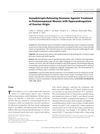
May 2011 in “The Journal of Clinical Endocrinology & Metabolism” Treatment with a hormone agonist can reduce excess male hormones in postmenopausal women without surgery.
 16 citations
,
December 2018 in “Plant Science”
16 citations
,
December 2018 in “Plant Science” This study found that elevated carbon dioxide levels may help mitigate water deficit stress in soybean roots by altering gene expression related to stress and nutrient transport.
15 citations
,
February 2021 in “Cells” This study concluded that using human umbilical cord blood mononuclear cells transfected with VEGF and FGF2 genes enhances skin wound healing in rats, demonstrating greater wound revascularization compared to controls.
9 citations
,
April 2019 in “Journal of Structural Biology” Keratin fibers in hair twist left-handed.
 8 citations
,
February 2022 in “Journal of Clinical Medicine”
8 citations
,
February 2022 in “Journal of Clinical Medicine” This study found that a notable percentage of COVID-19 patients experienced post-infection telogen effluvium, although no significant associations with infection-related factors were identified.
 5 citations
,
August 2003 in “British Journal of Dermatology”
5 citations
,
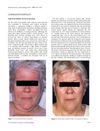
August 2003 in “British Journal of Dermatology” This article discusses the association between chronic diffuse telogen hair loss in women and iron deficiency, supporting the view that iron's role is unclear and often overstated, but reports no new clinical results.
1 citations
,
January 2019 in “Journal of pharmacy & pharmacognosy research” This study found that a 2.5% flavonoid-rich extract of Equisetum hyemale promoted hair growth in a rat model of chemically-induced alopecia, showing results comparable to 5% minoxidil.
 August 2023 in “International Journal of Molecular Sciences”
 This review discusses the use of human-to-mouse xenografting to study human skin processes in vivo, highlighting its importance for understanding skin regeneration and pathology while identifying knowledge gaps and challenges in applying these findings to human skin.
This review reports that thermal spring waters, enriched with a diverse hydrobiome, hold promising potential for use in dermocosmetics, as their bioactive compounds could enhance skin protection, repair, and appearance, benefiting conditions like atopic dermatitis and rosacea.
 May 2022 in “Голова и шея.”
 This study observed that elderly women exhibited a tendency for higher personal anxiety and increased brain DC-potential indicators, with distinct energy cost patterns in different brain regions compared to elderly men.
 January 2022 in “Sustainable development goals series”
 The document concludes that significant investment in agricultural innovation is necessary to achieve global food security and nutrition.
 5 citations
,
January 2012 in “Natural Science”
5 citations
,
January 2012 in “Natural Science” This study analyzed the elemental content of three medicinal herbs used for general weakness and found they contain varying amounts of bioavailable minor and trace elements, with insignificant levels of toxic elements.
 September 2024 in “International Journal of Pharmaceutical Quality Assurance”
 This review suggests that Shirodhara, an ancient Ayurvedic therapy, may significantly improve mental well-being by reducing post-COVID anxiety, depression, and insomnia, although further randomized controlled trials are needed to confirm these promising findings.
3 citations
,
July 2024 in “Journal of Vascular Diseases” This review compiles existing research on ischemia-modified albumin (IMA) as a biomarker for myocardial ischemia, highlighting current gaps in understanding its formation and detection, with no new clinical results reported.
 June 2026 in “Zenodo (CERN European Organization for Nuclear Research)”
 In this study, researchers formulated a natural poly-herbal baby shampoo with ingredients like Amla and Soapnut, demonstrating it to be a mild, effective cleansing and conditioning option for infants, offering a gentle alternative to synthetic shampoos without causing irritation.
 June 2026 in “Zenodo (CERN European Organization for Nuclear Research)”
 This study developed and evaluated a poly-herbal baby shampoo using natural ingredients and found it to be an effective and gentle alternative to synthetic shampoos, offering cleansing and conditioning benefits suitable for infants' sensitive scalps.
 March 2013 in “The Journal of Urology”
 This study found that patients with androgenetic alopecia frequently had higher PSA levels and more significant urinary symptoms, likely due to older age, though prostate weight did not differ.
 January 2026 in “AYUSHDHARA”
 This study compared two Ayurvedic treatments for alopecia and found that applying Chirabilwa Lepa after Prachanna led to significantly better improvement in hair regrowth than using Gunja Lepa after Prachanna among the 60 patients studied.