 6 citations
,
January 1996 in “Endocrine-related Cancer”
6 citations
,
January 1996 in “Endocrine-related Cancer” In this study, combining flutamide with finasteride showed additive effects in reducing tumor and prostate growth in a mouse model predictive of androgen-sensitive prostate cancer.
97 citations
,
December 2011 in “New England Journal of Medicine” This article discusses the FDA's decision not to approve 5α-reductase inhibitors for prostate cancer prevention, citing an increase in high-grade tumors but no mortality evidence, and reports no new results.
Dutasteride reduces prostate cancer risk by 23% in high-risk men.
 August 2013 in “Nature Reviews Drug Discovery”
 New cancer treatments show promise in reducing tumor growth and improving skin regeneration in mice.
 October 2010 in “International Journal of Dermatology”
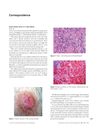
 An 86-year-old man with prostate cancer was diagnosed with a rare, low-grade breast cancer and underwent surgery but declined additional hormone therapy.
February 2004 in “Oncology Times” This presentation by Dr. Shutsung Liao suggests that a treatment approach involving cyclic use of androgens and anti-androgens, along with green tea extract, may help extend survival in advanced prostate cancer patients resistant to standard therapy.
September 2013 in “Cancer Discovery” Finasteride is safe for long-term use in prostate cancer treatment.
 38 citations
,
June 2015 in “Expert Opinion on Therapeutic Targets”
38 citations
,
June 2015 in “Expert Opinion on Therapeutic Targets” This review explores potential indications for prolactin receptor inhibitors beyond breast and prostate cancers, emphasizing the need for potent antibodies to further research prolactin receptor expression.
 1 citations
,
March 2004 in “Journal of the American Academy of Dermatology”
1 citations
,
March 2004 in “Journal of the American Academy of Dermatology” This study discusses two cases of acneiform skin eruptions associated with the use of the EGFR inhibitor ZD1839 in prostate cancer treatment, emphasizing the need for dermatologists to be aware of potential skin reactions.
 August 2013 in “Nature Reviews Drug Discovery”
 New treatments may restore cancer-blocking proteins, slow prostate cancer, identify drug targets, and potentially regrow hair.
 January 2012 in “Anales (Reial Acadèmia de Medicina de la Comunitat Valenciana)”
 This study found that SRD5A2 expression is absent in one third of benign adult prostates and is associated with hypermethylation, suggesting potential personalization of treatment for prostatic diseases based on methylation status.
January 2005 in “Urologia Journal” This study found that both Finasteride and MK386 reduced cell proliferation in primary prostate cancer cultures, with Finasteride being more effective in lower Gleason scores and MK386 in higher ones.
3 citations
,
November 2024 in “Egyptian Journal of Medical Human Genetics” This bibliometric analysis identified SGK1 as a key factor in cancer, showing that its dysregulation can lead to tumor growth and treatment resistance. The authors highlighted SGK1's potential as a therapeutic target, but note that further research is needed to develop effective treatment strategies.
 51 citations
,
March 2006 in “Bioorganic & Medicinal Chemistry”
51 citations
,
March 2006 in “Bioorganic & Medicinal Chemistry” This study screened synthesized pyridinecarboxamides for antitumor properties and found that many, particularly 5c and 7a, showed moderate in vitro activity against various human tumor cell lines.
 August 2013 in “Nature Reviews Drug Discovery”
 New treatments for cancer and skin disorders show promise in disrupting harmful cell interactions and promoting hair growth.
November 2007 in “Data Archiving and Networked Services (DANS)” This thesis reviews the molecular mechanisms of androgen receptor functions, including receptor structure and interaction with other proteins, and reports no new experimental findings.
 10 citations
,
July 2022 in “Journal of Medicinal Chemistry”
10 citations
,
July 2022 in “Journal of Medicinal Chemistry” This article discusses the potential for combining PROTACs with other therapeutic modalities in drug discovery and reports no clinical results.
May 2008 in “Trends in Urology Gynaecology & Sexual Health” This study found that continuous use of loop diuretics may double the rate of bone loss in elderly men compared to intermittent or non-use.
 October 1999 in “The Journal of Urology”
 This article discusses developments in clinical urology featured in the Journal of Urology's October 1999 issue and presents no new clinical findings.
 66 citations
,
January 2001 in “Vitamins and hormones”
66 citations
,
January 2001 in “Vitamins and hormones” This chapter reviews the role of androgen receptors in mediating the actions of androgens in specific tissues and provides no new experimental findings.
 127 citations
,
June 2008 in “British Journal of Clinical Pharmacology”
127 citations
,
June 2008 in “British Journal of Clinical Pharmacology” This study supports the conclusion that the hormetic dose-response model is the most prevalent and fundamental model in biological and biomedical sciences, applicable to a wide range of clinical conditions.
 4 citations
,
October 2013 in “Springer eBooks”
4 citations
,
October 2013 in “Springer eBooks” This chapter reviews existing knowledge about melatonin's MT₁ and MT₂ receptors in human tissues, discussing their established and potential functions, but reports no new clinical findings.
 2 citations
,
December 2022 in “Journal of Biochemistry and Molecular Biology”
2 citations
,
December 2022 in “Journal of Biochemistry and Molecular Biology” This review discusses the development and potential applications of organoids for human disease modeling and regenerative medicine but reports no new experimental results.
March 2019 in “SLAS TECHNOLOGY” This study found that MSN-ceria nanomaterial accelerates cutaneous wound healing in rat models by reducing ROS levels and promoting collagen deposition, leading to improved tissue regeneration without significant scarring.
 9 citations
,
September 2009 in “The Prostate”
9 citations
,
September 2009 in “The Prostate” In this study, finasteride doubled the duration of the first off-cycle in intermittent androgen deprivation therapy for mice with LNCaP tumors but did not improve overall survival.
 3 citations
,
December 2014 in “Journal of Clinical Oncology”
3 citations
,
December 2014 in “Journal of Clinical Oncology” This study observed that men with frontal and moderate vertex baldness between ages 40 and 50 had a higher risk of aggressive prostate cancer, suggesting a potential link between baldness pattern and cancer risk.
 147 citations
,
June 2011 in “New England journal of medicine/The New England journal of medicine”
147 citations
,
June 2011 in “New England journal of medicine/The New England journal of medicine” This review discusses the potential benefits and risks of 5α-reductase inhibitors in preventing prostate cancer and reports no new results.
 18 citations
,
March 2009 in “Medical Hypotheses”
18 citations
,
March 2009 in “Medical Hypotheses” This review discusses the potential link between long-term transdermal exposure to sex hormones from antiperspirants and increased breast and prostate cancer rates, calling for further research to confirm this theory.
 16 citations
,
April 2007 in “Journal of Obstetrics and Gynaecology Research”
16 citations
,
April 2007 in “Journal of Obstetrics and Gynaecology Research” In this study, serum PSA levels were higher in women with PCOS, suggesting it may serve as a marker for hyperandrogenism in this condition.
 6 citations
,
July 2016 in “Gynecological Endocrinology”
6 citations
,
July 2016 in “Gynecological Endocrinology” This study found that women with PCOS have higher total PSA levels than controls, and the total PSA level correlates positively with testosterone and free androgen index.