1 citations
,
August 2022 in “Veterinary medicine and science” This review discusses various diagnostic and treatment strategies for canine prostate diseases, including pharmacological options and advanced procedures, but reports no new clinical results.
 14 citations
,
January 2020 in “Biomaterials Science”
14 citations
,
January 2020 in “Biomaterials Science” Created microspheres show potential for safe and effective use in prostate artery embolization.
 October 2020 in “Journal of Pharmaceutical Sciences”
 This study found that using gallate-containing formulations like EGCG or tannic acid increased the solubility and controlled release of finasteride in microspheres, enhancing its dermal penetration in pig skin by 10 to 50 times compared to a control.
 110 citations
,
October 2019 in “Translational Andrology and Urology”
110 citations
,
October 2019 in “Translational Andrology and Urology” This review discusses current and emerging treatments for benign prostatic hyperplasia and emphasizes the need for further research to optimize treatment selection, but reports no new clinical results.
 12 citations
,
January 2005 in “Journal of Cosmetic Dermatology”
12 citations
,
January 2005 in “Journal of Cosmetic Dermatology” This review discusses the natural progression of androgenetic alopecia and potential factors influencing its long-term prognosis, reporting no new clinical results.
 4 citations
,
June 2025 in “Current Urology Reports”
4 citations
,
June 2025 in “Current Urology Reports” This study found that while new treatments like Optilume, Rezum, and Aquablation have minimal risks of sexual dysfunction, they offer less improvement in lower urinary tract symptoms compared to traditional surgeries like TURP, though Aquablation does reduce ejaculatory dysfunction more effectively than TURP.
January 2015 in “Faculty of 1000 Research Ltd” BPH treatment improved with personalized medicine, new drugs, and less invasive surgeries.
April 2012 in “The Journal of Urology” In this study, men using Propecia for alopecia showed normal erectile hemodynamics despite erectile dysfunction after stopping 5-alpha reductase inhibitors, while some BPH patients exhibited abnormal results potentially linked to vascular risk factors.
 228 citations
,
February 2003 in “Urology”
228 citations
,
February 2003 in “Urology” This article discusses the side effects of androgen deprivation therapy for nonmetastatic prostate cancer, highlighting the need for clinical trials to systematically study these effects.
12 citations
,
December 2015 in “F1000Research” This article discusses advancements and future directions in the treatment of benign prostatic hyperplasia, highlighting ongoing clinical trials of novel techniques, but it reports no new clinical results.
 June 2007 in “Endocrinology and Metabolism Clinics of North America”
 This study reports that incomplete information in a reverse supply chain can lead to efficiency losses, but a two-part tariff contract for the remanufacturer may improve performance by eliciting private information from collectors.
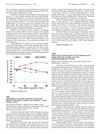 April 2010 in “The Journal of Urology”
 Human prostate cells produce more WISP1/CCN4 when there's not enough oxygen.
 March 2010 in “The Journal of Urology”
 This study found that men with early-onset androgenetic alopecia had larger prostate volumes and lower urinary flow rates compared to those without the condition, suggesting a potential link between AGA and urinary symptoms.
 24 citations
,
January 2013 in “Indian Dermatology Online Journal”
24 citations
,
January 2013 in “Indian Dermatology Online Journal” This study found that males with androgenetic alopecia had a higher risk of coronary artery disease, with significant differences in several lipid and blood pressure markers compared to controls.
In this observational study, men with early onset androgenic alopecia exhibited a statistically significant correlation with more severe forms of coronary artery disease compared to those without the condition.
 20 citations
,
January 2014 in “International Journal of Trichology”
20 citations
,
January 2014 in “International Journal of Trichology” This study found that early onset androgenetic alopecia in young Asian Indian Gujarati men is independently associated with an increased risk of coronary artery disease.
 6 citations
,
January 2010 in “Neoplasma”
6 citations
,
January 2010 in “Neoplasma” In this study, researchers found that shorter CA repeats in the ERbeta gene are correlated with PSA expression, and PSA immunoexpression is associated with increased disease-free survival in breast cancer.
 2 citations
,
November 2017 in “Cardiovascular endocrinology”
2 citations
,
November 2017 in “Cardiovascular endocrinology” This study found that androgenic alopecia is the strongest predictor of coronary artery disease in young men from Western India, followed by premature graying and obesity.
 January 2024 in “Wiadomości Lekarskie”
 This study reports that Abelson Interactor 1 (ABI1) regulates androgen receptor transcription in prostate cancer, identifying it as a potential target for new therapies addressing treatment resistance.
 February 2012 in “Expert Review of Endocrinology & Metabolism”
 This abstract reviews the unclear link between androgenic alopecia and prostate cancer, highlighting the need for further research to determine the mechanisms connecting these two conditions.
 April 2010 in “The Journal of Urology”
 This study found that ureteroileal anastomosis with direct intraluminal visualization had a 4.2% stricture rate, which compares favorably to other techniques with rates between 3.5% and 11.1%.
 75 citations
,
January 2014 in “Korean Journal of Urology”
75 citations
,
January 2014 in “Korean Journal of Urology” This review discusses the adverse effects of 5α-reductase inhibitors, finasteride and dutasteride, on sexual, psychological, and vascular health, emphasizing the need for physicians to inform patients of these risks.
 35 citations
,
January 2012 in “The Journal of Sexual Medicine”
35 citations
,
January 2012 in “The Journal of Sexual Medicine” This review examines various androgen deprivation therapy methods for advanced prostate cancer, highlighting benefits and potential cardiovascular and sexual adverse effects, but reports no new clinical results.
 20 citations
,
February 2004 in “Clinical and Experimental Ophthalmology”
20 citations
,
February 2004 in “Clinical and Experimental Ophthalmology” This paper presents two cases of rare intraorbital ophthalmic artery aneurysms associated with arteriovenous malformations and discusses their clinical presentation, pathogenesis, and management, but reports no new clinical outcomes.
 1 citations
,
January 2012 in “International Journal of Trichology”
1 citations
,
January 2012 in “International Journal of Trichology” Early hair loss in men and women may indicate a higher risk of heart disease and metabolic problems.
 December 2019 in “Reactions Weekly”
 Man stopped medications due to sexual side effects, found relief with prostatic artery embolisation.
2 citations
,
November 2017 in “International Journal of Research in Dermatology” In this study, the researchers found that the prevalence of metabolic syndrome was not higher in men with premature androgenetic alopecia compared to the general population.
 24 citations
,
January 2015 in “International Journal of Trichology”
24 citations
,
January 2015 in “International Journal of Trichology” This research observed that among young men with androgenic alopecia, there was a significant association with metabolic syndrome compared to healthy controls, suggesting AGA as a potential early marker for metabolic risk.
 1 citations
,
June 2025 in “Scientific Reports”
1 citations
,
June 2025 in “Scientific Reports” In this study on testosterone-induced benign prostatic hyperplasia in rats, hydroxychloroquine significantly reduced prostate-related markers and enhanced therapeutic effects when combined with finasteride, suggesting potential as a new treatment approach.
 255 citations
,
October 1985 in “The Journal of Clinical Endocrinology & Metabolism”
255 citations
,
October 1985 in “The Journal of Clinical Endocrinology & Metabolism” This study concluded that albumin-bound testosterone is biologically important and significantly contributes to testosterone bioavailability in women receiving spironolactone.