 1 citations
,
October 2021 in “Indian Journal of Plastic Surgery/Indian journal of plastic surgery”
1 citations
,
October 2021 in “Indian Journal of Plastic Surgery/Indian journal of plastic surgery” This study highlights that improving medical professionals' knowledge of hair cosmetics can enhance patient adherence to alopecia treatments and reduce health risks from incorrect use of hair products.
 1 citations
,
June 2021 in “Curēus”
1 citations
,
June 2021 in “Curēus” This study discusses incidental findings of syringomas and syringomatous proliferations in areas of scalp alopecia, suggesting they may be secondary to reactive changes from subclinical alopecia.
 1 citations
,
January 2021 in “Dermatology online journal”
1 citations
,
January 2021 in “Dermatology online journal” This report describes a unique case of linear lichen planus pigmentosus on the face with histological features of lichen planopilaris, which has not been documented before.
 1 citations
,
January 2019 in “Przegla̧d dermatologiczny”
1 citations
,
January 2019 in “Przegla̧d dermatologiczny” This article reviews the concept of cardiodermatology and its application in clinical practice but does not present new empirical findings.
 1 citations
,
April 2016 in “Journal of The American Academy of Dermatology”
1 citations
,
April 2016 in “Journal of The American Academy of Dermatology” A woman had a delayed allergic reaction to the blood thinner enoxaparin, treated with a steroid cream.
 1 citations
,
September 2015 in “Clinics in Dermatology”
1 citations
,
September 2015 in “Clinics in Dermatology” This article offers a question-by-question guide to assist clinicians in diagnosing hair shaft disorders, presenting no new clinical results.
 1 citations
,
November 2014
1 citations
,
November 2014 This chapter reviews patchy hair loss due to skin disease, nail disorders related to chronic trauma, and treatments for small carcinomas, but it reports no new clinical findings.

The document concludes that dermatology training and grading scales need to better represent dark-skinned individuals to improve diagnosis and assessment of skin conditions.
 1 citations
,
January 2013 in “Elsevier eBooks”
1 citations
,
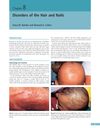
January 2013 in “Elsevier eBooks” The document reviews various hair and nail disorders, their causes, and treatments, emphasizing the need for proper diagnosis and the link between nail changes and systemic diseases.
 1 citations
,
January 2012 in “Elsevier eBooks”
1 citations
,
January 2012 in “Elsevier eBooks” The document concludes that the skin is a complex organ providing protection, sensation, and healing, with challenges in treating conditions like itchiness.
 1 citations
,
January 2005 in “Side effects of drugs annual”
1 citations
,
January 2005 in “Side effects of drugs annual” This chapter reviews various dermatological drugs and treatments, highlighting adverse effects, with no new clinical findings reported.
 1 citations
,
February 2004 in “Journal of The European Academy of Dermatology and Venereology”
1 citations
,
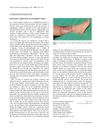
February 2004 in “Journal of The European Academy of Dermatology and Venereology” This paper reports a case of alopecia triangularis congenita in a 22-year-old woman, combined with androgenetic alopecia, and highlights successful treatment with internal and topical antiandrogens.
 1 citations
,
May 2002 in “British Journal of Dermatology”
1 citations
,
May 2002 in “British Journal of Dermatology” This article provides an overview of hair density, hair diameter, and the prevalence of female pattern hair loss but reports no new clinical findings.
 1 citations
,
February 1999 in “Journal of Paediatrics and Child Health”
1 citations
,
February 1999 in “Journal of Paediatrics and Child Health” This book review, published in the Journal of Paediatrics and Child Health, provides no new research findings.
 1 citations
,
January 1999 in “Journal of the European Academy of Dermatology and Venereology”
1 citations
,
January 1999 in “Journal of the European Academy of Dermatology and Venereology” Dermatology residents need thorough training in dermatosurgery for better patient outcomes.
 1 citations
,
May 1965 in “Medical Clinics of North America”
1 citations
,
May 1965 in “Medical Clinics of North America” Hair growth dysfunction involves various conditions with limited treatment options.
 1 citations
,
March 1954 in “Archives of dermatology”
1 citations
,
March 1954 in “Archives of dermatology” This article reviews small animal experiments reported from 1932 to 1952 in two dermatology journals and notes the contributions of Farris's book on laboratory animal care.
 1 citations
,
February 1954 in “Journal of the American Geriatrics Society”
1 citations
,
February 1954 in “Journal of the American Geriatrics Society” Steroid hormones can help treat aging issues and improve health in elderly people.
 June 2026 in “Discover Immunity.”
 This review discusses current advancements in mesenchymal stem cell-based therapies for skin repair and rejuvenation, focusing on therapeutic strategies, particularly highlighting the potential of neonatal and placenta-derived MSCs, and reports no new clinical results.
 June 2026 in “Frontiers in Cell and Developmental Biology”
 This review outlines recent advancements in understanding how micro-RNAs (miRNAs) influence hair regeneration, highlighting their role in stimulating hair growth and potential therapeutic approaches, while also addressing the challenges of clinical translation due to miRNAs' complex roles and delivery issues.
 June 2026 in “Frontiers in Immunology”
 In this case report, a 57-year-old man with severe atopic dermatitis, vitiligo, and alopecia areata showed rapid and significant improvement after treatment with the JAK1 inhibitor upadacitinib, suggesting its potential as an effective monotherapy for these co-existing conditions when conventional therapies fail.
 June 2026 in “Akdeniz Medical Journal”
 This study found significant seasonal variations in public interest for several skin conditions, including tinea pedis, pruritus, and psoriasis, among others, based on Google search trends in Türkiye from January 2022 to January 2025.
 June 2026 in “Dermatology and Therapy”
 This review provides an analysis of topical treatments with clinically proven efficacy for managing hyperpigmentation and concludes that the most effective approach is using combined therapies that target multiple aspects of skin pigmentation physiology.
 April 2026 in “Health Sciences Quarterly”
 In this single-center study, researchers conducted comprehensive dermatological exams of 112 hospitalized adult patients, revealing that several skin issues, like seborrheic dermatitis and xerosis cutis, were common but often unnoticed in routine hospital care, highlighting the need for better dermatology collaboration.
 April 2026 in “International Journal of Drug Delivery Technology”
 This study found trichoscopy to be a reliable non-invasive method for diagnosing various forms of alopecia, aiding in clinical management and reducing the need for biopsies in a hospital-based setting with 90 patients, including those with uncertain diagnoses.
 April 2026 in “Ankara Üniversitesi Veteriner Fakültesi Dergisi”
 This study found that Mueller-Hinton Agar performed better than Dermasel Agar for antifungal susceptibility testing of feline dermatophytes, providing reliable susceptibility data for effective antifungal therapy.
 April 2026 in “Clinical Cosmetic and Investigational Dermatology”
 In this retrospective study, the researchers found that infectious dermatologic conditions were most common among renal transplant recipients, with viral warts being the prevalent infectious condition, while increasing age and sex were associated with varying odds of developing different dermatologic issues.
 March 2026 in “Dermatology Reports”
 This study found that frontal fibrosing alopecia had higher long-term remission rates compared to lichen planopilaris, highlighting differences in their clinical presentations and outcomes.
 March 2026 in “Buletin Veteriner Udayana”
 This case report described a Persian cat with psychogenic alopecia and secondary dermatitis linked to environmental stress, which improved with antihistamine therapy, diet changes, and owner interaction, but relapsed in a high cat population setting.
 March 2026 in “Journal of Sustainable Veterinary and Allied Sciences”
 In this case report, a 5-year-old female German shepherd diagnosed with canine babesiosis and ehrlichiosis fully recovered after receiving parenteral treatment for these infections and topical therapy for dermatitis at the University of Ilorin's Veterinary Teaching Hospital.