 August 2023 in “Journal of controlled release”
 This research found that STAR particles, ceramic particles with microneedles, significantly enhance skin permeability and improve the topical delivery of drugs like minoxidil and acyclovir, effectively promoting or inhibiting hair growth without causing skin irritation in ex vivo pig skin and rat models.
 January 2025 in “PLoS ONE”
 This study found that aligned electrospinning membranes enhance skin wound healing by upregulating MMP12 expression and inhibiting fibroblast migration, which results in reduced scar formation, providing valuable insights for developing more effective biological dressings.
10 citations
,
August 2024 in “ACS Omega” This review discusses the use of nanomaterials in cosmetics, highlighting their benefits like enhanced stability and skin penetration, while also noting potential health risks and the role of natural ingredients in formulations.
8 citations
,
August 2022 in “Pharmaceutics” This study found that erythrocyte-anchored CPA-encapsulated nanoparticles improved the delivery and accumulation of Cepharanthine in the lungs, enhancing its effectiveness in treating acute lung injury by reducing inflammatory responses.
November 2025 in “International Journal of Molecular Sciences” This review covers the diverse clinical applications of platelet-rich plasma in regenerative medicine but provides no new clinical results.
January 2014 in “SciDok (Saarland University and State Library)” This study demonstrated that in vitro pig ear models effectively predict human follicular uptake of nanoparticles for potential transfollicular vaccination, but massage did not enhance nanoparticle penetration.
 263 citations
,
February 2011 in “Journal of Controlled Release”
263 citations
,
February 2011 in “Journal of Controlled Release” This study found that medium-sized particles (643 and 646 nm) penetrated deeper into porcine hair follicles in vitro than smaller or larger particles, suggesting size-selective targeting within follicular sites.
112 citations
,
February 2001 in “Journal of Investigative Dermatology” This study found that substance P and calcitonin-gene-related peptide have different roles in regulating hair growth in mice, with substance P promoting anagen progression and calcitonin-gene-related peptide inhibiting it.
 1 citations
,
November 2024 in “Cutis”
1 citations
,
November 2024 in “Cutis” PLLA injections can cause hair loss and skin issues.
This case study reports that a 35-year-old woman developed nonscarring alopecia following the cosmetic use of poly-L-lactic acid on her face and hairline.
 January 2025 in “Scripta Medica”
 In this study, PDO, PLLA, and PCL thread implants in ageing rat skin did not alter MMP1 gene expression but maintained collagen levels similar to young skin without UV-B exposure, suggesting possible benefits for skin collagen but not gene expression modification.
34 citations
,
September 2020 in “Clinical, cosmetic and investigational dermatology” This research found that hyaluronic acid increased cell proliferation and type I collagen more effectively than poly-L-lactic acid in both human fibroblast cultures and rat dermis.
In this study, PDLLA treatment in middle-aged mice was observed to enhance hair growth by increasing macrophage M2 polarization and hair follicle stem cell proliferation, potentially rejuvenating the skin's microenvironment and offering a novel approach for age-related hair loss.
 February 2026 in “International Journal of Molecular Sciences”
 This study found that PDLLA filler treatment may help combat age-related hair thinning by reducing oxidative stress and enhancing hair follicle function in both cell and animal models.
 February 2026 in “Plastic and Aesthetic Research”
 This narrative review examines advancements in regenerative aesthetic medicine, focusing on injectable modalities like PRP, polynucleotides, and exosomes, but highlights the need for more robust evidence and standardization in clinical applications.
 50 citations
,
December 2020 in “Bioactive Materials”
50 citations
,
December 2020 in “Bioactive Materials” This study suggests that a sandwich-structured wound dressing with bioceramic and polylactic acid layers may improve burn wound healing by absorbing exudates and promoting hair follicle regeneration.
November 2025 in “Scientia Pharmaceutica” This review highlights that injectable biostimulatory agents like poly-L-lactic acid, polycaprolactone, and calcium hydroxyapatite are effective in regenerative aesthetics by enhancing collagen production, stimulating adipogenesis, and improving dermal quality, although further research is needed to standardize protocols and confirm long-term safety and efficacy.
 200 citations
,
October 2009 in “European journal of endocrinology”
200 citations
,
October 2009 in “European journal of endocrinology” This review discusses the multifaceted actions of metformin in polycystic ovary syndrome and reports no new clinical results; the authors emphasize metformin's potential benefits in both cardiometabolic and reproductive aspects of PCOS.
 October 2025 in “Advanced Healthcare Materials”
 In a study on wound healing, researchers described injectable POEGMA‐DA hydrogels as a promising non-toxic alternative to traditional wound closure methods, showing effective tissue adhesion and enhanced regeneration of skin structures in a mouse model without significant inflammation.
67 citations
,
February 2022 in “International Journal of Molecular Sciences” This study developed a nanofiber wound dressing combining ciprofloxacin and tetracycline hydrochloride, which demonstrated strong antibacterial activity against E. coli and S. aureus and showed good biocompatibility with human skin fibroblast cells, indicating significant potential for wound healing applications.
 16 citations
,
January 2023 in “Acta Biomaterialia”
16 citations
,
January 2023 in “Acta Biomaterialia” This study reported that a new bioinspired injectable hydrogel, CQCS@gel, showed promise as a multifunctional wound dressing by achieving rapid hemostasis and promoting the healing of infected skin wounds in both in vitro and in vivo tests.
 20 citations
,
March 2023 in “Drug Delivery and Translational Research”
20 citations
,
March 2023 in “Drug Delivery and Translational Research” This study found that a lacticin 3147 solid lipid nanoparticle gel demonstrated potent and sustained antimicrobial activity against S. aureus, including MRSA, in ex vivo S. aureus-infected pig skin.
 22 citations
,
September 2019 in “ACS omega”
22 citations
,
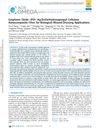
September 2019 in “ACS omega” This study found that AGO@HPC nanocomposite films demonstrated enhanced mechanical, anti-ultraviolet, and antibacterial properties, suggesting potential for use in antibacterial packaging and wound-dressing applications.
 29 citations
,
August 2008 in “Current Opinion in Pediatrics”
29 citations
,
August 2008 in “Current Opinion in Pediatrics” This review discusses the most common types of alopecia in adolescents and emphasizes the importance of psychosocial support, but reports no new clinical findings.
2 citations
,
October 2023 in “Biology” This review highlights cobalt's essential role in vitamin B12 metabolism and its biomedical applications but also warns of health risks from high levels and environmental contamination, discussing remediation methods like phytoremediation.
2 citations
,
October 2023 in “Animals” Lacto-fermentation changes amino acid profiles in bovine colostrum, but results are inconsistent.
 15 citations
,
November 2019 in “Cutaneous and Ocular Toxicology”
15 citations
,
November 2019 in “Cutaneous and Ocular Toxicology” This study investigated a liposomal hydrogel system for delivering minoxidil and tretinoin to treat androgenic alopecia, finding that the system enhanced skin permeation of minoxidil while retaining tretinoin on the skin and was non-irritating in animal tests, suggesting its potential effectiveness.
 9 citations
,
June 2021 in “International Journal of Pharmaceutics”
9 citations
,
June 2021 in “International Journal of Pharmaceutics” This study found that polymeric micelle nanocarriers delivered pharmacologically relevant amounts of spironolactone to the epidermis and upper dermis, with higher delivery to pilosebaceous units, suggesting potential for treating glucocorticoid-induced impaired wound healing and pilosebaceous androgen-related skin diseases.
 74 citations
,
July 1979 in “Lancet”
74 citations
,
July 1979 in “Lancet” This case report describes a 10-month-old boy with dermatitis, alopecia, and hypotonia who showed dramatic improvement with oral biotin, suggesting a possible defect in biotin absorption or transport.
 5 citations
,
January 2017 in “Elsevier eBooks”
5 citations
,
January 2017 in “Elsevier eBooks” This review focuses on the roles of amino acids, peptides, and proteins in cosmetics, highlighting their importance in skin health and their potential for development in personal care products due to their unique properties and biocompatibility.