 January 2020 in “Elsevier eBooks”
 This chapter provides an overview of phytochemicals with properties to combat alopecia and discusses the potential of flavonoids, found in several herbs, as a safer alternative to synthetic hair loss treatments due to their long-term skin compatibility.
 July 2019 in “International journal of Unani and integrative medicine”
 This paper reviews classical Unani texts and scientific research on Cuscuta reflexa, covering its traditional uses and pharmacological properties, but presents no new clinical results.
April 2025 in “Journal of Pharmacy and Pharmacology” This study reviewed how certain phytochemicals can stimulate hair follicles, promote keratinocyte proliferation, and engage specific signaling pathways like Wnt/β-catenin and AKT, suggesting these natural compounds may offer safer alternatives for promoting hair growth. However, challenges in bioavailability and formulation standardization remain to be addressed.
 November 2024 in “GSC Biological and Pharmaceutical Sciences”
 This review article discusses various natural ingredients like herbs and essential oils used in hair care products, highlighting their potential benefits such as promoting hair growth, reducing dandruff, and improving scalp health, and explores their application for different types of hair loss.
April 2020 in “The FASEB journal” In in-vitro experiments, this study found that poncirin showed higher inhibitory activity against JAK3 than tofacitinib, suggesting potential for alopecia areata treatment.
27 citations
,
January 1995 This study found that higher melanin concentration in black hair offers photoprotection against sunlight-induced protein damage in the cortex, whereas the cuticle experiences similar photodamage regardless of hair pigmentation.
10 citations
,
March 2005 in “International Journal of Cosmetic Science” This study found that photochemical and cosmetic chemical oxidation of hair causes surface damage by delipidation and acid formation, which can be characterized and quantified using microfluorometry and X-ray photoelectron spectroscopy.
 50 citations
,
February 2018 in “Biomedicine & pharmacotherapy”
50 citations
,
February 2018 in “Biomedicine & pharmacotherapy” This review discusses the anticancer properties of ginseng, including its potential to alleviate chemotherapy side effects, and calls for more research on its mechanisms of action in various cancers.
 3 citations
,
June 2022 in “GSC Biological and Pharmaceutical Sciences”
3 citations
,
June 2022 in “GSC Biological and Pharmaceutical Sciences” This study reported that methanolic extracts of Capparis decidua fruits showed significant in vitro thrombolytic activity, suggesting their potential as a dietary health supplement for preventing thrombotic cardiovascular diseases.
 2 citations
,
April 2018 in “Natural Product Communications”
2 citations
,
April 2018 in “Natural Product Communications” This review summarizes the bioactive compounds and pharmacological functions of Cynomorium songaricum Rupr., emphasizing its potential in developing health-related products, and notes that further research is needed.
 July 2026 in “Discover Food”
 This review critically examines scientific evidence on the health benefits of rosemary bioactives, finding potential in managing age-related diseases and skin aging conditions, and discusses their application in functional foods and aromatherapy, along with associated safety concerns.
June 2026 in “Health Nanotechnology” This narrative review suggests that nanoformulated phytochemicals hold promise for managing polycystic ovarian syndrome, but their efficacy and safety compared to standard treatments require further validation through clinical studies.
 April 2026 in “Cosmetics”
 In this review, several studies on Astragalus species, particularly Astragalus membranaceus, highlight their skin rejuvenating, photoprotective, antimicrobial, and wound-healing properties, though the authors note limitations due to reliance on non-human studies and short trial durations.

This chapter reviews the challenges and future prospects of using nanotechnology and phytochemistry in developing safe, effective, and precision-based therapies for Polycystic Ovary Syndrome, without reporting new clinical findings.

This study reports that Hair RiseTM microemulsion, made from plant extracts, significantly enhanced hair follicle cell growth and improved hair growth signaling pathways, suggesting it as a plant-based alternative for androgenetic alopecia treatment.
June 2022 in “Zenodo (CERN European Organization for Nuclear Research)” This study found that methanolic extracts from Capparis decidua fruits showed significant in vitro clot lysis activity, indicating potential as a safer anti-thrombotic alternative, but more research is needed to confirm its effectiveness in vivo.
 May 2025 in “IDOSR JOURNAL OF BIOLOGY CHEMISTRY AND PHARMACY”
 This review explores current research on how dietary phytochemicals may help manage male androgen disorders by affecting hormone levels and endocrine function, highlighting their potential therapeutic roles and mechanisms in hormonal health, but does not report specific results.
 85 citations
,
March 2012 in “Revista Brasileira de Farmacognosia”
85 citations
,
March 2012 in “Revista Brasileira de Farmacognosia” This review discusses the pharmacological benefits and chemical compounds of the Sophora genus, noting its traditional use and wide pharmacological actions, but reports no new clinical results.
43 citations
,
September 2021 in “Nutrients” This review discusses the vast potential uses of persimmon beyond its dietary benefits, including applications in sustainability and new product development, but reports no new clinical outcomes.
 43 citations
,
February 2020 in “Clinica chimica acta”
43 citations
,
February 2020 in “Clinica chimica acta” This review discusses the role of phytochemical nanoparticles in cervical cancer therapy and reports no new clinical results; the authors highlight their potential advantages over conventional chemotherapy.
 11 citations
,
July 2020 in “International Journal of Ayurvedic Medicine”
11 citations
,
July 2020 in “International Journal of Ayurvedic Medicine” This study identified 26 bioactive compounds in the ethanol extract of Indigofera tinctoria leaves, which are linked to various therapeutic activities, supporting its traditional medicinal use in treating numerous health conditions.
 5 citations
,
March 2024 in “Acta Scientiarum Polonorum Technologia Alimentaria”
5 citations
,
March 2024 in “Acta Scientiarum Polonorum Technologia Alimentaria” This study synthesized existing research on 11 tropical seed varieties, underscoring their potential in food, pharmaceutical, and agricultural industries due to their phytochemicals and nutrients, such as phenolics and vitamins, which could reduce waste and support sustainable practices.
3 citations
,
November 2024 in “Current Research in Microbial Sciences” This study found that extracts from the medicinal plants *Echinops echinatus* and *Tridax procumbens* displayed antimicrobial activity against several bacteria, including *Escherichia coli* and *Staphylococcus aureus*, and identified various compounds like flavonoids and terpenoids potentially responsible for these effects.
 2 citations
,
January 2024 in “Journal of Pharmacognosy and Phytochemistry”
2 citations
,
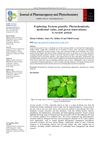
January 2024 in “Journal of Pharmacognosy and Phytochemistry” The study highlights Teak's (Tectona grandis) diverse applications beyond high-quality timber, emphasizing its bioactive compounds' pharmacological potential in cancer treatment and other uses across traditional medicine, cosmetics, and biodiesel production.
 2 citations
,
January 2023 in “International Journal of Dermatology Research”
2 citations
,
January 2023 in “International Journal of Dermatology Research” This study reported that C. procera leaf extracts showed antifungal activity against several dermatophytes, with ethanol extracts demonstrating slightly greater efficacy than aqueous extracts.
 2 citations
,
January 2018 in “International Journal of ChemTech Research”
2 citations
,
January 2018 in “International Journal of ChemTech Research” This study used phytochemical screening and FTIR spectroscopy with PCA to reveal slight chemical differences between two varieties of Eclipta alba, providing a method for their effective discrimination.
 1 citations
,
January 2020 in “Indo global journal of pharmaceutical sciences”
1 citations
,
January 2020 in “Indo global journal of pharmaceutical sciences” This article reviews the traditional uses of Citrullus colocynthis for various conditions like cancer and jaundice but reports no new clinical results, underscoring its role in folk medicine.
January 2026 in “International Journal of Molecular Sciences” This review discusses the diverse industrial applications of hemp beyond traditional fiber uses, highlighting its phytochemical components with antioxidant and antimicrobial properties that are explored in agrochemicals, cosmetics, and food sectors.
 September 2025 in “Journal of Phytonanotechnology and Pharmaceutical Sciences”
 This comprehensive review reports on the therapeutic potential and bioactive components of licorice (Glycyrrhiza glabra Linn), highlighting its diverse pharmacological properties and health benefits but also noting associated toxicity and adverse effects in medicinal and food applications.

This study found that supercritical fluid extraction of germinated perilla seed significantly promoted hair follicle cell proliferation and gene expression related to hair growth, suggesting its potential as a natural treatment for hair loss.