 November 2023 in “Deleted Journal”
 This review of Cedrus libani highlights its potential as a source of natural antioxidants and antimicrobials and notes that it may offer analgesic and anti-inflammatory benefits; however, further toxicological and clinical studies are necessary to confirm its safety and efficacy for treating human diseases.
 9 citations
,
July 2021 in “Journal of Natural Medicines”
9 citations
,
July 2021 in “Journal of Natural Medicines” This review summarizes research finding over 150 new molecules with various biological activities from traditional herbal medicines studied in China, Mongolia, Uzbekistan, and Bangladesh.
 35 citations
,
May 2019 in “Frontiers in genetics”
35 citations
,
May 2019 in “Frontiers in genetics” This study reported that specific non-coding RNAs may regulate the hair follicle cycle in Angora rabbits by acting as competitive endogenous RNAs, enhancing understanding of ncRNA roles in hair growth.
 17 citations
,
April 2015 in “Tropical Journal of Pharmaceutical Research”
17 citations
,
April 2015 in “Tropical Journal of Pharmaceutical Research” This review highlights the traditional use and potential therapeutic activities of Asiasari Radix in drug discovery, but it reports no new clinical results.
 10 citations
,
June 2019 in “International Journal of Cosmetic Science”
10 citations
,
June 2019 in “International Journal of Cosmetic Science” This review discusses the potential benefits of phytochemicals for hair care and emphasizes the need for more robust preclinical and clinical studies, without reporting new clinical results.
 2 citations
,
July 2025 in “Discover Chemistry.”
2 citations
,
July 2025 in “Discover Chemistry.” This study explored the optimization of phytochemicals from Alstonia boonei to develop potential 5-alpha reductase inhibitors for Benign Prostatic Hyperplasia, finding promising analogs with enhanced binding affinity and stability compared to Finasteride, warranting further experimental validation.
 2 citations
,
January 2022 in “Journal of Oleo Science”
2 citations
,
January 2022 in “Journal of Oleo Science” This study found that oil from CG17 garden cress seeds had higher amounts of β-carotenoids, tocopherols, and vitamins compared to other genotypes, with varying physiochemical properties across all seeds.
 1 citations
,
July 2017 in “International Journal of Advanced Research”
1 citations
,
July 2017 in “International Journal of Advanced Research” This study evaluated the phytochemical properties and in-vitro anti-fungal activity of Tridax procumbens but reports no new clinical results.
 December 2025 in “International Journal of Newgen Research in Pharmacy & Healthcare”
 This review compares regulations for herbal hair products' labeling and claim validation across various regions, identifying existing discrepancies and discussing the need for global standardization to improve consumer protection and trade facilitation.

This study discusses the potential of phytochemicals, such as isoflavones and polyphenols, to manage PCOS symptoms by improving insulin resistance, regulating hormones, and reducing cyst size, highlighting their promise as alternative treatments given the limitations of current pharmacological options.

This chapter explores the potential of phytochemicals in modulating human endocrine function, emphasizing the growing interest in plant-derived alternatives to synthetic medications for managing metabolic and hormonal disorders often linked to chemical exposures and lifestyle factors.
 February 2024 in “International journal of biology, pharmacy and allied sciences”
 This review discusses the potential of plant-based preparations for treating hair loss and reports no new clinical results; the authors highlight herbs with evidence of efficacy against alopecia.
 January 2024 in “International Journal of Environment Agriculture and Biotechnology”
 In this study, organic garlic was found to have higher levels of bioactive elements and stronger antimicrobial properties compared to chemically grown garlic, highlighting the benefits of organic cultivation for enhancing garlic's nutritional and health-promoting qualities.
 January 2020 in “Elsevier eBooks”
 This chapter provides an overview of phytochemicals with properties to combat alopecia and discusses the potential of flavonoids, found in several herbs, as a safer alternative to synthetic hair loss treatments due to their long-term skin compatibility.
 4 citations
,
July 2025 in “Frontiers in Immunology”
4 citations
,
July 2025 in “Frontiers in Immunology” This study explored peripheral blood immune dysregulation in alopecia areata through single-cell analyses, identifying systemic changes linked to disease severity and key signaling roles for monocytes, NK cells, and memory T cells, suggesting potential therapeutic targets.
 February 2026 in “International Journal of Recent Surgical and Medical Sciences”
 This review highlights that both human-derived and plant-derived exosomes show anti-inflammatory and antioxidant properties, with human exosomes being better for targeted medicinal treatments due to their ability to transport healing drugs, while plant exosomes are more scalable and cost-effective for cosmetic applications.
 October 2025 in “INSOLOGI Jurnal Sains dan Teknologi”
 In this laboratory study on rabbits, the researchers observed that both FET and FHE fractions improved hair length and weight, but minoxidil still led to better results, highlighting the comparative effects of different treatments on hair growth over 28 days.
 3 citations
,
June 2022 in “GSC Biological and Pharmaceutical Sciences”
3 citations
,
June 2022 in “GSC Biological and Pharmaceutical Sciences” This study reported that methanolic extracts of Capparis decidua fruits showed significant in vitro thrombolytic activity, suggesting their potential as a dietary health supplement for preventing thrombotic cardiovascular diseases.
 July 2026 in “Discover Food”
 This review critically examines scientific evidence on the health benefits of rosemary bioactives, finding potential in managing age-related diseases and skin aging conditions, and discusses their application in functional foods and aromatherapy, along with associated safety concerns.
 February 2024 in “Oriental Journal of Chemistry/Oriental journal of chemistry”
 This review reports various ethnomedicinal uses, phytochemical components, and potential pharmacological effects of Eclipta alba, highlighting benefits like wound healing and neuroprotection, though it underscores the need for further mechanism-based studies and clinical trials.
 4 citations
,
September 2024 in “Jurnal Pengolahan Hasil Perikanan Indonesia”
4 citations
,
September 2024 in “Jurnal Pengolahan Hasil Perikanan Indonesia” In this study, researchers reported that compounds from Bruguiera gymnorhiza leaves showed anti-inflammatory potential in in silico analyses, with favorable drug properties and specific binding to the IKKβ receptor, suggesting possible development into anti-inflammatory drugs.
 2 citations
,
April 2018 in “Natural Product Communications”
2 citations
,
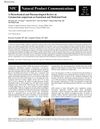
April 2018 in “Natural Product Communications” This review summarizes the bioactive compounds and pharmacological functions of Cynomorium songaricum Rupr., emphasizing its potential in developing health-related products, and notes that further research is needed.

This chapter reviews the challenges and future prospects of using nanotechnology and phytochemistry in developing safe, effective, and precision-based therapies for Polycystic Ovary Syndrome, without reporting new clinical findings.
 March 2024 in “World Journal Of Advanced Research and Reviews”
 This study highlights the potential benefits of herbal hair oil in improving hair health, controlling frizz, and preventing hair loss, with common ingredients like coconut, sesame, and mustard oils being frequently used.
 December 2023 in “Migration letters”
 This meta-analysis reviewed 25 studies and suggested that herbal interventions could improve reproductive health in women with PCOS, showing benefits across measures such as Body Mass Index, hirsutism, and insulin levels, although results were mixed for fasting glucose and FSH levels.
 50 citations
,
February 2018 in “Biomedicine & pharmacotherapy”
50 citations
,
February 2018 in “Biomedicine & pharmacotherapy” This review discusses the anticancer properties of ginseng, including its potential to alleviate chemotherapy side effects, and calls for more research on its mechanisms of action in various cancers.
 September 2023 in “Scientific reports”
 This study observed that testosterone concentrations in hair segments show some stability over time, but are influenced by factors like sebum integration, hair washing frequency, and individual hair growth rates.
 July 2022 in “Research Square (Research Square)”
 This study found that hair testosterone concentrations show some consistency over time, but factors like hair washing and individual growth rates influence these levels, suggesting the need for careful sampling and analysis adjustments.
 March 2026 in “The Indian Journal of Animal Sciences”
 This study on Indian dromedary camel breeds investigated the KRTAP7 protein, finding all four breeds shared an identical gene sequence, with 13 phosphorylation and glycosylation sites influencing hair characteristics, alongside predicted interactions with other biosynthesis-related proteins.
 5 citations
,
March 2024 in “Acta Scientiarum Polonorum Technologia Alimentaria”
5 citations
,
March 2024 in “Acta Scientiarum Polonorum Technologia Alimentaria” This study synthesized existing research on 11 tropical seed varieties, underscoring their potential in food, pharmaceutical, and agricultural industries due to their phytochemicals and nutrients, such as phenolics and vitamins, which could reduce waste and support sustainable practices.