 15 citations
,
May 2023 in “npj Regenerative Medicine”
15 citations
,
May 2023 in “npj Regenerative Medicine” This study found that mammary resident macrophages play a key role in mammary tissue development by influencing cell division and maintaining mammary stem cell activity through the TNF-α-Cdk1/Cyclin B1 signaling pathway, highlighting their importance in the mammary stem cell niche.
 15 citations
,
August 2022 in “Journal of endocrinological investigation”
15 citations
,
August 2022 in “Journal of endocrinological investigation” This review discusses how vitamin D and calcium signaling are essential for wound healing by activating epidermal and hair follicle stem cells, noting that deficiencies may lead to delayed or chronic wounds.
 15 citations
,
January 2018 in “Biomedical Reports”
15 citations
,
January 2018 in “Biomedical Reports” This review discusses multiple pathways through which exosomes may regulate skin functions and diseases like melanoma, scleroderma, and pigmentation disorders, without providing new clinical results; future therapeutic strategies are suggested.
 15 citations
,
January 2016 in “Biological & Pharmaceutical Bulletin”
15 citations
,
January 2016 in “Biological & Pharmaceutical Bulletin” This study found that bee venom promoted hair growth in mice and inhibited a key enzyme involved in testosterone conversion, suggesting its potential as a 5α-reductase inhibitor and hair growth promoter.
 15 citations
,
January 2015 in “Skin Pharmacology and Physiology”
15 citations
,
January 2015 in “Skin Pharmacology and Physiology” This study indicates that targeting the PTH/PTHrP receptor may potentially stimulate hair growth, particularly for chemotherapy-induced alopecia, as observed in hairless and cyclophosphamide-treated mice.
 14 citations
,
June 2021 in “Expert Opinion on Therapeutic Patents”
14 citations
,
June 2021 in “Expert Opinion on Therapeutic Patents” This review discusses various Wnt pathway modulators developed between 2014 and 2020, highlighting their potential as treatments for diseases like cancer and osteoarthritis, but reports no new clinical results.
 14 citations
,
January 2006 in “Skin pharmacology and physiology”
14 citations
,
January 2006 in “Skin pharmacology and physiology” This study found that procyanidin oligomers from apples and barley may stimulate hair growth by promoting hair epithelial cell proliferation and protecting them from apoptosis via MEK activation in a murine model.
 13 citations
,
December 2024 in “Cellular and Molecular Life Sciences”
13 citations
,
December 2024 in “Cellular and Molecular Life Sciences” This study reviews recent advancements in understanding caspases, highlighting their roles beyond apoptosis in cancer, inflammation, and neurological disorders, and discusses the potential and challenges of targeting caspases for therapeutic purposes.
 13 citations
,
October 2024 in “Scientific Reports”
13 citations
,
October 2024 in “Scientific Reports” In this study using data from young women in West Bengal, India, the researchers identified that leptin signaling impairment, insulin resistance, and specific gene mutations significantly contribute to PCOS, with obesity commonly manifesting in affected individuals.
 13 citations
,
November 2009 in “Journal of Dermatological Science”
13 citations
,
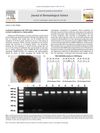
November 2009 in “Journal of Dermatological Science” This article discusses various dermatological studies cited by previous authors and reports no new clinical results.
 13 citations
,
August 1995 in “The Journal of Steroid Biochemistry and Molecular Biology”
13 citations
,
August 1995 in “The Journal of Steroid Biochemistry and Molecular Biology” This study found that the pH dependency of rat steroid 5α-reductase type II isozyme significantly affects its kinetic properties, including Vmax and Km, suggesting past discrepancies in literature may arise from these pH variances during assays.
 12 citations
,
February 2021 in “Translational Psychiatry”
12 citations
,
February 2021 in “Translational Psychiatry” This study identified two novel genetic variants associated with Alzheimer's disease in APOE ε4 non-carriers, revealing insights into the disease's underlying regulatory mechanisms.
 11 citations
,
July 2020 in “International Journal of Ayurvedic Medicine”
11 citations
,
July 2020 in “International Journal of Ayurvedic Medicine” This study identified 26 bioactive compounds in the ethanol extract of Indigofera tinctoria leaves, which are linked to various therapeutic activities, supporting its traditional medicinal use in treating numerous health conditions.
 11 citations
,
March 2020 in “American Journal of Medical Genetics Part A”
11 citations
,
March 2020 in “American Journal of Medical Genetics Part A” This study identified a novel homozygous EDNRA variant linked to Oro-Oto-Cardiac Syndrome and showed that EDNRA signaling is essential for normal craniofacial and cardiovascular development.
 11 citations
,
April 2017 in “Journal of The European Academy of Dermatology and Venereology”
11 citations
,
April 2017 in “Journal of The European Academy of Dermatology and Venereology” This study found that long non-coding RNAs are differentially expressed in androgenetic alopecia, suggesting potential roles in its development and novel targets for prevention and treatment.
 11 citations
,
January 2017 in “Biochemical and biophysical research communications”
11 citations
,
January 2017 in “Biochemical and biophysical research communications” This study observed that Cyp27b1−/− mice exhibited growth and skeletal abnormalities similar to those of Vdr−/− mice, despite differences like the development of alopecia in Vdr−/− mice, suggesting that 1α,25D3 may directly influence chondrocyte proliferation and differentiation.
 11 citations
,
July 2016 in “Endocrinology”
11 citations
,
July 2016 in “Endocrinology” This study found that higher Lnk expression in PCOS patients may contribute to insulin resistance by inhibiting insulin signaling pathways.
 11 citations
,
September 2012 in “The journal of investigative dermatology/Journal of investigative dermatology”
11 citations
,
September 2012 in “The journal of investigative dermatology/Journal of investigative dermatology” This study identified a missense mutation in the keratin 71 gene as the cause of autosomal dominant woolly hair/hypotrichosis in a Japanese family, marking the first human mutation in KRT71 linked to a hair disorder.
 11 citations
,
September 2011 in “Biochemical journal”
11 citations
,
September 2011 in “Biochemical journal” This study found that neurotrophin-4 regulates Cav3.2 T-current expression in D-hair neurons via TrkB receptor activation, highlighting its role in mechanosensitive function.
 10 citations
,
January 2016 in “PLOS ONE”
10 citations
,
January 2016 in “PLOS ONE” This study investigated protein expression changes during mouse hair follicle cycles and suggested their involvement in biological networks, potentially identifying targets for hair disease therapy.
 10 citations
,
January 2016 in “Global Dermatology”
10 citations
,
January 2016 in “Global Dermatology” This study observed that zinc deficiency in humans and mice was associated with diminished allergic contact dermatitis but increased severity and duration of irritant contact dermatitis.
 9 citations
,
September 2024 in “Scientific Reports”
9 citations
,
September 2024 in “Scientific Reports” This study found that cardamonin may inhibit OSCC cell migration, proliferation, and invasion by affecting the PI3K/AKT pathway, suggesting its potential as a treatment.
 9 citations
,
June 2020 in “BMC Molecular and Cell Biology”
9 citations
,
June 2020 in “BMC Molecular and Cell Biology” This study found that stress hormones, particularly CRF, can inhibit hair growth and induce hair loss by affecting human dermal papilla cells and hair follicles, suggesting a functional HPA axis in these cells.
 9 citations
,
January 2019 in “Postepy Dermatologii I Alergologii”
9 citations
,
January 2019 in “Postepy Dermatologii I Alergologii” The skin acts like an endocrine organ, making hormones that affect skin diseases and respond to stress.
 9 citations
,
May 2016 in “Veterinary dermatology”
9 citations
,
May 2016 in “Veterinary dermatology” This case report describes how a long-term combination of oral fatty acids and topical therapy appeared beneficial for managing autosomal recessive congenital ichthyosis in a goldendoodle with a PNPLA1 mutation.
 8 citations
,
December 2020 in “Scientific reports”
8 citations
,
December 2020 in “Scientific reports” This study examined the genetic basis for the curly hair trait in Mangalitza pigs, finding two specific genetic variants that contribute to this distinctive phenotype through autosomal dominant inheritance.
 8 citations
,
June 2019 in “Scientific Reports”
8 citations
,
June 2019 in “Scientific Reports” This study found that the retinoid receptor and PPAR pathway are involved in hair follicle miniaturization in androgenetic alopecia, alongside androgen receptors.
 8 citations
,
June 2019 in “Journal of Ginseng Research”
8 citations
,
June 2019 in “Journal of Ginseng Research” This study found that a gintonin-enriched fraction from ginseng promoted hair growth in mice by stimulating dermal papilla cell proliferation and increasing hair follicles and weight.
 8 citations
,
September 2017 in “Journal of Natural Medicines”
8 citations
,
September 2017 in “Journal of Natural Medicines” This study reported that the n-butanol fraction of Perilla frutescens extract, particularly rosmarinic acid, showed potential for hair regrowth and anti-androgenic activity in male mice, suggesting it as a possible treatment for androgenetic alopecia.
 8 citations
,
March 2014 in “American Journal of Pathology”
8 citations
,
March 2014 in “American Journal of Pathology” This study found that hairless mice with homozygous mutations developed significantly more aggressive basal cell carcinomas and a heightened inflammatory response to UVB exposure compared to their haired littermates.