 April 2023 in “International journal of dermatology and venereology”
 This study observed distinct dermoscopic features in pityriasis versicolor that could aid in its differentiation from similar skin disorders.
 April 2021 in “Sohag Medical Journal”
 This review outlines the proposed theories behind the development of alopecia areata, emphasizing the autoimmune process involving lost immune privilege in hair follicles, and stresses the need to pinpoint specific pathogenic mechanisms for potential treatments.
12 citations
,
May 2024 in “Indian Dermatology Online Journal” This study reviewed the role of probiotics in dermatological disorders and suggests they may help treat or prevent inflammatory skin conditions by modulating the microbiota, potentially reducing the need for steroids and antibiotics, though further research is needed to confirm efficacy and safety.
 12 citations
,
January 2014 in “The Pan African medical journal”
12 citations
,
January 2014 in “The Pan African medical journal” In this case report, a 5-year-old girl experienced extensive hypertrichosis after using topical minoxidil lotion unsupervised, which regressed after discontinuation, highlighting the need for medical oversight.
 9 citations
,
December 2020 in “British Journal of Dermatology”
9 citations
,
December 2020 in “British Journal of Dermatology” This research letter reports that low-dose oral minoxidil improved hair density and length in children with loose anagen hair syndrome.
 February 2026 in “Clinical Cosmetic and Investigational Dermatology”
 This case study reports significant hair regrowth in a 29-year-old female with filler-induced alopecia after treatment with concentrated growth factor injections, suggesting it as a promising alternative therapy to standard hyaluronidase injections.
 February 2025 in “Advanced Composites and Hybrid Materials”
 This study reported that in animal studies of androgenetic alopecia, a biodegradable microneedle patch releasing glutamic acid promoted hair regeneration more effectively than daily minoxidil, with higher hair follicle counts and less frequent dosing, showing the potential for clinical application.
 March 2023 in “Journal of Pakistan Society of Internal Medicine.”
 This case report highlights a young woman diagnosed with lupus enteritis, illustrating the importance of early diagnosis and treatment in this rare clinical manifestation of systemic lupus erythematosus.
 October 2025 in “Advanced Healthcare Materials”
 This study found that using a stevioside-based microneedle patch significantly increased minoxidil's solubility and skin absorption, promoting hair growth in animal models and achieving 67.5% area coverage by day 35, highlighting the potential of this novel delivery system for androgenetic alopecia treatment.
 291 citations
,
January 2014 in “The Scientific World Journal”
291 citations
,
January 2014 in “The Scientific World Journal” Lichen Planus is a less common condition affecting skin and mucous membranes, with various types and associated risk factors, challenging to diagnose, significantly impacts life quality, and may have a risk of cancerous changes in oral lesions.
 109 citations
,
May 2011 in “Dermatologic Therapy”
109 citations
,
May 2011 in “Dermatologic Therapy” This article reviews the characteristics, associations, and diagnostic criteria for alopecia areata and reports no new clinical findings; the authors note the disease's unpredictable course and variable prognosis.
 33 citations
,
September 2012 in “Australasian Journal of Dermatology”
33 citations
,
September 2012 in “Australasian Journal of Dermatology” This article reviews trichoscopic signs of chemotherapy-induced alopecia, including exclamation marks, but reports no new clinical results.
 6 citations
,
March 2019 in “JAAD case reports”
6 citations
,
March 2019 in “JAAD case reports” This review discusses treatment strategies for alopecia areata, emphasizing current immunomodulation approaches but reports no new clinical results.
 2 citations
,
March 2019 in “Journal of Dermatology”
2 citations
,
March 2019 in “Journal of Dermatology” This report describes a rare case of alopecia areata coexisting with primary scarring alopecia, diagnosed through detailed trichoscopic investigation, highlighting the importance of comprehensive examination for accurate diagnosis.
 1 citations
,
January 2014 in “Health Renaissance”
1 citations
,
January 2014 in “Health Renaissance” This report describes a rare case of pseudopelade of Brocq in a 20-year-old male, emphasizing its unique presentation with scalp hair loss and mild itching.
 1 citations
,
December 2013 in “Journal of Evolution of Medical and Dental Sciences”
1 citations
,
December 2013 in “Journal of Evolution of Medical and Dental Sciences” This historical review examines the diagnostic and etiological understanding of alopecia areata, emphasizing the evolution of theories and the impact of immunological data, while providing no new clinical results.
 March 2025 in “Dermatologic Surgery”
 This study found that fractional radiofrequency microneedling may be as effective and safe as intralesional corticosteroid injections for treating patchy alopecia areata, with potentially fewer side effects.
 March 2025 in “International Journal of AYUSH Case Reports”
 In this case report, a 25-year-old male with alopecia areata experienced significant hair regrowth and symptom relief following individualized homeopathic treatment with Bacillinum, though the researchers emphasized that more studies are needed to confirm these results and their general applicability.
 August 2024 in “World Journal of Biology Pharmacy and Health Sciences”
 In this case, ayurvedic medicines were reported to effectively manage a patient with alopecia areata, with fewer side effects and reduced relapse rates compared to conventional treatments.
 December 2023 in “Medical & Clinical Case Reports Journal”
 This case study reported significant hair regrowth in a young female patient with alopecia areata after 60 days of Ayurvedic treatment, including leech therapy and herbal medicines, demonstrating its potential effectiveness according to the authors' observations.

This article suggests that alopecia areata may be an early skin manifestation of hereditary hemochromatosis in individuals predisposed to autoimmunity, recommending iron status evaluation during AA diagnosis; it reports no new clinical results.
January 2022 in “Indian journal of drugs in dermatology” This review of available data noted that oral minoxidil shows promise for treating various alopecia disorders, including androgenetic alopecia and alopecia areata, but high-quality studies are needed to better understand its effectiveness and mechanisms in these conditions.
 May 2019 in “Small Animal Dermatology”
 This chapter discusses a case of feline paraneoplastic alopecia in a cat and provides educational insights into recognizing and managing the condition, along with potential treatment approaches.
 January 2018 in “SOJ microbiology & infectious diseases”
 This review outlines the changing landscape of psoriasis vulgaris treatment with biologics, which offer benefits but also have increasingly recognized adverse effects, without presenting new clinical results.
 May 2017 in “InTech eBooks”
 This review discusses trichotillomania and traction alopecia, focusing on their clinical features, diagnostic criteria, and treatment options, but it reports no new research findings.
 48 citations
,
May 1999 in “International Journal of Dermatology”
48 citations
,
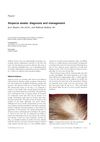
May 1999 in “International Journal of Dermatology” This article reviews the diagnosis and management of alopecia areata but reports no new research findings.
22 citations
,
January 2012 in “Mediators of inflammation” This review discusses the potential benefits of nonantibiotic macrolides for treating inflammatory skin disorders and reports no new clinical results.
 4 citations
,
November 2015 in “Aesthetic Plastic Surgery”
4 citations
,
November 2015 in “Aesthetic Plastic Surgery” Using tissue expanders for scalp reconstruction in patients with extensive Aplasia Cutis Congenita is effective and has minimal complications.
 January 2025 in “Journal of Skin and Stem Cell”
 This case report describes a middle-aged man with chronic tophaceous gout who experienced a rare form of non-scarring alopecia due to urate crystal deposition around hair follicles, leading to hair loss that remarkably improved with targeted treatment including allopurinol and lifestyle changes.
April 2023 in “Dermatologica Sinica” This review by Boucher et al. highlights the Pemphigus Disease Area Index and Autoimmune Bullous Skin Disorder Intensity Score as the most valid and reliable tools for assessing pemphigus severity but notes that simplified scores like IGAs require further validation.