 2 citations
,
July 2017 in “IEEE Photonics Journal”
2 citations
,
July 2017 in “IEEE Photonics Journal” This study found that combining second-harmonic generation with optical coherence tomography may effectively evaluate wound healing by monitoring collagen formation and optical signal changes in regenerated tissue.
 September 2014 in “Proceedings of SPIE, the International Society for Optical Engineering/Proceedings of SPIE”
 This study found that high-speed optical coherence tomography may be a promising non-invasive tool for analyzing human hair conditions.
 25 citations
,
August 1998 in “Dermatologic Surgery”
25 citations
,
August 1998 in “Dermatologic Surgery” This study found that using a dissecting microscope for follicular unit graft preparation in hair transplant surgeries increased hair yield by 17% compared to using magnifying loupes with transillumination.
 16 citations
,
September 2016 in “Experimental Dermatology”
16 citations
,
September 2016 in “Experimental Dermatology” This review provides guidance on using two-photon microscopy for real-time and long-term visualization of stem cell activity in live mice skin, focusing on its application in researching skin and stem cell biology.
 1 citations
,
February 2018 in “Australasian journal of dermatology”
1 citations
,
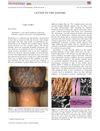
February 2018 in “Australasian journal of dermatology” Advanced imaging techniques are crucial for accurately diagnosing Monilethrix, a rare hair disorder.

This study utilized polarized light microscopy to examine hair shafts in ten children with rare genetic disorders, such as Netherton syndrome and ectodermal dysplasia, providing valuable diagnostic insights into hair thickness, composition, and structural irregularities associated with these conditions.
 20 citations
,
January 2015 in “Polish Journal of Pathology”
20 citations
,
January 2015 in “Polish Journal of Pathology” Reflectance confocal microscopy is a useful, non-invasive tool for diagnosing some skin diseases, with potential for future improvements.
 16 citations
,
October 2012 in “British Journal of Dermatology”
16 citations
,
October 2012 in “British Journal of Dermatology” Chemotherapy can cause significant hair thinning and changes in hair texture, while tamoxifen has a smaller effect.
 17 citations
,
January 2011 in “Skin Research and Technology”
17 citations
,
January 2011 in “Skin Research and Technology” Hair from people with seborrheic dermatitis is thicker scaled, more damaged, and thinner than healthy hair, and atomic force microscopy can help monitor the condition.
 2 citations
,
January 2022 in “Skin research and technology”
2 citations
,
January 2022 in “Skin research and technology” In this study, optical coherence tomography detected hair follicles at the dermoepidermal junction not visible on the scalp surface in alopecia areata patients, suggesting OCT may help monitor treatment response.
 1 citations
,
December 2014 in “Scanning”
1 citations
,
December 2014 in “Scanning” This study used multiphoton microscopy to successfully visualize rabbit skin microstructure, highlighting its noninvasive potential for future skin research related to diseases and wound healing.
 49 citations
,
January 2003 in “American Journal of Clinical Dermatology”
49 citations
,
January 2003 in “American Journal of Clinical Dermatology” This review discusses various pediatric hair loss conditions and treatments, highlighting the importance of a holistic approach and noting that no single treatment is universally effective.
 November 2025 in “Clinical Cosmetic and Investigational Dermatology”
 In this study, researchers suggest that digital microscopy using visible light could offer a more objective approach to diagnosing hirsutism by quantifying terminal hair, with future research needed to assess its usefulness in women with the condition.

This article reviews applications of optical coherence tomography techniques in medicine, including for diagnosing androgenic alopecia and monitoring blood coagulation, but provides no new clinical results.
January 2019 in “The Pharma Innovation Journal” This study found that optimal antioxidant properties of a cream-mask, as indicated by extended Paramecium caudatum motor activity in a toxic environment, were achieved with 10% Sophora japonica tincture and 5% Serenoa repens dry extract.
 20 citations
,
July 2010 in “Skin Research and Technology”
20 citations
,
July 2010 in “Skin Research and Technology” This study found that aging in Korean individuals is associated with changes in hair diameter and surface structure, as observed through atomic force microscopy.
 4 citations
,
May 2017 in “Pediatric Dermatology”
4 citations
,
May 2017 in “Pediatric Dermatology” This case report details a 3-year-old girl with short anagen syndrome, characterized by short, sparse hair, where X-ray microanalysis showed her hair's main bioelements were normal.
 May 2026 in “International Journal of Versatile Research and Analysis”
 This study used air wedge interferometry to measure the thickness of human scalp hair from three individuals, finding average thicknesses of 66.482 µm, 59.355 µm, and 59.927 µm respectively, within the typical range for adults.
 July 2023 in “Clinical, cosmetic and investigational dermatology”
 In this study, reflectance confocal microscopy was used to diagnose periorificial dermatitis, revealing specific skin changes such as hair follicle dilatation, increased vascular density, and inflammation, which help distinguish it from similar conditions.
 42 citations
,
April 2008 in “Acta materialia”
42 citations
,
April 2008 in “Acta materialia” This study investigated the tensile response and morphological changes of different ethnic hair types using AFM, showing variations between virgin, chemically damaged, and conditioner-treated Caucasian hair under different conditions.
 26 citations
,
April 2011 in “Skin Research and Technology”
26 citations
,
April 2011 in “Skin Research and Technology” This study found that in vivo confocal scanning laser microscopy accurately quantifies neogenic hair follicles in mice, producing results similar to histology while avoiding fixation artifacts.
 21 citations
,
December 2016 in “European journal of pharmaceutics and biopharmaceutics”
21 citations
,
December 2016 in “European journal of pharmaceutics and biopharmaceutics” This study found that nano-sized lipid particles improved the skin accumulation and retention of dexamethasone compared to a base cream, suggesting potential benefits for inflammatory skin disease treatment.
 17 citations
,
May 2016 in “Archives of Dermatological Research”
17 citations
,
May 2016 in “Archives of Dermatological Research” This study identified specific reflectance confocal microscopy features that help differentiate scarring from non-scarring alopecia, providing a non-invasive diagnostic tool.
 13 citations
,
March 2006 in “International Journal of Cosmetic Science”
13 citations
,
March 2006 in “International Journal of Cosmetic Science” The study found that a polymer treatment changes the charge on hair surfaces, making bleached hair smoother and less porous.
 10 citations
,
January 2013 in “Journal of The European Academy of Dermatology and Venereology”
10 citations
,
January 2013 in “Journal of The European Academy of Dermatology and Venereology” In this study, a square pulse, low-fluence IPL device used at home significantly reduced terminal hair count by 87% six months post-treatment, with evidence of hair miniaturization similar to professional laser treatments.
 10 citations
,
June 2001 in “International Journal of Cosmetic Science”
10 citations
,
June 2001 in “International Journal of Cosmetic Science” This study found that laboratory-formulated natural shampoos condition hair better than commercial herbal shampoos, as shown by SEM micrograph analysis of hair microstructure.
 3 citations
,
December 2013 in “Journal of Dermatology”
3 citations
,
December 2013 in “Journal of Dermatology” This study found that scanning electron microscopy can identify four specific hair morphology patterns in alopecia areata patients, offering a less invasive diagnostic option compared to punch biopsy.
 1 citations
,
October 2024 in “Dermatology Practical & Conceptual”
1 citations
,
October 2024 in “Dermatology Practical & Conceptual” This study suggests that RCM may be a promising non-invasive diagnostic tool for alopecia areata incognita, showing substantial agreement with histopathology while noting some discrepancies.
 January 2026 in “Inflammation and Regeneration”
 This review highlights that two-photon excitation microscopy is a valuable tool for visualizing live skin structures and immune responses at high resolution, though its clinical use is hindered by safety and cost issues.
 February 2024 in “Infection and drug resistance”
 This study presented a case of tinea capitis in a 4-year-old without typical symptoms and traced the infection to Microsporum canis carried by domestic cats, highlighting the need for accurate diagnosis and appropriate treatment, especially in households with pets.