 3 citations
,
January 2011 in “Intestinal Research”
3 citations
,
January 2011 in “Intestinal Research” This article reports on a patient case of Cronkhite-Canada syndrome, detailing symptoms and diagnostic findings, and reviews the syndrome's characteristics without presenting new clinical data.
 2 citations
,
October 2025 in “Discover Immunity.”
2 citations
,
October 2025 in “Discover Immunity.” This review discusses the classification, diagnosis, and potential treatment pathways for Alopecia Areata, emphasizing the complex genetic and immunological factors involved, but reports no new clinical results.
 2 citations
,
October 2018 in “Springer eBooks”
2 citations
,
October 2018 in “Springer eBooks” Cancer treatments can cause skin-related side effects that may affect patient quality of life and require changes in treatment.
 2 citations
,
March 2017 in “TURKDERM”
2 citations
,
March 2017 in “TURKDERM” This study observed that pediatric bone marrow transplantation patients frequently experience various dermatological issues; mucositis and xeroderma were the most common.
 2 citations
,
October 2016
2 citations
,
October 2016 This article discusses the range of skin-related side effects caused by chemotherapy and radiotherapy, including novel patterns emerging with targeted therapies, but does not report new clinical results.
 1 citations
,
April 2023 in “Journal of the Hellenic Veterinary Medical Society”
1 citations
,
April 2023 in “Journal of the Hellenic Veterinary Medical Society” This study investigated pododermatitis in 300 dogs and found West Highland White Terriers, Shar-Peis, and French Bulldogs were predominantly affected by allergic pododermatitis. It also observed that interdigital skin was primarily involved in cases of atopic dermatitis and pododemodicosis.
 1 citations
,
September 2022 in “Nepal journal of dermatology, venereology & leprology”
1 citations
,
September 2022 in “Nepal journal of dermatology, venereology & leprology” This review examines the use of apremilast for non-FDA-approved dermatological conditions, noting varied efficacy but a favorable safety profile compared to conventional treatments.
 1 citations
,
July 2022 in “Вопросы современной педиатрии”
1 citations
,
July 2022 in “Вопросы современной педиатрии” This review discusses progeria, focusing on its pathogenesis, major symptoms, and management strategies, and includes a clinical case of a girl with the disease confirmed by genetic testing; it reports no new clinical results.
 1 citations
,
July 2020 in “Journal of cosmetic dermatology”
1 citations
,
July 2020 in “Journal of cosmetic dermatology” This case report describes a patient with systemic lupus erythematosus who developed both alopecia areata and lichen planopilaris despite immunosuppressive treatment, suggesting a shared immunopathogenesis between these disorders.
 1 citations
,
February 2020 in “International Journal of Research in Dermatology”
1 citations
,
February 2020 in “International Journal of Research in Dermatology” This study describes the clinical profile of scalp alopecia areata among patients at a tertiary care hospital, finding it more common in males, particularly those aged 21-30, with sudden onset and often asymptomatic progression.
 1 citations
,
January 2020 in “Skin appendage disorders”
1 citations
,
January 2020 in “Skin appendage disorders” This case study documents the co-existence of trichorhinophalangeal syndrome and loose anagen syndrome in a patient, highlighting a previously unreported association between the two conditions.
 1 citations
,
August 2017 in “British Journal of Dermatology”
1 citations
,
August 2017 in “British Journal of Dermatology” Sodium hypochlorite can effectively prevent and remove Staphylococcus aureus biofilms in atopic dermatitis at high enough concentrations.
 1 citations
,
January 2014 in “International Journal of Trichology”
1 citations
,
January 2014 in “International Journal of Trichology” This case report describes a 35-year-old woman with diffuse partial woolly hair occurring alongside epidermolysis bullosa with mottled pigmentation.
 February 2026 in “International Journal of Homoeopathic Sciences”
 This case report observed improvements in both hair regrowth and psychological symptoms in a 25-year-old male with alopecia areata after six months of individualized homeopathic treatment, suggesting potential benefits of this approach for such patients.
 January 2026 in “International Research Journal of Modernization in Engineering Technology and Science”
 This review outlines the existing understanding of alopecia areata, detailing its autoimmune nature, clinical presentation, histology, and management strategies, with corticosteroids highlighted as the most popular treatment option.
 January 2026 in “Journal of Clinical and Investigative Dermatology”
 This case report describes a father with HOXC13-associated pure hair-nail ectodermal dysplasia, presenting with severe nail dystrophy affecting all digits and notable hypotrichosis or complete alopecia.
 December 2025 in “IP Indian Journal of Clinical and Experimental Dermatology”
 This study observed that topical dinitrochlorobenzene was significantly more effective than topical betamethasone in treating patients with alopecia areata, with 53.3% achieving excellent hair regrowth compared to 13.3% using betamethasone.
 October 2025 in “Journal of Skin and Sexually Transmitted Diseases”
 This study found that thyroid dysfunction was significantly more frequent in patients with alopecia areata compared to a control group, even when they lacked symptoms of thyroid issues, supporting the need for routine thyroid screening in this population.
 March 2024 in “Cirugía y Cirujanos (English Edition)”
 In this study, researchers observed that all kidney transplant patients at a Mexico City hospital developed at least one type of skin condition, with infectious dermatoses being the most common. The authors recommend dermatological assessments before transplantation to manage dermatoses, potentially reducing related health risks.
 October 2023 in “Journal of Medicine, University of Santo Tomas (JMUST Online)”
 This study reported that among Filipino elderly patients, xerosis/xerotic eczema was the most common dermatological condition leading to consultation, with inflammatory dermatoses being the predominant category of skin diseases observed from 2014 to 2018 at a tertiary hospital's dermatology service.
 September 2023 in “Cureus”
 This study at B.J. Medical College and Civil Hospital highlighted an extensive range of nail disorders, with onychomycosis being the most common, and emphasized the importance of nails in diagnosing both dermatological and systemic conditions.

This comparative clinical study found no statistically significant difference in the remission and recurrence rates between intralesional triamcinolone acetonide and methotrexate for treating localized alopecia areata, suggesting similar efficacy between the two treatments.
 February 2023 in “Indian journal of private psychiatry/Indian Journal of Private Psychiatry”
 This case report highlights a rare instance of fingernail and toenail hyperpigmentation following the use of valproic acid, which resolved after discontinuation of the drug.
 January 2023 in “World Journal of Clinical & Medical Images”
 This report discusses a late-onset case of Cronkhite-Canada syndrome that improved with prednisone treatment, highlighting the importance of early diagnosis to reduce life-threatening complications.
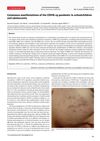 January 2023 in “Acta dermatovenerologica Alpina, Pannonica et Adriatica (Tiskana izd.)”
 This review details skin conditions in children and adolescents related to the SARS-CoV-2 pandemic, emphasizing mask-related acne and various cutaneous manifestations linked to infection and vaccination, with most being mild or nonspecific.
 October 2022 in “Medičnì perspektivi”
 This article discusses two cases of follicular dyskeratosis (Darier-White disease), highlighting its rare occurrence, genetic basis, and the challenges in diagnosis and treatment; it presents no new experimental results.
 July 2021 in “International journal of dermatology, venereology and leprosy sciences”
 This study found that diphenylcyclopropenone (DPCP) was more effective and better tolerated than dinitrochlorobenzene (DNCB) in promoting hair regrowth in patients with alopecia areata.
 September 2020 in “Journal of Investigative Medicine”
 This article discusses the role of the microbiome in different forms of alopecia and highlights the importance of Omics approaches for future research, but it provides no new clinical results.
 November 2019 in “Harper's Textbook of Pediatric Dermatology”
 This review discusses potential causes of alopecia and hair overgrowth in pediatric patients, detailing diagnostic techniques and treatments, but presents no new research findings.
 November 2019 in “Harper's Textbook of Pediatric Dermatology”
 This index of Harper's Textbook of Pediatric Dermatology, Fourth Edition, provides no clinical results or new findings.