 222 citations
,
October 1993 in “Journal of The American Academy of Dermatology”
222 citations
,
October 1993 in “Journal of The American Academy of Dermatology” This study found that androgenetic alopecia causes significant psychological distress, particularly in women, who exhibit a more negative body image and less adaptive functioning compared to controls.
 7 citations
,
March 2019 in “Frontiers in Cellular and Infection Microbiology”
7 citations
,
March 2019 in “Frontiers in Cellular and Infection Microbiology” Understanding how our bodies interact with mosquito-borne viruses is crucial because there are few treatments and vaccines.
 4 citations
,
September 2020 in “Frontiers in Microbiology”
4 citations
,
September 2020 in “Frontiers in Microbiology” In this study, algal oligosaccharides effectively countered key factors in androgenetic alopecia pathogenesis, improving hair growth indicators in vitro and in mice.
 September 2023 in “Journal of microbiology and biotechnology”
 This study found that low molecular weight collagen peptide from fish may promote hair growth in both human cells and mice by activating the Wnt/β-catenin signaling pathway.
 8 citations
,
April 1965 in “Archives of biochemistry and biophysics”
8 citations
,
April 1965 in “Archives of biochemistry and biophysics” This study found that sheep wool follicles actively oxidize acetate and glucose, suggesting the involvement of the TCA cycle for compound synthesis and the potential role of the pentose phosphate pathway in ribose production for RNA and DNA.
 June 2026 in “Korean Journal of Food Science and Technology”
 In this study, a 10% fermented Glycine max compound was found to promote faster hair growth and follicle formation in mice compared to 3% minoxidil, suggesting potential as a hair health supplement.
5 citations
,
January 2012 in “JBI Library of Systematic Reviews” This review discusses the fermented wheat germ extract Avemar as a potential adjunctive therapy in cancer treatment, noting promising laboratory results, but reports limited human trial evidence for its clinical effectiveness.
This study explored fermented rice water as a natural source of probiotics, finding that it contains beneficial microbes that may balance scalp microbiota, reduce dandruff, and support hair follicle health, offering a safe alternative to chemical treatments.
 24 citations
,
September 2018 in “Lasers in Surgery and Medicine”
24 citations
,
September 2018 in “Lasers in Surgery and Medicine” This study shows that multiphoton microscopy can non-invasively distinguish between scarring and non-scarring alopecia by identifying certain morphological features, but further research is needed to confirm its clinical utility.
August 2025 in “International Journal of Biological Macromolecules” A new hydrogel can kill resistant bacteria and help heal infected burn wounds.
22 citations
,
June 2021 in “Plants” This study found that a methanolic extract of Sterculia foetida seeds demonstrated significant thrombolytic, anti-arthritic, analgesic, and antipyretic activities, with moderate cytotoxic effects in vitro and in vivo.
 March 2025 in “Journal of Cosmetic Dermatology”
 This study explored the effects of TTFE on male androgenic alopecia, finding that topical application increased hair density, follicular diameter, and scalp hydration while reducing water loss and sebum production in a 12-week trial.
 November 2025 in “Zenodo (CERN European Organization for Nuclear Research)”
 This study observed that dermatophytosis, primarily caused by fungi like M. canis, is the most common fungal skin infection in cats, often resolving spontaneously except in young or immunocompromised animals.
73 citations
,
April 2017 in “Scientific Reports” In this study, nitrogen starvation in Chlorella sp. FC2 IITG led to increased lipid accumulation by altering the expression of enzymes involved in various metabolic pathways, suggesting potential for genetic engineering of microalgae.
 271 citations
,
September 2008 in “Nutrition reviews”
271 citations
,
September 2008 in “Nutrition reviews” This study identified new dietary ligands for the human vitamin D receptor, including curcumin and gamma-tocotrienol, which may influence its biological functions.
 192 citations
,
March 2017 in “Cell host & microbe”
192 citations
,
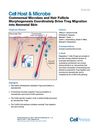
March 2017 in “Cell host & microbe” The researchers reported that hair follicle development and commensal microbe colonization promote the accumulation of regulatory T cells in neonatal skin, with the Ccl20-Ccr6 pathway playing a key role in this process.
 188 citations
,
October 2012 in “The AAPS Journal”
188 citations
,
October 2012 in “The AAPS Journal” This review discusses strategies for developing semi-solid topical generic products to match the quality of reference-listed drugs, using concepts like quality by design and reverse-engineering, but reports no new results.
 134 citations
,
January 2011 in “Development”
134 citations
,
January 2011 in “Development” This study found that disrupting Adam10 in the epidermis led to severe skin and multi-organ abnormalities, implicating Adam10 as crucial for proper Notch signaling and skin maintenance.
 127 citations
,
January 2013 in “PLOS ONE”
127 citations
,
January 2013 in “PLOS ONE” This study found that feeding aged mice a probiotic yogurt induced changes leading to thicker, healthier fur, suggesting a bacteria-triggered interleukin-10-dependent mechanism that mimics signs of youth and reproductive fitness.
 105 citations
,
January 2010 in “Mediators of Inflammation”
105 citations
,
January 2010 in “Mediators of Inflammation” This article reviews the role of skin surface lipid in mediating environmental stressors and discusses potential therapeutic interventions, reporting no new experimental findings.
 93 citations
,
April 2012 in “International Journal of Cosmetic Science”
93 citations
,
April 2012 in “International Journal of Cosmetic Science” This article discusses the role of stratum corneum disruption in dandruff and suggests that treatments improving scalp barrier integrity along with antifungal activity may be beneficial; it reports no new research findings.
 92 citations
,
September 2015 in “Journal of Lipid Research”
92 citations
,
September 2015 in “Journal of Lipid Research” This review discusses the roles of dermal white adipose tissue (dWAT) as an insulator, antibiotic, and regenerative tissue, highlighting its importance in systemic metabolism and immune function, but reports no new clinical results.
 92 citations
,
January 1998 in “Dermatology”
92 citations
,
January 1998 in “Dermatology” This study found that 2% ketoconazole shampoo improved hair density and anagen follicle proportion in androgenic alopecia similarly to minoxidil treatment, suggesting a potential role for Malassezia in inflammation.
 86 citations
,
April 2016 in “Nature Communications”
86 citations
,
April 2016 in “Nature Communications” This study suggests that Notch1 acts as a key signal in skin epithelium, promoting immune cell recruitment and aiding in normal skin repair after damage.
 78 citations
,
June 2013 in “Science”
78 citations
,
June 2013 in “Science” This study found that mice lacking the Sept4/ARTS gene had more hair follicle stem cells and improved wound healing, suggesting apoptosis regulation as a potential target in regenerative medicine.
 65 citations
,
October 2018 in “Frontiers in cellular and infection microbiology”
65 citations
,
October 2018 in “Frontiers in cellular and infection microbiology” This study observed that dandruff in Indian women is associated with a distinct scalp microbiome, including specific bacterial and unknown Malassezia species, with implications for nutrient homeostasis and cell-host adhesion pathways.
 64 citations
,
August 2007 in “Artificial Organs”
64 citations
,
August 2007 in “Artificial Organs” This study found that PHBV cocultured with epithelial and dermal cells might enhance early-stage wound healing by promoting wound closure and re-epithelization more effectively than PHBV/collagen.
 61 citations
,
May 2016 in “Scientific reports”
61 citations
,
May 2016 in “Scientific reports” This study found that IMT-P8, a novel cell-penetrating peptide, effectively facilitated the dermal delivery of proteins and peptides in mouse skin and cell lines, suggesting potential for topical applications in cosmetics and skin diseases.
 61 citations
,
May 2015 in “Planta”
61 citations
,
May 2015 in “Planta” Certain fungi and bacteria help orchid seeds germinate and plants grow better.
 59 citations
,
November 2015 in “International Journal of Cosmetic Science”
59 citations
,
November 2015 in “International Journal of Cosmetic Science” This review considers oxidative stress effects on hair aging and emphasizes the need for dermatologists to recognize and treat factors affecting scalp and hair health, but it provides no new clinical findings.