3 citations
,
November 2024 in “Current Research in Microbial Sciences” This study found that extracts from the medicinal plants *Echinops echinatus* and *Tridax procumbens* displayed antimicrobial activity against several bacteria, including *Escherichia coli* and *Staphylococcus aureus*, and identified various compounds like flavonoids and terpenoids potentially responsible for these effects.
4 citations
,
January 1886 This article covers the classification and roles of various microbes, such as those involved in fermentations and environmental processes, but it does not provide new research results.
 September 2025 in “Institutional Repositories DataBase (IRDB)”
 Lactic acid bacteria fermentation can turn waste into valuable skincare ingredients.
 January 2023 in “Han'gug mi'saengmul saengmyeong gong haghoeji/Han-guk misaengmul saengmyeong gonghak hoeji”
 This study found that a mixed extract of N. jatamansi, O. basilicum, and C. sativus, particularly when extracted via steaming and ultrasonic methods, increased antioxidant content, stimulated melanin production for black hair, and promoted hair growth in mouse models, while maintaining high cell viability.
 September 2021 in “Han'gug mi'saengmul saengmyeong gong haghoeji/Han-guk misaengmul saengmyeong gonghak hoeji”
 This study found that an ethanolic extract from the microalga Tetrathelmis tetrathele exhibited anti-inflammatory effects, promoted the proliferation of certain skin and hair cells, and inhibited 5α-reductase activity, suggesting its potential as a therapeutic agent for preventing alopecia and enhancing scalp health.
 April 2026 in “Ankara Üniversitesi Veteriner Fakültesi Dergisi”
 This study found that Mueller-Hinton Agar performed better than Dermasel Agar for antifungal susceptibility testing of feline dermatophytes, providing reliable susceptibility data for effective antifungal therapy.
 February 2020 in “International Journal of Current Microbiology and Applied Sciences”
 This study found that canine hair follicle stem cells in vitro expressed markers associated with multipotency, suggesting their potential role in the hair cycle.
 2 citations
,
January 2023 in “Bioresource Technology Reports”
2 citations
,
January 2023 in “Bioresource Technology Reports” This study suggests that using glycosidases to lyse the polysaccharides of Botryoccocus braunii may allow for the semi-continuous recovery of hydrocarbons while keeping the cells viable.
 4 citations
,
March 2019 in “Journal of Pure and Applied Microbiology”
4 citations
,
March 2019 in “Journal of Pure and Applied Microbiology” This study investigated the anti-inflammatory effects of a 940nm diode laser in Wistar rats with carrageenan-induced arthritis and found that a 74J/cm² energy density significantly reduced edema and restored function, whereas 171J/cm² neared thermal exposure limits for the skin.
66 citations
,
August 2007 in “Applied and environmental microbiology” This study engineered a bioluminescent yeast strain responsive to androgenic chemicals, demonstrating rapid and sensitive detection suitable for high-throughput screening and environmental monitoring.
 August 2005 in “Microscopy and Microanalysis”
 Polymethylene wax in hair relaxers makes hair smooth and shiny with less damage.
 2 citations
,
July 2022 in “Asian Journal of Microbiology, Biotechnology & Environmental Sciences”
2 citations
,
July 2022 in “Asian Journal of Microbiology, Biotechnology & Environmental Sciences” This review highlights zinc's crucial role in both plant growth and human health, while noting the widespread problem of zinc deficiency in various soils, but reports no new findings.
 August 2019 in “International journal of current microbiology and applied sciences”
 This study found that among 86 skin scrapings from various dog breeds with ringworm lesions, Microsporum species were the predominant fungal infection, with Labradors showing the highest infection rate. Miconazole was most effective in antifungal susceptibility tests.
July 2026 in “Frontiers in Bioengineering and Biotechnology” This mini-review reports that advances in microbioreactor technology, particularly with microfluidics, significantly enhance eukaryotic cell-based biomedicine by improving productivity, scalability, and reproducibility in applications like CAR T-cell manufacturing and organoid growth, though challenges in scalability and material selection remain.
1 citations
,
June 2024 in “Access Microbiology” This study found that certain non-dermatophytic moulds, specifically *Absidia* sp., *Cladosporium tenuissimum*, and *Aspergillus welwitschiae*, can cause skin symptoms such as discoloration and lesions in albino mice, suggesting potential virulence due to enzyme activity.
 1 citations
,
April 2023 in “International Journal of Molecular Sciences”
1 citations
,
April 2023 in “International Journal of Molecular Sciences” This study found that Botryococcus terribilis ethanol extract significantly reduced inflammation markers in LPS-stimulated RAW264 cells, potentially via Axl inhibition and alteration of immune-related gene expression.
 19 citations
,
July 2011 in “Microscopy and Microanalysis”
19 citations
,
July 2011 in “Microscopy and Microanalysis” This article reviews the role of adult stem cells in tissue homeostasis and wound repair, focusing on their regulation within the murine hair follicle's specialized niche, but it presents no new findings.
1 citations
,
June 2012 in “OhioLink ETD Center (Ohio Library and Information Network)” In this study, the 40-MBR system was shown to enhance drug-screening efficiency by providing reliable, real-time monitoring of cell conditions in 3-D cultures compared to traditional methods.
1 citations
,
March 2022 in “Protection convergence” This study found that double-fermented green coffee bean extracts displayed strong antioxidant, anti-inflammatory, and dermal papilla cell growth-promoting activities, suggesting potential use in cosmetics for scalp and hair health.
 January 2025 in “International Journal of Advanced Biochemistry Research”
 This study found that in dogs with dermatological disorders, fungal dermatitis was diagnosed in 20.77% of cases, with Microsporum spp. being the most common fungal pathogen, emphasizing the need for thorough diagnostic approaches including clinical, microscopic, and cultural assessments.
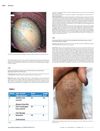 October 2017 in “The American journal of gastroenterology”
 This case series highlights severe micronutrient deficiencies and complications in three patients who did not adhere to follow-up care after Roux-en-Y gastric bypass, emphasizing the importance of regular nutritional monitoring.
 1 citations
,
August 2024 in “SAR Journal of Pathology and Microbiology”
1 citations
,
August 2024 in “SAR Journal of Pathology and Microbiology” This study observed that among Iraqi women with hirsutism, most had hypothyroidism and elevated hormone levels, particularly DHEAS and testosterone, with acne being the most common associated clinical feature.
 March 2026 in “Saudi Journal of Pathology and Microbiology”
 This case report from Qatar highlights the failure of traditional diagnostic approaches in a young woman with severe hair loss, emphasizing the potential benefits of DNA-guided nutrigenomics and the importance of compassionate communication in addressing psychosocial distress.
9 citations
,
February 2024 in “mBio” This study found that biliverdin beta and delta, metabolites of heme, play a critical role in Pseudomonas aeruginosa iron acquisition and cooperative behaviors, which are crucial for the bacterium's long-term infection in cystic fibrosis patients, suggesting potential targets for new therapies.
30 citations
,
April 2009 in “Mycoses” This study found that the fungus Microsporum gypseum enzymatically degrades keratin in human hair, with the sequence of degradation reflecting the keratinization and cystine content of individual hair components in vitro.
11 citations
,
November 2022 in “Food and Chemical Toxicology” This study found that microalgal extract from Botryococcus terribilis exhibited antidepressant-like effects in mice by regulating neuroinflammation and modulating neurotransmitter systems.
49 citations
,
April 2017 in “AFRICAN JOURNAL OF BIOTECHNOLOGY” In this study, the authors explore the use of endophytic fungi as biofactories for producing eco-friendly silver nanoparticles, emphasizing their antimicrobial potential and the methods for their synthesis and analysis in nanobiotechnology.
2 citations
,
February 2025 in “Advanced Healthcare Materials” This study developed microfluidics-based 3D microtumors to model minimal residual disease in ovarian cancer, highlighting their alignment with patient-derived MRD and response to a fatty acid oxidation inhibitor.
 7 citations
,
September 2024 in “Applied Microbiology and Biotechnology”
7 citations
,
September 2024 in “Applied Microbiology and Biotechnology” In this study, researchers observed that Malassezia species show different lipid metabolism and growth patterns depending on pH, with slightly acidic conditions promoting beneficial lipid bio-conversion for skin health, while neutral pH resulted in lower growth and lipid content, potentially negatively impacting the skin.
1 citations
,
April 2024 in “Pathogens” This study observed mycobacterial infection with M. xenopi in a pet ferret, noting its resistance to doxycycline, and highlighted the potential zoonotic transmission risk associated with such infections.