 3 citations
,
November 2022 in “Baghdad Journal of Biochemistry and Applied Biological Sciences”
3 citations
,
November 2022 in “Baghdad Journal of Biochemistry and Applied Biological Sciences” This study found that renin and d-dimer levels were significantly higher in PCOS patients, particularly those also infected with COVID-19, compared to non-PCOS women.
 3 citations
,
April 2017 in “Journal of Medical Science And clinical Research”
3 citations
,
April 2017 in “Journal of Medical Science And clinical Research” In this study, acne was the most common skin manifestation among women with PCOS, significantly correlated with elevated LH levels and the LH:FSH ratio.
 3 citations
,
September 2010 in “Acta Médica Portuguesa”
3 citations
,
September 2010 in “Acta Médica Portuguesa” This review explores the psychosocial impact of PCOS symptoms on health-related quality of life, emphasizing the need for multidisciplinary care and individual perspectives, but reports no new research findings.
 2 citations
,
July 2024 in “Ibn AL- Haitham Journal For Pure and Applied Science”
2 citations
,
July 2024 in “Ibn AL- Haitham Journal For Pure and Applied Science” This study found that PCOS women with COVID-19 had lower ACE2 levels and higher insulin resistance, suggesting increased cardiovascular risk.
 2 citations
,
December 2022 in “International Journal of Infertility & Fetal Medicine”
2 citations
,
December 2022 in “International Journal of Infertility & Fetal Medicine” This study found that women with PCOS who are obese had an altered lipid profile and increased waist-hip ratio compared to lean counterparts, without differences in endocrine parameters.
 2 citations
,
June 2009 in “The Nurse practitioner”
2 citations
,
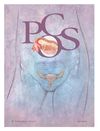
June 2009 in “The Nurse practitioner” This article highlights that many women with PCOS are unaware of their condition and its increased risks for type 2 diabetes and cardiovascular disease, and it offers no new clinical findings.
 1 citations
,
August 2024 in “World Journal of Advanced Pharmaceutical and Medical Research”
1 citations
,
August 2024 in “World Journal of Advanced Pharmaceutical and Medical Research” This review discusses the causes, symptoms, and management of Polycystic Ovarian Syndrome (PCOS) without presenting new clinical results.
 1 citations
,
October 2022 in “International journal of endocrinology”
1 citations
,
October 2022 in “International journal of endocrinology” This study found that dihydrotestosterone treatment in female rats altered anterior pituitary gland gene expression, with significant repression of prolactin and inhibition of GnRH receptor gene expression, suggesting specific hormone production changes.
 1 citations
,
May 2011 in “Molecular Medicine Reports”
1 citations
,
May 2011 in “Molecular Medicine Reports” This study found no association between the -866G/A polymorphism in the UCP2 gene and the development of polycystic ovary syndrome.
 1 citations
,
December 1997 in “The British Journal of Psychiatry”
1 citations
,
December 1997 in “The British Journal of Psychiatry” This document outlines the indications, dosing, side effects, and contraindications for Epilim in epilepsy treatment, with no new research findings presented.
 March 2026 in “Balkan Sağlık Bilimleri Dergisi”
 This review discusses the role of nurse navigators in managing polycystic ovary syndrome, highlighting their support in symptom management, lifestyle changes, psychosocial care, and evidence-based practices, but presents no new findings.
 November 2025 in “Asian Journal of Medical Sciences”
 In this study of women with PCOS in a rural setting, researchers observed no significant differences in hormonal or metabolic profiles based on age at menarche, but early menarche was associated with higher hirsutism, suggesting it could serve as an indicator of hyperandrogenism risk.
This study found a weak and negative correlation between depression and adiponectin levels in women with polycystic ovary syndrome, which was statistically significant.
 August 2025 in “International Journal of Environmental Sciences”
 In this descriptive cross-sectional study, researchers observed that less than 10% of female nursing students in Dharmapuri have been diagnosed with polycystic ovarian syndrome, though many show increasing symptom prevalence and poor health-related behaviors, underlining the need for better education and regular gynecological check-ups.
 June 2025 in “International Journal of Environmental Sciences”
 In this study, researchers found that serum levels of integrin, CLEC10A, and interleukin-42 significantly differed between PCOS patients treated with infertility drugs and untreated PCOS patients when compared to healthy controls, suggesting these biomarkers could help differentiate treatment status in PCOS.
 April 2025 in “International Journal of Homoeopathic Sciences”
 This case report describes marked improvement in symptoms for a 24-year-old woman with PCOS following individualized homeopathic treatment, which reportedly included a reduction in irregular menstruation, vaginal discomfort, and weight gain.

This study reviews 10 herbal supplements, including Berberine and Cinnamon, as alternative treatments for PCOS, noting they are more accessible and affordable than conventional medications, especially in low-resource settings, though further clinical research is needed.
 January 2025 in “ANNALS OF PAKISTAN MEDICAL & ALLIED PROFESSIONALS”
 This study found that insulin resistance is common among Pakistani women with PCOS and is independently associated with increased hyperandrogenism, as indicated by correlations with testosterone levels and other androgenic measures.
 December 2024 in “Turkish Society of Clinical Biochemistry”
 This study found that women with idiopathic hyperandrogenemia had higher urinary Bisphenol A levels compared to healthy controls, suggesting a potential role of this chemical in the condition.
 April 2024 in “International Journal of Advanced Multidisciplinary Research and Studies”
 This study outlines a multidisciplinary approach to investigate primary amenorrhea, emphasizing the necessity to consider medical history, physical examination, and potential hormonal or anatomical causes, and recommends early referral in cases of chromosomal abnormalities or persistent amenorrhea following the development of secondary sexual characteristics.
 March 2024 in “Journal of Rawalpindi Medical College/Journal Rawalpindi Medical College”
 This study observed that skin conditions like hirsutism, acne, and androgenic alopecia were common in PCOS patients and may aid in its diagnosis.
 February 2024 in “Brazilian Journal of Implantology and Health Sciences”
 This review discusses the high prevalence of dermatological manifestations like hirsutism and acne in PCOS patients and explores various therapeutic approaches, highlighting the need for early recognition and treatment.
 October 2023 in “ANNALS OF PAKISTAN MEDICAL & ALLIED PROFESSIONALS”
 This study found that in women with PCOS, insulin resistance is closely associated with hyperandrogenism, indicating it may independently predict increased androgen levels.
 June 2023 in “Journal of multidisciplinary sciences (Online)”
 This review examines possible links between polycystic ovarian syndrome and reproductive cancers, but reports no new clinical findings.
 August 2022 in “Journal of Contemporary medical practice”
 This review discusses the current advancements in diagnosing and treating polycystic ovary syndrome with both traditional Chinese and Western medicine, and it reports no new results.
 June 2022 in “COJ Biomedical Science & Research”
 PCOS management includes lifestyle changes and medications to improve fertility.
 September 2021 in “International journal of Ayurveda and pharma research”
 In this case report, a patient with subclinical hypothyroidism exhibited a significant reduction in TSH levels after four months of ayurvedic treatment, but levels slightly increased afterward.
 February 2021 in “International Journal of Science and Research (IJSR)”
 This study found that the total testosterone/dihydrotestosterone ratio is significantly higher in women with polycystic ovary syndrome and is associated with a worse metabolic profile in both PCOS and healthy women.
 June 2019 in “Journal of Akhtar Saeed Medical & Dental College”
 This study found that while serum prolactin levels were higher in women with hirsutism, the relationship between prolactin levels and hirsutism severity was not statistically significant.
 June 2019 in “The Egyptian Journal of Fertility and Sterility”
 This study found that while there were no significant differences in ovulation and pregnancy rates, chromium picolinate was better tolerated than metformin in women with polycystic ovarian syndrome.