70 citations
,
December 2004 in “Proceedings of the National Academy of Sciences” This study found that BMP signaling influences hair pigmentation in mice by affecting the Agouti protein and interacts with MC-1R pathways to modulate melanin production.
 56 citations
,
August 2020 in “American Journal of Clinical Dermatology”
56 citations
,
August 2020 in “American Journal of Clinical Dermatology” This study concluded that the ClinRO and PRO measures, along with their photoguides, offer clear and meaningful assessments for patients with alopecia areata concerning eyebrow, eyelash, and nail appearance, as well as eye irritation.
31 citations
,
July 2023 in “Foods” This overview outlines the latest advancements and challenges in developing three-dimensional scaffolds for biomanufacturing cultured meat, focusing on organizing muscle stem cells to better mimic the structure of traditional meat. Results are not reported in the abstract.
 31 citations
,
August 2001 in “PubMed”
31 citations
,
August 2001 in “PubMed” This study found that the TrichoScan method detected significant increases in hair counts and cumulative hair thickness in men after finasteride treatment, suggesting its potential for monitoring hair treatment responses.
 29 citations
,
March 2008 in “Dermatologic Surgery”
29 citations
,
March 2008 in “Dermatologic Surgery” This study developed a prototype device that suggests potential for diagnosing changes in hair quantity, diameter, and density, though formal clinical studies are needed to confirm these findings.
 24 citations
,
March 2010 in “Value in Health”
24 citations
,
March 2010 in “Value in Health” This review found that the only PCOS-specific quality of life measure, the PolyCystic Ovary Syndrome Questionnaire, has an incomplete development history and lacks some essential measurement properties for clinical trial use.
 24 citations
,
April 2007 in “European Journal of Pharmaceutics and Biopharmaceutics”
24 citations
,
April 2007 in “European Journal of Pharmaceutics and Biopharmaceutics” This study found that artocarpin delivered via alginate/chitosan microparticles effectively suppressed the growth of hamster flank organs compared to artocarpin in solution form, without significant systemic effects.
13 citations
,
January 2012 in “Dermatologic surgery” This study found that the cross-section trichometer is a promising tool for measuring hair mass index with high reproducibility, suggesting potential clinical and research applications.
12 citations
,
August 2001 in “PubMed” This study found that contrast enhanced phototrichogram (CE-PTG) significantly improved detection of various hair types and growth stages in androgenetic alopecia compared to standard PTG and was comparable to biopsy analysis.
 10 citations
,
January 2002 in “Nihon Keshouhin Gijutsushakaishi/Journal of S C C./Nihon Keshouhin Gijutsushakai kaishi”
10 citations
,
January 2002 in “Nihon Keshouhin Gijutsushakaishi/Journal of S C C./Nihon Keshouhin Gijutsushakai kaishi” This study found that the cuticle layer of hair contributes approximately 60% to bending stress, highlighting its significant role in the mechanical properties of hair stiffness.
9 citations
,
February 2018 in “Journal of Patient-Reported Outcomes” This study developed two comprehensive patient-reported outcome measures for systemic lupus erythematosus to assess symptom fluctuations and impacts, following FDA guidelines, which may aid in clinical studies and practice.
9 citations
,
January 2016 in “Journal of Controlled Release” This study found that applying controlled hypobaric stress to the skin significantly improved the in vitro and in vivo penetration of macromolecules, facilitating enhanced drug delivery.
7 citations
,
May 2024 in “Life” This study found no significant laboratory differences between Caucasian adults with non-cicatricial alopecia and healthy controls, but reported that affected individuals were significantly younger, suggesting that lifestyle and diet might contribute to early hair loss risk.
 6 citations
,
April 2016 in “Journal of the Formosan Medical Association”
6 citations
,
April 2016 in “Journal of the Formosan Medical Association” This study found that metformin treatment improved clinical outcomes in Taiwanese women with polycystic ovary syndrome, notably in overweight and insulin-resistant patients.
 4 citations
,
October 2024 in “American Journal of Clinical Dermatology”
4 citations
,
October 2024 in “American Journal of Clinical Dermatology” This study found that ritlecitinib improved patient-reported outcomes related to hair growth in individuals with alopecia areata, with some experiencing clinically meaningful hair regrowth, although changes in emotional symptoms and activity limitations were minimal and similar across treatment groups.
 4 citations
,
July 2018 in “International Journal of Research -GRANTHAALAYAH”
4 citations
,
July 2018 in “International Journal of Research -GRANTHAALAYAH” This paper introduces a new microscopy technique to measure biomagnetic fields of human hair follicles using Prussian Blue Stain mixed with iron particles, but it reports no new clinical results.
4 citations
,
November 2017 in “PubMed” This study found that Synsepalum dulcificum seed oil hair treatment significantly reduced hair breakage and improved hair health indices in women, outperforming both placebo and argan oil treatments.
 4 citations
,
November 2011 in “Archives of Dermatology”
4 citations
,
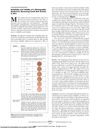
November 2011 in “Archives of Dermatology” This study describes a simple, noninvasive hair counting method used in a hair growth prevention trial, assessing its reliability and validity.
 3 citations
,
January 2022 in “Medical Mycology Journal”
3 citations
,
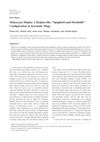
January 2022 in “Medical Mycology Journal” This study observed Malassezia hyphae in the keratotic plugs of healthy individuals, which contrasts with previous findings of these hyphae primarily in lesions of pityriasis versicolor patients.
3 citations
,
December 2021 in “Skin research and technology” This study clarified and quantified the concept of hair transparency using a validated mathematical model based on measurable hair properties and consumer perception data from stylists in Japan and China.
3 citations
,
August 2018 in “Zenodo (CERN European Organization for Nuclear Research)” This study introduced a tabletop optical microscopy technique to measure the biomagnetic field reach of human hair follicles using Prussian Blue Stain with iron particles.
 3 citations
,
January 2018 in “International Journal of Cosmetic Science”
3 citations
,
January 2018 in “International Journal of Cosmetic Science” In this study, researchers developed a method called the Stiffness-Angle Law and found that hair treated with caffeine-infused shampoo showed a 13.2% increase in stiffness, as measured by their novel evaluation technique.
 2 citations
,
February 2024 in “Journal of the European Academy of Dermatology and Venereology”
2 citations
,
February 2024 in “Journal of the European Academy of Dermatology and Venereology” This study resulted in a draft version of the Patient‐Reported Impact of Dermatological Diseases measure, PRIDD, which includes 27 items refined from patient consensus and is now undergoing psychometric testing.
2 citations
,
December 2010 in “PubMed” This study reported that a new two-point bending stiffness method effectively correlated with sensory assessments for hair styling gels but not for hair styling sprays, likely due to differences in polymer/hair composites.
1 citations
,
July 2023 in “International Journal of Pharmaceutical Sciences and Drug Research” This study developed an effective and reliable HPTLC method for the simultaneous measurement of linoleic acid and oleanolic acid in Eclipta alba.
1 citations
,
January 2003 in “Benjamins eBooks” This study found no significant difference in hair cortisol concentrations between sows confined in farrowing crates and those in loose-housing systems, suggesting confinement may not affect chronic stress levels.
 December 2025 in “BMC Medical Genomics”
 This study demonstrated that RNA-seq can effectively expand hair follicle transcriptomic profiling in a multi-center study, offering deeper insights than blood transcriptomics alone.
 April 2024 in “Journal of wildlife diseases”
 This study reported that captive muskoxen in Fairbanks, Alaska have significantly faster and variable guard hair growth rates compared to free-ranging Greenland muskoxen, indicating that a universal hair growth rate cannot be applied across different muskox populations or time periods.
June 2026 in “JAAD International”  March 2026 in “Mendeley Data”
 In this study, researchers developed an open-source browser-based tool to enhance the reproducibility and accuracy of SALT score calculations from scalp photos, aimed particularly at assessing partial regrowth in alopecia areata patients on JAK inhibitor therapy.