 46 citations
,
May 2011 in “Movement Disorders”
46 citations
,
May 2011 in “Movement Disorders” This article contains additional supporting information available online but presents no new research findings.
 39 citations
,
May 2011 in “Movement Disorders”
39 citations
,
May 2011 in “Movement Disorders” Finasteride may help reduce symptoms in male Tourette syndrome patients.
 31 citations
,
June 2011 in “Movement Disorders”
31 citations
,
June 2011 in “Movement Disorders” The document describes a woman with familial Parkinson's disease due to a genetic mutation, showing severe symptoms and poor response to treatment, and suggests finasteride may help reduce symptoms in Tourette syndrome.
 20 citations
,
June 2014 in “BMC genomics”
20 citations
,
June 2014 in “BMC genomics” This study identified the placenta at the base of the ovary as the origin of poplar seed hair development and detailed transcriptome dynamics during the growth process.
 20 citations
,
July 1990 in “Journal of the American Academy of Dermatology”
20 citations
,
July 1990 in “Journal of the American Academy of Dermatology” Captopril may cause hair loss, as shown by a woman's hair regrowing after stopping the medication.
 19 citations
,
January 2015 in “Skin Pharmacology and Physiology”
19 citations
,
January 2015 in “Skin Pharmacology and Physiology” This study reported that using 5% minoxidil topical foam twice daily improved hair density and width in both the frontotemporal and vertex regions of men with moderate androgenetic alopecia.
 18 citations
,
June 2017 in “Journal of The American Academy of Dermatology”
18 citations
,
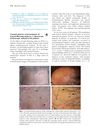
June 2017 in “Journal of The American Academy of Dermatology” In this study, trichoscopy consistently identified typical findings of frontal fibrosing alopecia, revealing three unusual clinical patterns in 18.4% of patients, which may aid in the differential diagnosis when clinical presentations are atypical.
 17 citations
,
May 2011 in “Movement Disorders”
17 citations
,
May 2011 in “Movement Disorders” Finasteride significantly reduced tics and obsessive-compulsive symptoms in patients with Tourette syndrome.
 14 citations
,
January 2015 in “Current problems in dermatology”
14 citations
,
January 2015 in “Current problems in dermatology” This review addresses treatment approaches for female pattern hair loss, highlighting that combining different therapies may be more effective than single treatments, but no new results are reported.
 14 citations
,
July 2012 in “Journal of the American Academy of Dermatology”
14 citations
,
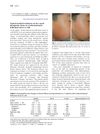
July 2012 in “Journal of the American Academy of Dermatology” This study found that topical tacalcitol improved roughness and scaling in erythromelanosis follicularis faciei et colli, although it was less effective for facial erythema.
 10 citations
,
June 2011 in “Movement Disorders”
10 citations
,
June 2011 in “Movement Disorders” THAP1 gene changes do not affect DYT1 dystonia; finasteride may help reduce tics and OCD in Tourette syndrome.
 9 citations
,
May 1989 in “Journal of the Royal Society of Medicine”
9 citations
,
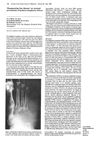
May 1989 in “Journal of the Royal Society of Medicine” An elderly woman's swollen, painful foot was found to be caused by a rare type of bone lymphoma, which improved with radiation treatment.
 7 citations
,
June 2011 in “Movement Disorders”
7 citations
,
June 2011 in “Movement Disorders” A specific gene mutation is linked to a hereditary form of dystonia that responds well to certain medications.
 7 citations
,
June 2010 in “Journal of The American Academy of Dermatology”
7 citations
,
June 2010 in “Journal of The American Academy of Dermatology” This paper reports a single case of lichenoid cutaneous sarcoidosis that was unresponsive to standard treatments but showed marked improvement with the administration of oral tranilast.
 5 citations
,
May 2011 in “Movement Disorders”
5 citations
,
May 2011 in “Movement Disorders” Finasteride significantly reduced tics and obsessive-compulsive symptoms in Tourette syndrome patients.
 5 citations
,
May 2011 in “Movement Disorders”
5 citations
,
May 2011 in “Movement Disorders” Finasteride may help reduce tic severity in male Tourette syndrome patients.
 4 citations
,
May 2011 in “Movement Disorders”
4 citations
,
May 2011 in “Movement Disorders” A woman's unique dementia was misdiagnosed, a genetic mutation increases Parkinson's risk with age, and finasteride may help with Tourette syndrome.
 3 citations
,
April 2021 in “Journal of Medicinal Chemistry”
3 citations
,
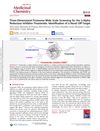
April 2021 in “Journal of Medicinal Chemistry” This study suggests that finasteride may inhibit the enzyme PNMT, potentially contributing to its sexual and psychological side effects.
 3 citations
,
October 2018 in “Skin appendage disorders”
3 citations
,
October 2018 in “Skin appendage disorders” In this study, Spectral DNC-N® significantly reduced hair shedding and increased hair mass and density in women with early female pattern hair loss, with effects evident after 3 months and sustained through 6 months.
 2 citations
,
January 2021 in “Journal of The American Academy of Dermatology”
2 citations
,
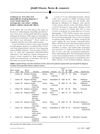
January 2021 in “Journal of The American Academy of Dermatology” This commentary highlights the consistency of recent findings on low-dose oral minoxidil's tolerability for androgenetic alopecia, noting infrequent side effects except for hypertrichosis.
 1 citations
,
August 2000 in “Expert Opinion on Therapeutic Patents”
1 citations
,
August 2000 in “Expert Opinion on Therapeutic Patents” This article reviews the therapeutic use of carnitine derivatives for re-establishing mitochondrial functionality in aging and reports no new clinical results.

In this study, low-dose oral minoxidil was found to have a favorable safety profile for treating alopecia, with mostly mild side effects, in both general and hypertensive populations.
 January 2011 in “Yearbook of Dermatology and Dermatologic Surgery”
 Finding a positive nonsentinel lymph node in melanoma patients indicates a worse prognosis.
 June 2024 in “Namık Kemal Tıp Dergisi”
 This study investigated whether individuals with psoriasis have higher MDS-16 scores and potentially more maladaptive daydreaming compared to healthy individuals.
75 citations
,
June 2007 in “Journal of Biological Chemistry” This study found that the combination of MT-DADMe-ImmA and MTA selectively induced apoptosis in head and neck squamous cell carcinoma cell lines FaDu and Cal27, but not in normal fibroblasts or MTAP-deficient breast cancer cells.
 9 citations
,
December 2023 in “Journal of Neuroimmune Pharmacology”
9 citations
,
December 2023 in “Journal of Neuroimmune Pharmacology” This study found that systemic administration of NDP-MSH, a melanocortin receptor agonist, provided neuroprotective effects on dopaminergic nigrostriatal neurons in a mouse model of Parkinson's disease, reducing neuroinflammation and suggesting a role for regulatory T cells in these neuroprotective effects.
 81 citations
,
July 2012 in “Translational Psychiatry”
81 citations
,
July 2012 in “Translational Psychiatry” In this pilot study, no significant differences were observed between memantine and placebo groups in young adults with Down syndrome on the primary memory outcomes, but some improvement was noted in a secondary measure.
24 citations
,
February 1986 in “Cancer” In this case study, a man with necrolytic migratory erythema and a glucagonoma experienced decreased plasma glucagon levels and reduced metastases after treatment with dimethyltriazenoimidazole carboxamide.
48 citations
,
June 2000 in “Japanese Journal of Cancer Research” This study found that dimethylarsinic acid significantly accelerates skin tumor development in hair follicle-targeted K6/ODC transgenic mice.
 June 2026 in “Frontiers in Oncology”
 In this study, researchers found that deficiencies in Gsdma1/2/3 significantly inhibited the initiation and progression of cutaneous squamous cell carcinoma (cSCC) in mice, suggesting GSDMA's role in promoting cSCC proliferation and its potential as a therapeutic target.