
This study found that a complex extract of Polygonatum sibiricum and Nelumbinis semen improved menopause symptoms in an ovariectomized rat model by enhancing blood lipid metabolism and reducing osteoporosis, without increasing risks of side effects like endometriosis, unlike conventional hormone-replacement therapy.
This study suggests that specific genetic changes, including mutations in protein-coding genes and noncoding regions, have contributed to the evolution of hairlessness in multiple mammalian species.
 November 2020 in “bioRxiv (Cold Spring Harbor Laboratory)”
 The study found that dermal EZH2 plays a crucial role in coordinating dermal fibroblast differentiation and epidermal development by modulating Wnt/β-catenin and retinoic acid signaling.
 November 2020 in “bioRxiv (Cold Spring Harbor Laboratory)”
 This study found that the Polycomb Repressive Complex 2, particularly its component Ezh2, is crucial in regulating dermal fibroblast differentiation and epidermal keratinocyte proliferation during murine skin development.
 June 2018 in “Biomedical Journal of Scientific & Technical Research”
 This mini review discusses cellular plasticity in cutaneous wound healing and reports no clinical results; the authors aim to enhance regenerative medicine by examining underlying mechanisms.
 April 2018 in “D-Scholarship@Pitt (University of Pittsburgh)”
 This study found that keratin-75, discovered in enamel tissue, is secreted by ameloblasts using an unconventional pathway involving the ER-Golgi-Intermediate-Compartment and Golgi, differing from typical cytokeratin localization.
 January 2018 in “Stem cell biology and regenerative medicine”
 This paper reviews the role of ATP-dependent chromatin remodeling complexes in epidermal homeostasis, hair regeneration, and skin repair, noting contributions to 3D-genomic organization and suppression of UV-induced hyper-proliferation, without presenting new results.
 April 2017 in “Journal of Investigative Dermatology”
 This study found that miR-486 and miR-451 levels were reduced in alopecia areata-affected skin, and delivering their mimics to mice mitigated symptoms by reducing inflammation and immune activity.
 July 2016 in “Indian journal of science and technology”
 In this study, researchers found that neonate hairs have a distinct microstructure with no medulla and smaller hair follicles compared to adult hairs.
This study found that Avicennia marina extract and its active compound avicequinone C inhibit enzymes and receptors related to androgenic alopecia, potentially supporting hair growth in cultured dermal papilla cells.
 January 2012 in “Elsevier eBooks”
 This chapter reviews therapies for skin and corneal regeneration and hair loss, discussing various treatments but presenting no new research findings.
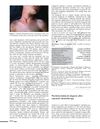
This abstract discusses pellagra as a nutritional disorder characterized by a known set of symptoms but reports no new clinical findings; the authors review existing knowledge and suggest further research.
 June 2004 in “Dermatologic Surgery”
 This article presents techniques that help hair restoration surgeons achieve aesthetically pleasing single donor scars after multiple surgeries, enhancing the viability of the single-scar technique.
 March 2026 in “Wiadomości Lekarskie”
 This narrative review explores how psychological stress may contribute to premature skin aging by affecting dermal collagen and elastin remodeling through neuroendocrine, molecular, and cellular pathways, highlighting potential therapeutic targets to preserve skin structure and function.
May 2023 in “bioRxiv (Cold Spring Harbor Laboratory)” This study reported the first comprehensive transcriptome atlas of the extraorbital lacrimal gland in mice, identifying over 41 cell subclasses and revealing significant cell-cell communication networks, particularly among innate lymphoid cells.
December 2022 in “Clinical and experimental dermatology and therapies” In this study, the addition of a topical gel containing growth-factor mimicking oligopeptides and other ingredients showed improved efficacy in subjects with androgenic alopecia using minoxidil or finasteride compared to drug treatment alone.
 363 citations
,
March 2017 in “Nature Communications”
363 citations
,
March 2017 in “Nature Communications” This study found that, in mouse tail epidermis, stem cells rapidly activate and regenerate new progenitors to repair wounds, with mechanisms affecting their proliferation, differentiation, and migration.
 124 citations
,
June 2020 in “Cell Stem Cell”
124 citations
,
June 2020 in “Cell Stem Cell” This study found that in mice, dermal adipocytes initiate inflammation and aid repair after skin injury by releasing lipids, suggesting a role in managing inflammatory diseases and impaired wound healing.
 115 citations
,
February 2016 in “Nature Communications”
115 citations
,
February 2016 in “Nature Communications” The authors concluded that the dermal response to epidermal Wnt/β-catenin signaling depends on distinct fibroblast lineages, with each responding to different paracrine signals such as Hedgehog and TGF-β.
 71 citations
,
September 2006 in “Cell Transplantation”
71 citations
,
September 2006 in “Cell Transplantation” This study concludes that fetal skin cells can significantly enhance wound healing and reduce scarring when used to treat severe burns and various wounds in children.
 64 citations
,
August 2007 in “Artificial Organs”
64 citations
,
August 2007 in “Artificial Organs” This study found that PHBV cocultured with epithelial and dermal cells might enhance early-stage wound healing by promoting wound closure and re-epithelization more effectively than PHBV/collagen.
 37 citations
,
October 2009 in “Dermatology”
37 citations
,
October 2009 in “Dermatology” This study suggests that the action of minoxidil in stimulating hair growth likely occurs at the follicular dermal papilla, though it does not induce new follicle formation.
 23 citations
,
September 2017 in “The journal of investigative dermatology/Journal of investigative dermatology”
23 citations
,
September 2017 in “The journal of investigative dermatology/Journal of investigative dermatology” In this mouse study, NF-κB was shown to play a role in hair follicle cycling and morphogenesis, with specific activity patterns differing by hair type and involving noncanonical signaling for zigzag hair bending.
 18 citations
,
November 2014 in “Journal of Agricultural and Food Chemistry”
18 citations
,
November 2014 in “Journal of Agricultural and Food Chemistry” This study found that ethanol-extracted propolis stimulated hair growth in mice by promoting the proliferation of hair keratinocytes.
 13 citations
,
September 1989 in “International Journal of Dermatology”
13 citations
,
September 1989 in “International Journal of Dermatology” Carbamazepine may cause reversible nail detachment.
 10 citations
,
August 2021 in “Journal of Cosmetic Dermatology”
10 citations
,
August 2021 in “Journal of Cosmetic Dermatology” This study retrospectively analyzed 3028 patients with telogen effluvium, finding that 6.2% had iron deficiency anemia and vitamin D deficiency was common, especially in women who were more often prescribed vitamin D therapy.
 6 citations
,
September 2019 in “Skin pharmacology and physiology”
6 citations
,
September 2019 in “Skin pharmacology and physiology” This study found that RCS-01 cell therapy for aged skin was well tolerated and associated with increased gene expression related to extracellular matrix homeostasis, suggesting potential skin improvement.
5 citations
,
July 2022 in “Frontiers in Medicine” In this study, the combination of ECM-C with microneedle and radiofrequency treatments improved periorbital wrinkles, skin elasticity, and thickness more effectively than ECM-C with microneedles alone, but subjective evaluations showed no significant differences.
 2 citations
,
January 2020 in “BioMed Research International”
2 citations
,
January 2020 in “BioMed Research International” This study found that Phaeodactylum tricornutum extract enhanced hair follicle cell proliferation, indicated by increased keratin and ERK1/2 signaling, suggesting its potential for hair care applications.
 2 citations
,
March 2019 in “Plastic and Reconstructive Surgery”
2 citations
,
March 2019 in “Plastic and Reconstructive Surgery” This review discusses various mechanical isolation procedures for tissue-like stromal vascular fraction, such as the nanofat procedure, and highlights the need for controlled trials to assess their regenerative effectiveness.