 6 citations
,
September 2022 in “Journal of Clinical Medicine”
6 citations
,
September 2022 in “Journal of Clinical Medicine” This study reported that micro-needling with Low-Level LED Therapy and Growth Factors may improve hair density in mild-to-moderate hair loss and telogen effluvium related to COVID-19, based on preliminary observations.
4 citations
,
November 2025 in “Nature Reviews Disease Primers” 3 citations
,
November 2021 in “Frontiers in Medicine” This study found that androgenetic alopecia can affect the occipital region in men with advanced stages of the condition.
3 citations
,
January 2020 in “Indian Journal of Dermatology” This study found that certain VDR gene polymorphisms are more prevalent in female pattern hair loss patients than in healthy controls, suggesting these polymorphisms may increase disease risk.
 2 citations
,
April 2023 in “BMC endocrine disorders”
2 citations
,
April 2023 in “BMC endocrine disorders” In this study, a significant positive correlation between clinical hyperandrogenism and free androgen index was found in younger women with PCOS, but not in older women.
 2 citations
,
December 2016 in “Journal of Pakistan Association of Dermatology”
2 citations
,
December 2016 in “Journal of Pakistan Association of Dermatology” In this study, it was found that 39.6% of the women in Isfahan aged 20 to 70 had androgenetic alopecia, and lower ferritin levels were linked to more severe cases.
1 citations
,
January 2022 in “Springer eBooks” 1 citations
,
January 2000  July 2026 in “Aesthetic Plastic Surgery”
 This pilot study found that intradermal 10% glucose combined with non-cross-linked hyaluronic acid improved hair density and diameter more than hyaluronic acid alone in adults with androgenetic alopecia, with no serious adverse events.
 July 2026 in “International Journal of Clinical & Experimental Dermatology”
 This exploratory pilot study reported that using a 2% Oleosome-FGF-2 fusion extract scalp serum twice daily for 84 days in women with telogen effluvium and brittle hair improved hair density, anagen/telogen ratio, hair shaft thickness, and scalp hydration compared to a placebo.
 May 2026 in “Zenodo (CERN European Organization for Nuclear Research)”
 This review discusses the pathophysiology, molecular events, and therapeutic options for androgenetic alopecia, but reports no new clinical findings.
 May 2026 in “Drug Delivery and Translational Research”
 Nanocarriers with spironolactone and 2-deoxy-D-ribose may improve hair loss treatment by targeting hair follicles directly.
 May 2026 in “Zenodo (CERN European Organization for Nuclear Research)”
 This review explores the complex pathophysiology of androgenetic alopecia, highlighting genetic factors, androgen metabolism, and emerging therapies such as platelet-rich plasma and low-level laser therapy, but notes that no ultimate cure exists and treatments focus on slowing progression and promoting hair growth.
 April 2026 in “Dermatology and Therapy”
 The device improved hair growth and thickness in men without side effects.
 June 2025 in “Australian Prescriber”
 In this study, the authors highlighted treatments for androgenetic alopecia, noting that combination therapies with drugs like minoxidil and antiandrogens often require at least 6 months for clinical improvement, while also emphasizing the value of patient counseling for informed treatment choices.
 March 2025 in “International Journal of Trichology”
 This case report describes the first observed instance of fibrosing alopecia in a pattern distribution in a child, suggesting the condition is not solely androgen dependent.
This study proposes a new treatment protocol combining autologous regenerative therapy with mesotherapy and photobiostimulation for androgenetic alopecia, leveraging adipose-derived stem cells to stimulate hair follicle regeneration.

This study found that frequent consumption of sweetened tea drinks is linked to an increased risk of female androgenetic alopecia, with the risk further heightened by late bedtimes, but sleep behavior rather than sugar intake mediates the association.
January 2024 in “Updates in clinical dermatology” This paper reviews the autoimmune disorder alopecia areata, its progression, and its significant emotional and psychological impact, but reports no new clinical findings.
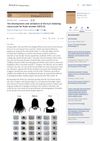 October 2023 in “The Journal of Dermatology”
 This study developed and validated the Hair-Shedding Visual Scale for Asian Women, finding it to be an effective tool for identifying FPHL and TE.
 January 2023 in “Annals of Dermatology”
 This study found that males with a maternal history of androgenetic alopecia were significantly more likely to have female pattern hair loss, suggesting early screening might be beneficial.
This case report and literature review concluded that using the follicular unit extraction technique for hair transplants in androgenetic alopecia patients yields satisfactory aesthetic results and high patient satisfaction over 12 months.
 January 2021 in “Springer eBooks”
 The document reviews the latest and most effective hair restoration techniques for male and female hair loss.
This article discusses disruptions in hair cycle dynamics and follicular miniaturization associated with patterned hair loss, emphasizing androgen-related changes, and reports no clinical findings.
 February 2011 in “Vestnik dermatologii i venerologii”
 This study observed a decrease in hair density and average hair diameter, along with an increase in hair loss, among females with androgenic alopecia compared to healthy controls.
January 2007 in “Revista del Centro Dermatológico Pascua” This abstract discusses the effects of androgenetic alopecia on men's and women's quality of life but reports no new research findings.
January 2026 in “Clinical Dermatology Review” This study found that platelet-rich plasma therapy significantly improved hair density, diameter, and reduced inflammation in androgenetic alopecia patients compared to placebo, though individual responses varied.
January 2022 in “Springer eBooks” April 2020 in “International journal of reproduction, contraception, obstetrics and gynecology” This case study discussed a postmenopausal female with androgenic alopecia and hirsutism due to a Leydig cell tumor, suggesting the importance of further workup in women with severe hirsutism or androgenic alopecia.