 1 citations
,
January 2014 in “Springer eBooks”
1 citations
,
January 2014 in “Springer eBooks” Adult acne is more common in women, often linked to hormones, and can be harder to treat.
 1 citations
,
January 2014 in “Progress in Neurology and Psychiatry”
1 citations
,
January 2014 in “Progress in Neurology and Psychiatry” This report discusses the complex interplay between dermatological and psychiatric conditions and presents insights shared at the 22nd EADV Congress, but it reports no new research results.
 1 citations
,
January 2013 in “Springer eBooks”
1 citations
,
January 2013 in “Springer eBooks” The document concludes that skin and nail changes can indicate various underlying health conditions.
 1 citations
,
January 2013 in “Elsevier eBooks”
1 citations
,
January 2013 in “Elsevier eBooks” The document reviews various hair and nail disorders, their causes, and treatments, emphasizing the need for proper diagnosis and the link between nail changes and systemic diseases.
 1 citations
,
January 2013 in “Chronicles of young scientists”
1 citations
,
January 2013 in “Chronicles of young scientists” This article discusses the characteristics of human hair, its damaging processes, and the potential repair effects of immuno-cosmeceuticals, but it reports no new clinical results.
 1 citations
,
October 2012 in “Gynäkologische Endokrinologie”
1 citations
,
October 2012 in “Gynäkologische Endokrinologie” This review discusses androgenization symptoms like hirsutism, alopecia, and acne in reproductive-age women, focusing on diagnostic and therapeutic approaches, and highlights postmenopausal considerations, but presents no new clinical findings.
 1 citations
,
March 2011 in “Infertility”
1 citations
,
March 2011 in “Infertility” This chapter discusses common endocrine disorders affecting the pituitary, thyroid, and adrenal glands, and their impact on human fertility, emphasizing practical evaluation and treatment algorithms.
 1 citations
,
January 2010 in “Elsevier eBooks”
1 citations
,
January 2010 in “Elsevier eBooks” Any drug can cause skin reactions, but antibiotics, NSAIDs, and psychotropic drugs are more common, with some reactions being life-threatening.
This chapter reviews various types of aromatic compounds and provides references, but reports no new experimental results.
 1 citations
,
January 2001 in “American Journal of Kidney Diseases”
1 citations
,
January 2001 in “American Journal of Kidney Diseases” This report suggests that recombinant human erythropoietin use may be linked to alopecia in Southeast Asian women with chronic renal failure.
 1 citations
,
December 1997 in “The British Journal of Psychiatry”
1 citations
,
December 1997 in “The British Journal of Psychiatry” This document outlines the indications, dosing, side effects, and contraindications for Epilim in epilepsy treatment, with no new research findings presented.
 1 citations
,
March 1997 in “Journal of the American Pharmaceutical Association”
1 citations
,
March 1997 in “Journal of the American Pharmaceutical Association” This guideline summary, endorsed by six Spanish pediatric societies, outlines consensus recommendations for managing childhood asthma, emphasizing diagnosis, maintenance treatment with low-dose inhaled corticosteroids, and patient education for effective control.
 May 2026 in “Scientific Reports”
 This study found that a bioactive borosilicate glass containing Sr and Cu ions exhibited promising mechanical strength, biocompatibility, and antibacterial activity, particularly the CuSr-1 wt.% composition, suggesting potential for use in orthopedic implants and bone tissue engineering.
 May 2026 in “Journal of Wildlife and Conservation Medicine”
 This study found that camera trap images revealed mange-like skin lesions in snow leopards and other species in Kyrgyz reserves, with detection rates varying widely and raising concerns about disease spread.
 April 2026 in “Frontiers in Pharmacology”
 This study revealed significant signals of drug-related cognitive disorders in several medications that lack relevant FDA label warnings, suggesting a need for increased clinical awareness and potential label updates.
 April 2026 in “International Journal of Nanomedicine”
 This review explores quercetin's potential in multifunctional theranostic systems, highlighting its bioactivity and the challenges of improving its clinical application through innovative strategies like nanoencapsulation, while noting that research in this area is underdeveloped.
 February 2026 in “International Journal of Science and Research (IJSR)”
 This case report describes an 18-year-old female with alopecia areata who experienced hair regrowth within seven days following Prachana Vidhi treatment in an Ayurvedic setting, suggesting this approach may offer effective results for patchy hair loss.
This source provides medical information intended solely for licensed professionals and emphasizes that it is not a substitute for medical advice, diagnosis, or treatment decisions, which remain the responsibility of treating physicians.
 January 2026 in “Microsystems & Nanoengineering”
 This study analyzed 853 articles to reveal that research on silica-based nanobiomaterials in regenerative medicine has rapidly increased, with distinct regional differences in impact and emerging focus areas in drug delivery and wound healing.
 January 2026 in “Nature Communications”
 This study presented a new wearable textile-based device with near-infrared OLEDs that significantly reduced cell aging markers and improved cell migration in vitro, suggesting it as a promising, non-invasive phototherapy option for hair follicle treatment and hair-loss management.
 January 2026 in “RSC Advances”
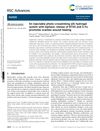
 The hydrogel helps heal wounds without scars by releasing two drugs gradually.
 December 2025 in “ADMET & DMPK”
 This review synthesizes recent research to propose a precision framework for treating androgenetic alopecia and alopecia areata based on genetic insights and pathway biology, highlighting the roles of androgen-receptor signaling, immune dysregulation, and emerging therapies like regenerative medicine and AI-assisted diagnostics.
 December 2025 in “Scientific Reports”
 This study found that preconditioning human hair follicle-derived stem cells with valproic acid enhanced their survival and migration in ischemic-like conditions by activating autophagy and inhibiting the AKT/mTOR pathway, suggesting this approach could improve stem cell therapies for ischemic stroke.
 December 2025 in “International Journal of Medicine and Public Health”
 In this study, researchers found that overt hyperthyroidism was the most prevalent thyroid disorder among patients, especially in women, and it was characterized by classic symptoms like high pulse rate and weight loss, highlighting the importance of early identification and management to prevent complications.
This study suggests that estimating autism likelihood as early as one month after birth may enable more precise early intervention for children with developmental support needs, potentially improving diagnosis, workflows, and reducing service wait times.
 October 2025 in “Journal of Translational Medicine”
 This literature review discusses the challenges and potential strategies for creating fully functional hair follicles capable of active cycling, emphasizing the molecular mechanisms, signaling pathways, and innovative regenerative techniques, such as hair micropatterning and three-dimensional printing, crucial for optimizing hair follicle regeneration.
 October 2025 in “International Research Journal of Ayurveda & Yoga”
 This review discusses the use of Kusthadi Lepam for treating Ek-Kustha, which resembles psoriasis, but reports no new clinical results; the authors suggest further research on its efficacy and safety.
 September 2025 in “Journal of Health Sciences”
 In this study, researchers developed an antioxidant hair tonic using Dipteryx odorata (cumaru) extract, aimed at treating scalp psoriasis, which could potentially improve quality of life for patients due to its natural anti-inflammatory and antioxidant properties.
In this case report, an African American male with signs of acne keloidalis nuchae highlights the condition's chronic nature and need for early intervention to minimize permanent scarring and its psychosocial impact.
 June 2025 in “Cermin Dunia Kedokteran”
 This study emphasizes the importance of early detection and cross-sector collaboration in preventing suicide among adolescents, highlighting the role of health professionals, screening tools, and family support systems.