 1 citations
,
September 2025 in “PLoS ONE”
1 citations
,
September 2025 in “PLoS ONE” This study identified numerous drugs with potential to trigger vitiligo, cautioning that these pharmacovigilance findings need further validation and that patients on these medications should be monitored for vitiligo development.
This research found significant associations between gut microbiome composition and 14 out of 37 examined health conditions, suggesting that increased microbial abundance often aligns with favorable health states.
 1 citations
,
March 2025 in “Archivos Argentinos de Pediatria”
1 citations
,
March 2025 in “Archivos Argentinos de Pediatria” This study found that exposure to phytoestrogens, bisphenol A, parabens, and phthalates was associated with developing idiopathic premature thelarche in girls.
 1 citations
,
January 2025 in “RSC Advances”
1 citations
,
January 2025 in “RSC Advances” The researchers evaluated scientific data on the usage and pharmaceutical applications of ascorbic acid derivatives, such as ascorbyl-6-palmitate and ascorbyl-2-glucoside, highlighting their development into stable delivery platforms to overcome ascorbic acid's instability and formulation challenges.
 1 citations
,
March 2024 in “Signal transduction and targeted therapy”
1 citations
,
March 2024 in “Signal transduction and targeted therapy” In this review, researchers explored the multifaceted role of NF-κB signaling in various biological processes and diseases, including its interactions with other pathways, and discussed possible therapeutic approaches targeting this pathway for treating conditions like cancer, autoimmune disorders, and COVID-19.
 1 citations
,
January 2024 in “Nature communications”
1 citations
,
January 2024 in “Nature communications” This study found that stimulating toll-like receptor 5 via mucosal delivery of a flagellin-containing fusion protein effectively extended lifespan and enhanced healthspan in mice, including improved bone density and cognitive capacity.
 1 citations
,
January 2024 in “Wiadomości Lekarskie”
1 citations
,
January 2024 in “Wiadomości Lekarskie” This study evaluated a new computer-aided detection system for identifying Breast Arterial Calcification in mammograms, achieving 70% accuracy, but highlighted the need for a larger dataset to explore its relationship with cardiovascular diseases.
 1 citations
,
January 2024 in “American journal of clinical and experimental immunology.”
1 citations
,
January 2024 in “American journal of clinical and experimental immunology.” This study reports that cutaneous manifestations such as herpes zoster, purpura, and livedo reticularis in COVID-19 patients can potentially indicate disease severity, aiding in the prediction of the illness's progression and guiding dermatological management during the pandemic.
 1 citations
,
November 2023 in “Indian Journal of Science and Technology”
1 citations
,
November 2023 in “Indian Journal of Science and Technology” In this study, researchers identified several active metabolites in Eclipta alba, demonstrated strong interaction with Alzheimer's disease proteins, and found that 28 days of treatment improved memory without significant toxicity in rats, suggesting potential pathways for treating Alzheimer's.
 1 citations
,
October 2023 in “Romanian Journal of Morphology and Embryology”
1 citations
,
October 2023 in “Romanian Journal of Morphology and Embryology” This review analyzed 109 articles to classify skin lesions associated with COVID-19 and their frequency during the disease, but found no conclusive evidence on long-term persistence of specific types due to rarity.
 1 citations
,
May 2023 in “Indian Journal of Dermatology Venereology and Leprology”
1 citations
,
May 2023 in “Indian Journal of Dermatology Venereology and Leprology” This study found that patients with alopecia areata were more likely to experience hearing loss compared to healthy individuals, potentially due to damage to follicular melanocytes involved in the autoimmune process.
 1 citations
,
November 2022 in “World Family Medicine Journal /Middle East Journal of Family Medicine”
1 citations
,
November 2022 in “World Family Medicine Journal /Middle East Journal of Family Medicine” This study found that while participants in Jeddah, Saudi Arabia, had good knowledge about Vitamin D and recognized sunlight as a key source, there was inconsistency in their attitudes towards maintaining adequate Vitamin D levels.
 1 citations
,
July 2022 in “Functional foods in health and disease/Journal of functional foods in health & disease”
1 citations
,
July 2022 in “Functional foods in health and disease/Journal of functional foods in health & disease” This study found that oral probiotic supplementation over 12 weeks may improve hair growth, skin condition, metabolic health, and stress responses in Chinese adults with hair loss and a high risk of metabolic syndrome.
 1 citations
,
November 2021 in “Advances in Dermatology and Allergology”
1 citations
,
November 2021 in “Advances in Dermatology and Allergology” This study described the clinical and pathologic characteristics of patients with cutaneous lupus erythematosus, noting that chronic cutaneous lupus was most common, with photosensitivity as a prevalent symptom.
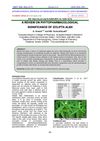 1 citations
,
January 2020 in “International journal of research in pharmacy and chemistry”
1 citations
,
January 2020 in “International journal of research in pharmacy and chemistry” This review provides an overview of the ethnomedicinal uses, chemical composition, and pharmacological profile of Eclipta alba Hassk and presents no new clinical findings.
 1 citations
,
October 2018 in “InTech eBooks”
1 citations
,
October 2018 in “InTech eBooks” This chapter reviews current and emerging pharmacological treatments for alopecia, noting that the FDA's classification of alopecia as a cosmetic disease has limited drug development and led to off-label use of potentially dangerous compounds.
 1 citations
,
July 2016 in “Cosmetics”
1 citations
,
July 2016 in “Cosmetics” This review highlights a case of cross sensitization to dyes from temporary henna tattoos and stresses the need for public awareness on the risks associated with these tattoos.
 1 citations
,
April 2016 in “Journal of The American Academy of Dermatology”
1 citations
,
April 2016 in “Journal of The American Academy of Dermatology” A man developed a rare skin condition and drug-induced lupus, highlighting the need for biopsy in diagnosing skin issues caused by sunlight.
 1 citations
,
April 2016 in “Journal of The American Academy of Dermatology”
1 citations
,
April 2016 in “Journal of The American Academy of Dermatology” A woman had a delayed allergic reaction to the blood thinner enoxaparin, treated with a steroid cream.
 1 citations
,
January 2016 in “Elsevier eBooks”
1 citations
,
January 2016 in “Elsevier eBooks” This review examines the origins and mechanisms of tumor initiation in common skin cancers, but does not present new experimental findings; it emphasizes the need for further research on cancer stem cells.
 1 citations
,
January 2014 in “Rinsho Shinkeigaku”
1 citations
,
January 2014 in “Rinsho Shinkeigaku” This case report suggests an immunological link between multifocal acquired demyelinating sensory and motor neuropathy and alopecia, with both conditions improving after treatment with intravenous immunoglobulin.
 June 2026 in “Frontiers in Oncology”
 In this study, researchers found that deficiencies in Gsdma1/2/3 significantly inhibited the initiation and progression of cutaneous squamous cell carcinoma (cSCC) in mice, suggesting GSDMA's role in promoting cSCC proliferation and its potential as a therapeutic target.

The researchers presented a rare case of a four-year-old developing scarring alopecia after a two-week ICU stay, highlighting the challenge of diagnosing pressure alopecia in children and the crucial role of early detection and trichoscopy in preventing permanent hair loss.
 May 2026 in “AAPS PharmSciTech”
 This study found that PEGylated LUT-Aspasomes significantly improved neuroprotective effects in stressed rats, enhancing spatial memory, reducing depressive-like behavior, and preserving hippocampal architecture better than free luteolin. Additionally, it increased brain delivery and stability, suggesting potential for treating stress-related neurobehavioral disorders.

This study found that in men with androgenetic alopecia, elevated triglycerides were the only factor consistently associated with the condition, suggesting a potential link between AGA and lipid metabolism, although other hormonal, metabolic, and sleep factors were not significantly different after propensity score matching.
 April 2026 in “Frontiers in Cell and Developmental Biology”
 This literature review suggests that hair cell loss in hearing loss is often secondary to preceding morphological and functional defects in hair cells, indicating that interventions should focus on hearing preservation before significant hair cell loss occurs.
 March 2026 in “American Journal of Clinical Dermatology”
 This narrative review provides an overview of the persistent dermatological side effects experienced by cancer survivors due to treatments, highlighting their impact on quality of life and the need for structured dermatological care during survivorship.
 March 2026 in “Journal of Clinical and Basic Psychosomatics”
 This review, sourced from expert panel discussions and literature analysis, suggests Tianmeng oral liquid may improve sleep, reduce anxiety and depression, and enhance well-being in psychosomatic disorder patients, though further research is necessary.
 March 2026 in “International Journal of Science Strategic Management and Technology”
 This research introduces WomenCare, a web-based system using a machine learning model to predict PCOD risk by evaluating factors like age, BMI, and lifestyle habits; it aims to help women monitor their health but is not a substitute for a professional diagnosis.
 March 2026 in “Folia Histochemica et Cytobiologica”
 This review highlights LTBP1 as a critical integrator in disease processes, showing its dual role in cancer progression and suppression, its pathological influence in fibrosis, and its contribution to various disorders, suggesting its potential as a biomarker and therapeutic target.