 April 2026 in “AMEI's Current Trends in Diagnosis & Treatment”
 This review discusses the symptoms, causes, and treatment options for polycystic ovary syndrome and reports no new results; the authors highlight the role of lifestyle changes, medications, and fertility treatments.
 March 2026 in “Collagen and Leather”
 This study found that a newly developed supramolecular FPC hydrogel effectively promotes wound healing through its anti-inflammatory and angiogenic properties, making it a promising material for wilderness first aid due to its storage convenience, sprayability, and ability to speed up wound recovery.
 March 2026 in “Journal of Cancer Survivorship”
 This review highlights the potential for physical exercise to reduce treatment toxicity and modification rates in patients with metastatic colorectal cancer receiving systemic treatments, suggesting benefits for survival outcomes; it recommends further trials to confirm these findings.
 March 2026 in “SKIN The Journal of Cutaneous Medicine”
 This study demonstrated that litifilimab significantly reduced disease activity in cutaneous lupus erythematosus by Week 16, with improvements most notable in sunlight-exposed skin areas.

This review discusses how permanent micropigmentation can restore eyebrow appearance and potentially improve psychosocial well-being in cancer survivors experiencing alopecia after chemotherapy, but it reports no new clinical results.
 January 2026 in “Pakistan journal of urology.”
 This case study detailed a rare instance of Penile Thread Tourniquet Syndrome in a 10-year-old boy, where a thread caused localized infection and edema without urethral damage, ultimately resulting in a favorable outcome through surgical and conservative management.

This case study reports a rare instance of both alopecia areata and fixed drug eruption occurring in the same area on a 40-year-old man's beard, triggered by oral paracetamol, highlighting potential shared pathogenic pathways and the isotopic phenomenon.
 January 2026 in “Al-Kunooze Scientific Journal”
 This study documented that dermatophytosis was highly prevalent in Basra's cats, particularly affecting males and cats under nine months, with lesions most frequent on ears, face, and abdomen.
 December 2025 in “TURKDERM”
 This article discusses Trikostazis spinuloza (TS), a dermatological condition often misdiagnosed, and reviews its demographic, clinical, and dermoscopic features, but reports no new clinical results.
 December 2025 in “Canadian Urological Association Journal”
 This study highlights the gap between media claims and limited scientific evidence on the impact of alternative therapies for men's health, emphasizing the need for larger-scale trials for informed patient counseling.
 November 2025 in “Nanoscale Advances”
 This review highlights the potential of inorganic nanoparticle-based scaffolds as innovative tools for advanced wound care, emphasizing their ability to provide antimicrobial action and regenerative support, while also discussing fabrication strategies and challenges in optimizing their clinical application.
 October 2025 in “International Journal of Social health”
 This systematic review reported that among men taking finasteride for benign prostatic hyperplasia, total PSA levels decreased by 30% to 50%, and free PSA by up to 45%, with reductions in prostate volume and PSA density observed as well.
 August 2025 in “International Journal of Scientific Research in Biological Sciences”
 In this study, women with polycystic ovarian syndrome were found to have significantly higher blood levels of DHEA, IL-6, and TNF-α compared to healthy controls.
 July 2025 in “Bulgarian Portal for Open Science”
 In this study, researchers explained that healing of extensive skin defects involves granulation filling the wound cavity, followed by epithelialization from skin edges and hair follicles, which are crucial steps in wound healing.
 June 2025 in “Reports of Vinnytsia National Medical University”
 In this study, young Ukrainian men with alopecia areata were found to generally have higher body circumference measurements, particularly in the upper limbs, lower limbs, and trunk, compared to healthy controls, suggesting potential markers for the disease and aiding personalized diagnosis and treatment approaches.
 May 2025 in “Journal of Diverse Medical Research Medicosphere”
 This article reports a rare case of angioedema in a pregnant woman with systemic lupus erythematosus, highlighting a need for further research in this area.
 May 2025 in “International Journal of Innovations in Science Engineering and Management.”
 This study reviewed the literature on cryptorchidism in dogs and found it may be associated with dermatological issues like alopecia, with surgical intervention and cyclosporine offering partial benefit.
 January 2025 in “International Journal of Dermatology Venereology and Leprosy Sciences”
 This review discusses the various off-label treatments for alopecia areata, highlighting that these therapies may promote hair growth but are not curative.
 January 2025 in “Dermatology Review”
 In this case report, a 57-year-old man with chronic myelogenous leukemia developed a large, rapidly growing giant keratoacanthoma, highlighting the diagnostic challenges it poses compared to cutaneous squamous cell carcinoma, with surgical excision identified as the preferred treatment.
 October 2024 in “Dermatology Practical & Conceptual”
 The researchers recommend considering porokeratosis as a possible diagnosis for scalp lesions since accurate identification is crucial for management and new treatments like topical cholesterol/lovastatin show promising potential for treating porokeratosis.
 October 2024 in “International Journal of Research in Dermatology”
 This study, conducted at AIIMS Raebareli, found that infections, especially fungal, are the most common dermatological conditions affecting all age groups in their clinic, with dermatitis being notably prevalent among adults, suggesting the need for targeted public health measures.
 August 2024 in “Journal of Animal Science and Technology”
 This study identified specific keratin-associated protein genes that are highly expressed in different varieties and sexes of Angora goats, providing insights for improving mohair development through targeted breeding strategies.
 June 2024 in “Journal of Dermatology & Cosmetology”
 This comparison study identified non-shaven FUT long hair (FUL) restoration as potentially offering more aesthetic benefits and fewer scars than FUE or conventional FUT for treating various types of alopecia.
 May 2024 in “Scientific Reports”
 In this study, researchers examined androgen receptor activity in the adult mouse brain and found specific expression in key brain areas, which could inform understanding of cognitive side effects in humans undergoing androgen deprivation therapy for prostate cancer.
 April 2024 in “Research Square”
 IBD patients treated with TNF antagonists may develop autoimmune alopecia areata, with severe cases less likely to improve.
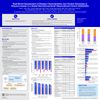
In this retrospective study of alopecia areata patients across several European countries, researchers observed a notable reduction in SALT scores, but few patients reached or maintained a clinically significant SALT score of ≤20, indicating potentially limited effectiveness of current treatments for extensive hair loss.
 January 2024 in “International Research Journal of Ayurveda & Yoga”
 This study reports that in a single-case study, a 24-year-old female with alopecia areata experienced significant hair regrowth after undergoing seven sessions of Jalaukavacharana (leech therapy) along with Ayurvedic medication, suggesting these treatments may be beneficial for such cases.
 January 2024 in “Frontiers for young minds”
 This article explores the different types of alopecia, their causes, and treatment options, emphasizing the impact of hair loss on appearance and mental health. However, it does not report specific study results.
 January 2024 in “International Journal of Homoeopathic Sciences”
 This abstract outlines the issue of hair loss caused by various factors, including stress and autoimmune disorders like alopecia areata, which results in spot baldness, but does not provide specific study results.
 January 2024 in “International Journal of Advanced Biochemistry Research”
 In this study investigating canine pyoderma, the researchers found that Staphylococcus species isolated from 57 dogs were most sensitive to the antibiotic Linezolid, with a 100% sensitivity rate, followed by other antibiotics like Doxycycline hydrochloride and Cefpodoxime.