7 citations
,
July 2019 in “Animals” This study identified a new ovine KRTAP21-1 gene variant in sheep, with wool yield affected by the variant, suggesting its potential as a genetic marker for improving wool production.
 6 citations
,
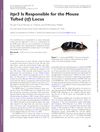
October 2012 in “Journal of Heredity”
6 citations
,
October 2012 in “Journal of Heredity” This study identified the Itpr3 gene as responsible for the tufted hair loss phenotype in the BTBR mouse strain.
 30 citations
,
March 2019 in “Archives animal breeding/Archiv für Tierzucht”
30 citations
,
March 2019 in “Archives animal breeding/Archiv für Tierzucht” In this study, variation in the KRTAP15-1 gene in goats was linked to changes in cashmere fibre diameter, with specific variants showing dominant or recessive effects.
77 citations
,
April 2005 in “Journal of Investigative Dermatology” Repetin is a protein involved in skin and hair development, binding calcium and compensating for other proteins when needed.
70 citations
,
December 2008 in “Cancer Research” This study found that activating CXCR2 on ras-transformed keratinocytes promotes migration and tumor development in a mouse skin model.
 February 2026 in “Trials”
 The Exfoliate-Dissolve-Repair skincare approach may effectively treat keratosis pilaris and reduce the need for corticosteroids.

This study in Gansu alpine fine-wool sheep identified two SNPs in the KRT71 gene that significantly affect wool length, with distinct expression patterns observed in hair follicles, suggesting KRT71 as a candidate gene for enhancing wool production traits.
October 2024 in “Journal of the Endocrine Society” This case report highlights that a patient with resistance to thyroid hormone was misdiagnosed as having Graves’ disease, leading to unnecessary radioactive iodine treatment.
45 citations
,
March 2001 in “Journal of Investigative Dermatology” This study identified a new cytokeratin, mK6irs, specifically expressed in the inner root sheath of mouse hair follicles, distinguishing it as a member of the type II cytokeratin family.
32 citations
,
November 1998 in “Journal of Biological Chemistry” This study found that the unique functions of keratin 16 are likely determined by its tail domain, challenging the previous hypothesis about the role of the helix 1B subdomain.
66 citations
,
June 2001 in “Gastroenterology” In this study, K19-lacZ transgenic mice exhibited epithelial-specific reporter gene expression in tissues such as the pancreas and stomach, suggesting the K19 promoter is a valuable tool for studying epithelial cell biology.
 September 2024 in “Journal of Medicine and Life”
 In this study, researchers identified a recurrent nonsense mutation, c.409C>T (p.Arg137*), in the COL7A1 gene through whole exome sequencing in a family with autosomal recessive dystrophic epidermolysis bullosa, demonstrating the importance of this method for diagnosing genetically complex conditions.
2 citations
,
August 2022 in “Animals” In this study, a specific genetic variant of KRTAP6-2 in Longdong cashmere goats was associated with finer cashmere fiber diameter, suggesting its potential as a molecular marker for breeding improvements.
44 citations
,
March 2012 in “Molecular Carcinogenesis” This study found that keratin 15 expressing cells from the hair follicle contribute to the development and long-term persistence of cutaneous papillomas in transgenic mice, with a subset showing the Ha-ras mutation.
109 citations
,
February 2018 in “CB/Current biology” This study concluded that the receptor-like kinase ERULUS, regulated by auxin, is crucial for modulating cell wall composition and pectin dynamics during root hair growth in Arabidopsis.
 85 citations
,
September 2013 in “International Journal of Molecular Sciences”
85 citations
,
September 2013 in “International Journal of Molecular Sciences” This review evaluates existing research on Keratin 15 to assess its validity as a marker for epidermal stem cells, reporting no new results.
28 citations
,
February 2010 in “Experimental Dermatology” This study concluded that the frizzy mutation in mice is linked to a T to A transversion in Prss8 and is orthologous to the 'hairless' mutation in rats.
May 2006 in “The Journal of Cell Biology” In this study, researchers at Johns Hopkins University found that Keratin 17 plays a signaling role in cell growth during a wound response by aiding mTOR pathway activation, beyond its structural functions.
 1 citations
,
December 2019 in “JURNAL BIOSAINS”
1 citations
,
December 2019 in “JURNAL BIOSAINS” This study evaluated krokot extract as a hair tonic and found it to be microbiologically safe, effective at extending and increasing hair weight, non-irritating, and generally well-received in terms of aroma and color when tested on rabbits.
 127 citations
,
July 2002 in “EMBO journal”
127 citations
,
July 2002 in “EMBO journal” This study found that RXRα/RARγ heterodimers are necessary for retinoic acid-induced keratinocyte proliferation in the skin, while normal epidermal maintenance does not require RAR-mediated signaling.
130 citations
,
April 2003 in “Journal of Investigative Dermatology” This study reports the cloning and expression details of two new human type II keratins, K6irs3 and K6irs4, in the hair follicle's inner root sheath, suggesting a distinct functional role related to hair structure.
19 citations
,
May 2022 in “International journal of molecular sciences” This study suggests that PRX01, PRX44, and PRX73 regulate extensin-mediated cell wall properties during root hair cell growth, influencing growth patterns, peroxidase activity, and cell wall thickness.
 November 2022 in “The journal of investigative dermatology/Journal of investigative dermatology”
 This study found that conditional deletion of CD271 in mouse epidermis led to significant disorganization and increased thickness, suggesting CD271's crucial role in regulating skin differentiation and structure.
15 citations
,
June 2020 in “The journal of investigative dermatology/Journal of investigative dermatology” This study identifies KLK14 as a significant factor contributing to hair defects and skin inflammation in a mouse model of Netherton syndrome.
 April 2016 in “Journal of Investigative Dermatology”
 This study suggests that dsRNA may enhance KRT9 expression in palm and sole skin through β-catenin signaling, potentially linking mechanical damage to specific skin features and certain skin conditions.
74 citations
,
October 2012 in “The American Journal of Human Genetics” This study found that loss-of-function mutations in the HOXC13 gene cause autosomal-recessive pure hair and nail ectodermal dysplasia, emphasizing its role in hair and nail development.
73 citations
,
May 2009 in “Proceedings of the National Academy of Sciences” This study found that disrupting the Sox21 gene in mice led to progressive hair loss and regrowth, identifying Sox21 as a key regulator of hair shaft cuticle differentiation.
68 citations
,
December 2010 in “The journal of investigative dermatology/Journal of investigative dermatology” This study suggests a regulatory model where HOXC13 activates Foxn1, affecting hair and nail differentiation, supported by similarities in Hoxc13(tm1Mrc) and Foxn1(nu) mice phenotypes and gene expression patterns.
67 citations
,
June 2019 in “Proceedings of the National Academy of Sciences” This study introduces a method for long-term expansion of adult mouse epidermal stem cells in vitro using an organoid culture system that maintains the basal-apical organization.
65 citations
,
December 2015 in “Experimental dermatology” This study found that both Th1 and Th2 immune responses, along with IL-23 and IL-32 cytokine pathways, are active in alopecia areata lesions, and corticosteroid injections significantly altered these immune markers.