 53 citations
,
May 1986 in “Clinics in endocrinology and metabolism”
53 citations
,
May 1986 in “Clinics in endocrinology and metabolism” This review discusses the influence of androgens on hair and sebaceous growth, emphasizing that response may depend more on peripheral sensitivity than on hormone levels; it reports no new empirical results.
 23 citations
,
February 1979 in “Veterinary Clinics of North America: Small Animal Practice”
23 citations
,
February 1979 in “Veterinary Clinics of North America: Small Animal Practice” This review discusses the physicochemical properties, binding mechanisms, and factors affecting corticosteroid-binding globulin (CBG) functions, but reports no new clinical results.
 8 citations
,
November 2015 in “The American journal of dermatopathology/American journal of dermatopathology”
8 citations
,
November 2015 in “The American journal of dermatopathology/American journal of dermatopathology” The authors present a case of punctate follicular porokeratosis, suggesting it as a distinct clinical entity distinguished by keratotic lesions originating specifically from hair follicles.
 6 citations
,
January 2020 in “BMC Medical Genetics”
6 citations
,
January 2020 in “BMC Medical Genetics” In this study, researchers identified a novel STS gene (c.287G > A; p.W96*) mutation in Pakistani individuals with X-linked ichthyosis, expanding the understanding of its genetic causes and aiding in genetic counseling.
 3 citations
,
July 2011 in “Folia Histochemica et Cytobiologica”
3 citations
,
July 2011 in “Folia Histochemica et Cytobiologica” This study concluded that the inner root sheath inhibits the expression of certain differentiation markers in hair bulbs, with calcium-induced changes paralleling those seen in hair follicle mid-segments.
 2 citations
,
January 2018
2 citations
,
January 2018 This article reports the first case of perforating necrobiosis lipoidica in Colombia and the 19th case worldwide in diabetic patients.
 December 2025 in “Cureus”
 This article discusses topical keratolytic therapy for keratosis pilaris, highlighting potential benefits while noting limitations in the current evidence base, and reports no clinical results.
 October 2023 in “Research Review”
 This source describes the development, structure, and types of skin appendage tumors, noting both benign and malignant forms, potential associations with syndromes, and categories based on follicular differentiation.
 February 2023 in “Research Square (Research Square)”
 This study reports that a new mouse model with a CARD14 mutation successfully mimics key human PRP symptoms, and anti-IL-17A antibody significantly reduces these symptoms.
 June 2022 in “Indian journal of clinical and experimental opthalmology”
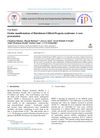
 This case report details the ocular complications of Hutchinson-Gilford Progeria syndrome in a 20-year-old Bangladeshi patient, highlighting symptoms like dry eyes, Meibomian gland dysfunction, and cataracts.
 January 2022 in “Autopsy and Case Reports”
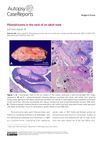
 This article describes a case of pilomatricoma in a 22-year-old male with successful surgical excision and no recurrence, highlighting its histopathological features and typical clinical presentation.
 January 2018 in “Elsevier eBooks”
 The document concludes that proper diagnosis and treatment of follicular disorders are crucial, with specific treatments for conditions like acne, drug-induced eruptions, and rosacea.
 January 2017 in “Springer eBooks”
 The document explains various skin conditions and their treatments.
 April 2014 in “Jurnal Biomedik : JBM”
 This case report diagnosed an 8-year-old girl with trachyonychia and secondary onychomycosis, finding that spontaneous improvement is common, making specific therapy often unnecessary despite treatment challenges with associated fungal infections.
180 citations
,
April 2002 in “Cell Death and Differentiation”  7 citations
,
November 2022 in “Communications biology”
7 citations
,
November 2022 in “Communications biology” This study found that injecting keratin into the skin of mice promoted hair growth, potentially through keratin's interaction with hair-forming cells and changes in the microenvironment.
11 citations
,
January 1981 in “Cells Tissues Organs” This article describes the structure and components of hair cuticle cells and their intercellular junctions but reports no new clinical results.
85 citations
,
January 1990 38 citations
,
July 1993 in “Journal of Investigative Dermatology” 5 citations
,
December 1996 in “Biochemical and Biophysical Research Communications” In this study, keratin genes mHa1 and mHb4 were unable to form an extensive keratin network in one cell line, altering endogenous keratin distribution, but showed better integration in another cell line.
28 citations
,
November 1987 in “Journal of the American Academy of Dermatology” This study developed an in vitro model using human follicular keratinocytes to observe selective cell growth and differentiation, potentially aiding future research on hair biology and growth processes.
27 citations
,
May 2004 in “Journal of Investigative Dermatology” 198 citations
,
October 1986 in “Differentiation” 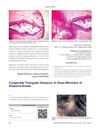 13 citations
,
January 2011 in “International Journal of Trichology”
13 citations
,
January 2011 in “International Journal of Trichology” CTA is often mistaken for AA but doesn't respond to steroids and may require hair transplantation.
20 citations
,
December 2010 in “Journal of Morphology” In this study, researchers found that alpha-keratin homologs similar to those in mammalian hair are present in the claws of the lizard Anolis carolinensis, suggesting a structural role during claw formation.
126 citations
,
January 1987 in “Current topics in developmental biology/Current Topics in Developmental Biology” Different keratin proteins are expressed in various epithelial cells at different stages, affecting cell structure and function.
90 citations
,
July 1993 in “Journal of Investigative Dermatology” This article reviews the molecular characteristics of human hair keratins, noting their distinct classification from epidermal keratins and the variability in expression that may occur without noticeable hair changes, but reports no new study results.
23 citations
,
February 2004 in “British Journal of Dermatology” Keratin in mouse hair follicles is complex and plays specific roles.
April 2009 in “The FASEB Journal” This study demonstrated that a keratin gel promotes nerve regeneration across critical defects in rabbit models, showing improved nerve conduction and muscle action potential compared to control treatments.