 77 citations
,
June 2017 in “Advances in Therapy”
77 citations
,
June 2017 in “Advances in Therapy” This review discusses recent advances and ongoing clinical trials in novel therapeutics for alopecia areata, despite the lack of current FDA-approved treatments for severe cases, and reports no new results.
 55 citations
,
October 2019 in “Dermatology and therapy”
55 citations
,
October 2019 in “Dermatology and therapy” This review found that JAK/STAT pathway inhibitors, such as tofacitinib and ruxolitinib, led to symptom improvement in all observed atopic dermatitis cases, but responses were mixed for vitiligo and alopecia areata, with a generally mild safety profile reported.
 30 citations
,
May 2016 in “Expert Opinion on Biological Therapy”
30 citations
,
May 2016 in “Expert Opinion on Biological Therapy” This review discusses immune pathways involved in alopecia areata and explores emerging, more targeted therapeutic strategies, noting their potential for better safety and effectiveness compared to traditional immune suppressants.
 December 2017 in “The journal of investigative dermatology. Symposium proceedings/The Journal of investigative dermatology symposium proceedings”
 This article reviews the role of the National Alopecia Areata Foundation in promoting research and collaboration to find treatments or a cure for alopecia areata and reports no clinical results.
 158 citations
,
July 1993 in “The Journal of Pediatrics”
158 citations
,
July 1993 in “The Journal of Pediatrics” This study observed that omeprazole was highly effective in reducing symptoms and esophagitis in children with severe esophagitis unresponsive to other treatments, though its long-term safety regarding elevated gastrin levels remains uncertain.
 70 citations
,
February 2015 in “Expert Opinion on Drug Discovery”
70 citations
,
February 2015 in “Expert Opinion on Drug Discovery” This review discusses current knowledge on the biological mechanisms of different types of alopecia but reports no new clinical findings; the authors highlight future research directions, especially regarding epidermal stem cells and immune pathways.
 42 citations
,
April 2021 in “Journal of clinical pharmacology”
42 citations
,
April 2021 in “Journal of clinical pharmacology” This review discusses baricitinib's applications for various inflammatory disorders and highlights its promising efficacy alongside potential adverse effects, advocating for further research before it becomes a standard treatment.
 20 citations
,
January 2018 in “Expert opinion on emerging drugs”
20 citations
,
January 2018 in “Expert opinion on emerging drugs” This review discusses the potential of Janus Kinase inhibitors for treating alopecia areata and other forms of alopecia, highlighting the need for further research on their long-term safety and optimal formulation.
 13 citations
,
May 2021 in “Plants”
13 citations
,
May 2021 in “Plants” This study found that the n-hexane fraction from Leea indica leaves significantly increased hair growth in mice and showed potential as a natural treatment for alopecia.
 2 citations
,
April 2025 in “Frontiers in Genetics”
2 citations
,
April 2025 in “Frontiers in Genetics” This study investigated the genetic basis of coat color variation in cattle using skin transcriptome and whole-genome analyses, identifying the ASIP gene as a significant determinant that is differentially expressed and under strong positive selection in black and brown cattle breeds.
 March 2025 in “HAL (Le Centre pour la Communication Scientifique Directe)”
 This thesis investigates the underlying mechanisms and treatment options for androgenetic alopecia, highlighting the molecular roles of androgens and genetic predispositions, and evaluates current and emerging therapies, such as PROTACs and Janus Kinase inhibitors, to enhance patient management.
 January 2025 in “Geneesmiddelenbulletin”
 This 104-week follow-up trial found that baricitinib is effective and safe for treating severe alopecia areata but requires continuous use to sustain hair regrowth. The drug is included in the NVDV guidelines and reimbursed by Dutch insurers for this purpose.
 November 2023 in “Berkala Ilmu Kesehatan Kulit dan Kelamin/Berkala ilmu kesehatan kulit dan kelamin (Periodical of dermatology and venerology)”
 This study found that publications on skin changes and treatments in pregnant women increased from 2013 to 2022, although their citation rates moderately decreased over the same period.
 January 2022 in “European Proceedings of Life Sciences”
 This article discusses the genetic polymorphisms affecting the antioxidant system and suggests that personalized detoxification plans and nutrition may be beneficial for patients with chronic diseases, but it reports no new clinical findings.
June 2020 in “Dermatologic therapy” Using Janus kinase inhibitors (JAKi) in COVID-19 treatment requires careful consideration due to their immunosuppressive effects.
 April 2016 in “Journal of the American Academy of Dermatology”
 This study found that in a tertiary academic institution, nearly 1 in 5 dermatology consults were for drug-related skin reactions, with antibiotics frequently identified as the culprits.
 September 2023 in “Journal of the American Academy of Dermatology”
 Topical tofacitinib helped a man with severe scalp condition after other treatments failed.
 April 2023 in “Revista colombiana de reumatología”
 In this study, a 24-year-old patient with severe alopecia areata showed an excellent clinical response to the JAK inhibitor tofacitinib after one month, following unsuccessful previous treatments.
 41 citations
,
December 2015 in “JAMA Dermatology”
41 citations
,
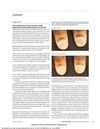
December 2015 in “JAMA Dermatology” Tofacitinib citrate improved nail dystrophy and pain in patients with alopecia universalis without causing side effects.
 2 citations
,
April 2017 in “Journal of Investigative Dermatology”
2 citations
,
April 2017 in “Journal of Investigative Dermatology” In this study, tofacitinib treatment led to significant hair regrowth in 60% of patients with moderate-to-severe alopecia areata, suggesting potential for JAK inhibitors in treating this condition.
 130 citations
,
February 2018 in “Journal of Investigative Dermatology”
130 citations
,
February 2018 in “Journal of Investigative Dermatology” This study found that tofacitinib led to ≥50% hair regrowth in eight out of twelve patients with moderate to severe alopecia areata, suggesting a potential benefit for using JAK inhibitors in treating this condition.
30 citations
,
August 2021 in “Journal of Ethnopharmacology” This review examines the phytochemistry, biological activities, and potential applications of Akebia species in medicine and cosmetology, highlighting the differences in chemical composition between A. quinata and A. trifoliata.
April 2017 in “Leukemia research” This study reported that tofacitinib may be a promising treatment for alopecia areata in adolescents, showing significant hair regrowth with mild adverse effects in a retrospective review.
2 citations
,
May 2017 in “Journal of the American Academy of Dermatology” Tofacitinib helped a 19-year-old regrow hair after other treatments failed.
 May 2023 in “International Journal of Trichology”
 In this case report, the researchers described the use of tofacitinib in treating a 14-year-old boy from India with severe alopecia areata, achieving complete hair regrowth within 2 months without serious adverse events, highlighting tofacitinib's potential benefits and safety in adolescent cases.
April 2025 in “International Journal of Dermatology” This study found that Black patients with alopecia areata showed an average 20% reduction in scalp involvement after JAK inhibitor therapy, indicating positive treatment outcomes in this group.
 28 citations
,
December 2017 in “Journal of Investigative Dermatology Symposium Proceedings”
28 citations
,
December 2017 in “Journal of Investigative Dermatology Symposium Proceedings” This review summarizes findings on the long-term use of tofacitinib for severe alopecia areata, reporting its potential as a promising treatment option.
 August 2018 in “Journal of Investigative Dermatology”
 This study of alopecia areata patients found that a 10 mg twice-daily dose of oral tofacitinib led to significant hair regrowth, suggesting it may be beneficial for treatment.
 3 citations
,
August 2020 in “Case Reports in Dermatology”
3 citations
,
August 2020 in “Case Reports in Dermatology” This case report suggests that JAK inhibitors like tofacitinib may effectively treat alopecia in patients with complex cases involving both rheumatological and dermatological conditions.

In this six-year study of a Saudi cohort, oral tofacitinib showed favorable long-term effectiveness for patients with AA, with manageable adverse events requiring regular monitoring.