23 citations
,
March 1998 in “BMJ” This report emphasizes the importance of considering haemochromatosis and conducting iron studies when investigating infertility due to endocrine causes.
 23 citations
,
April 1991 in “Journal of The American Academy of Dermatology”
23 citations
,
April 1991 in “Journal of The American Academy of Dermatology” Minoxidil solution can cause skin irritation and allergies in some users.
22 citations
,
August 2012 in “PubMed” Adequate zinc and iron intake may reduce hair loss after bariatric surgery.
22 citations
,
January 2012 in “Obstetrics and Gynecology International” In this study of Bulgarian women, the waist-to-stature ratio was a better marker for an unfavorable metabolic profile than the waist-to-hip ratio among those with PCOS and obesity.
 21 citations
,
January 2014 in “Dermatology Research and Practice”
21 citations
,
January 2014 in “Dermatology Research and Practice” This study found no significant difference in serum and hair levels of iron, zinc, and copper between female alopecia areata patients and healthy controls.
21 citations
,
April 2011 in “Clinical Cosmetic and Investigational Dermatology” This review discusses treatments for acne of varying severity and hormonal influences but reports no new clinical results; it suggests specific therapies for different acne types and highlights considerations for female patients.
21 citations
,
July 2001 in “Clinics in dermatology” This review discusses the clinical use of nutraceuticals for skin aging in dermatological practices and reports no new clinical results.
 20 citations
,
October 2008 in “European journal of endocrinology”
20 citations
,
October 2008 in “European journal of endocrinology” This study found that lipin 1β expression in both visceral and subcutaneous adipose tissue is significantly lower in PCOS patients compared to controls, suggesting its involvement in the pathogenesis of insulin resistance.
 20 citations
,
October 2018 in “American Journal of Clinical Dermatology”
20 citations
,
October 2018 in “American Journal of Clinical Dermatology” This article reviews drug-induced pigmentation and reports no new clinical findings, highlighting difficulty in confirming drug associations due to factors like delayed onset and polypharmacy.
 20 citations
,
January 2016 in “Open Journal of Endocrine and Metabolic Diseases”
20 citations
,
January 2016 in “Open Journal of Endocrine and Metabolic Diseases” This article discusses the prevalence, diagnosis, and treatment of polycystic ovary syndrome, emphasizing its early diagnosis and management due to potential reproductive and metabolic complications, but reports no new findings.
19 citations
,
October 2021 in “Medicine” In this study, anemia was commonly observed in exercising women, especially those with heavy menstrual bleeding, and the authors recommend using a simple screening tool involving haemoglobin testing.
 19 citations
,
July 2019 in “Biomedical Microdevices”
19 citations
,
July 2019 in “Biomedical Microdevices” This review discusses the safety and potential adverse events of microneedling as both a medical and consumer product, noting the need for further understanding; no new clinical results are presented.
 19 citations
,
January 2019 in “International Journal of Trichology”
19 citations
,
January 2019 in “International Journal of Trichology” This consensus paper reviews expert opinions on treating telogen effluvium but reports no new clinical findings.
19 citations
,
February 2018 in “International Journal of Endocrinology and Metabolism” This study found that the revised 43-item PCOSQ had better validity and reliability than the original version, although further studies are needed to assess its predictive efficacy.
 19 citations
,
January 2016 in “Dermatology Research and Practice”
19 citations
,
January 2016 in “Dermatology Research and Practice” This study observed that telogen effluvium was the most common form of acquired alopecia among females in a semiurban Indian population, with stress and chemical exposure as major exacerbating factors.
19 citations
,
March 2015 This study reports the first detection of electromagnetic forces from human hairs, evidenced by the aggregation of iron nanoparticles around hair follicles.
 19 citations
,
January 2015 in “Journal of Clinical and Diagnostic Research”
19 citations
,
January 2015 in “Journal of Clinical and Diagnostic Research” This study found that telogen effluvium was the most common type of diffuse hair loss among women, with psychological stress and iron deficiency anemia being significant contributing factors.
 19 citations
,
January 2015 in “Current problems in dermatology”
19 citations
,
January 2015 in “Current problems in dermatology” This review discusses environmental factors like UV radiation and smoking that affect hair health and highlights the potential role of nutrition, but it reports no new results.
 19 citations
,
April 1995 in “Clinical Genetics”
19 citations
,
April 1995 in “Clinical Genetics” This report describes two siblings with a new familial association of loose anagen syndrome and ocular coloboma, despite unaffected parents and no family history.
 18 citations
,
August 2012 in “Cutaneous and Ocular Toxicology”
18 citations
,
August 2012 in “Cutaneous and Ocular Toxicology” This study found that alopecia areata patients had increased insulin resistance compared to controls, suggesting a potential link between inflammation, stress axis activation, and insulin resistance in this population.
 18 citations
,
December 2010 in “The Journal of Steroid Biochemistry and Molecular Biology”
18 citations
,
December 2010 in “The Journal of Steroid Biochemistry and Molecular Biology” The authors concluded that increased expression of the HSD11B1 gene in adipose tissue correlates with obesity markers and predicts insulin resistance, but this association is independent of polycystic ovary syndrome when adiposity is controlled for.
 18 citations
,
December 2010 in “PubMed”
18 citations
,
December 2010 in “PubMed” This study found that early androgenic alopecia patients showed increased prevalence of insulin resistance and metabolic syndrome, suggesting they should be monitored for coronary artery disease over the long term.
 18 citations
,
July 2018 in “Turk Pediatri Arsivi-turkish Archives of Pediatrics”
18 citations
,
July 2018 in “Turk Pediatri Arsivi-turkish Archives of Pediatrics” This study reported that the most common skin diseases among children in the Erzincan region of Turkey were preventable conditions, like acne and warts, suggesting the need for enhanced health education and preventive care.
 18 citations
,
April 2016 in “Endocrinology and Metabolism Clinics of North America”
18 citations
,
April 2016 in “Endocrinology and Metabolism Clinics of North America” This review discusses the diagnostic challenges of PCOS in adolescents, noting that the persistence of hyperandrogenism and oligomenorrhea is required for diagnosis, while genetic studies suggest involvement of the hypothalamic-pituitary-ovarian axis.
 18 citations
,
March 2016 in “Cosmetics”
18 citations
,
March 2016 in “Cosmetics” This review discusses telogen effluvium, including its triggers, clinical presentations, and management options, and does not report new research findings, emphasizing the need for identification and exclusion of underlying causes.
 18 citations
,
March 1984 in “BMJ”
18 citations
,
March 1984 in “BMJ” Minoxidil helps hair regrowth in alopecia, but more research needed.
17 citations
,
January 2020 in “The World Journal of Men's Health” This article discusses the potential health risks associated with long-term use of finasteride and dutasteride for prostate and hair loss treatments, suggesting risks may include non-alcoholic fatty liver disease, insulin resistance, type 2 diabetes, and other metabolic issues.
 17 citations
,
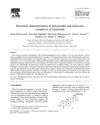
January 1999 in “Journal of Molecular Structure”
17 citations
,
January 1999 in “Journal of Molecular Structure” This study determined the molecular structure of finasteride and its related crystalline forms, highlighting different hydrogen-bond interactions and structural configurations in various crystalline complexes.
17 citations
,
August 2021 in “Dermatologic surgery” This review found that microneedling is generally safe, with most adverse effects being minor and resolving quickly, though there is increased risk in patients with active infections, darker skin, or metal allergies.
17 citations
,
January 2018 in “International Journal of Trichology” This study found that patients with premature hair graying had lower serum levels of iron, copper, and calcium, which correlated with the severity of graying.