 May 2018 in “White Rose eTheses Online (University of Leeds, The University of Sheffield, University of York)”
 In this study, researchers found that alopecia areata patients show a significant reduction in suppressive regulatory T-cells and an increase in inflammatory T-cell populations, suggesting an immunological imbalance contributing to the disease.
 January 2018 in “Stem cell biology and regenerative medicine”
 This review discusses the interplay between signaling/transcription factor-mediated and epigenetic mechanisms in skin development and regeneration, highlighting the need for further exploration of epigenome reorganization in these processes.
This chapter reviews the presence and roles of stem cells in various body systems, focusing on their lifelong function in animals and humans, and reports no new experimental findings.
This source outlines common health issues in weanling gerbils, including skin infections often tied to beta-hemolytic Staphylococcus aureus, and obesity-related conditions like diabetes, as well as respiratory infections and musculoskeletal problems, without detailing specific new study results.
This review discusses the complex causes and treatment options for female androgenetic alopecia but does not present new research findings, emphasizing the need for early diagnosis and treatment.
 November 2015 in “European Journal of Inflammation”
 This review discusses the potential pathogenic mechanisms of cicatricial alopecia and emphasizes the need for further research on treatment methods, but it reports no new clinical findings.

In this study, researchers found that alopecia areata is linked to immune cell activation against hair follicle autoantigens and is associated with heart changes and cardiac marker alterations in humans and mice.
 March 2014 in “Institutional Repositories DataBase (IRDB)”
 Skin-derived stem cells could help treat skin aging and pigmentation issues.
 March 2013 in “Revista Brasileira de Cirurgia Plástica”
 This article reviews advances in hair transplant techniques such as megasessions of micro and mini grafts, highlighting platelet growth factors' potential to enhance hair density, without reporting new clinical findings.
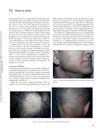 April 2012 in “Informa Healthcare eBooks”
 Alopecia areata is a common autoimmune condition causing varying hair loss, diagnosed by specific patterns of inflammation around hair follicles, with several treatment options available.
 February 2010 in “Journal of The American Academy of Dermatology”
 Surgery on a baby with a skin disorder improved eyelid position and eye health.
 February 2010 in “Journal of The American Academy of Dermatology”
 A woman's nail separation was likely caused by poor blood flow, and a treatment for similar conditions might help.
 August 2009 in “Expert Review of Dermatology”
 This review examines physiological changes and dermatoses during pregnancy and reports no clinical results, highlighting the importance of recognizing these conditions for appropriate management.
 March 2009 in “Medical & surgical dermatology”
 Women with androgenetic alopecia have fewer terminal hairs, phenol in nail surgery is safe, and a new hair transplant method is faster and less damaging.
 January 2009 in “Springer eBooks”
 The document concludes that managing skin conditions during pregnancy is important and requires specialized care.
 September 2008 in “UK vet. Companion animal”
 This article updates on the medical management of benign prostatic hyperplasia in companion animals and reports no new clinical findings; the authors discuss existing treatments.
 January 2008 in “Springer eBooks”
 Thyroid disease can cause hair loss and treating thyroid problems might help with hair disorders.
 January 2008 in “Pratique médicale & chirurgicale de l'animal de compagnie”
 This review discusses the controversial non-inflammatory alopecia known as alopecia X, highlighting its unknown etiology and the variable effectiveness of various proposed treatments, but reports no new results.
 June 2003 in “Journal of Investigative Dermatology Symposium Proceedings”
 This special issue reviews recent progress in hair research discussed at the 2001 International Hair Workshop, reporting developments in androgen action, stem cell biology, and potential therapies for hair growth disorders without presenting new experimental results.
 January 2003 in “Elsevier eBooks”
 Androgens and other hormones affect hair growth and skin conditions like acne.
 May 1991 in “Current problems in dermatology”
 This article reviews the relationship between the skin and the immune system and discusses how skin manifestations can indicate immunodeficiencies but reports no new research findings.
 26 citations
,
June 2018 in “The journal of immunology/The Journal of immunology”
26 citations
,
June 2018 in “The journal of immunology/The Journal of immunology” This study demonstrated that AIRE-deficient rats exhibit key symptoms of APECED, making them a relevant model for exploring potential treatments.
 9 citations
,
April 2018 in “Journal of trace elements in medicine and biology”
9 citations
,
April 2018 in “Journal of trace elements in medicine and biology” This review presents the practice of using hair bioelement analysis to assess nutritional status or environmental exposure, proposing complex interactions and hypotheses regarding depression and autism but reports no new clinical results.
130 citations
,
December 1998 in “The journal of investigative dermatology/Journal of investigative dermatology” In this study, different types of catagen in the C57BL/6 mouse model exhibited varying effects on hair follicle melanocytes and melanin distribution, with spontaneous and dexamethasone-induced catagen showing pigment incontinence, while cyclophosphamide-induced catagen retained dendritic melanocytes but increased ectopic melanin.
166 citations
,
July 1999 in “American Journal Of Pathology” This study found that the loss of a functional hr gene in mice leads to premature and abnormal hair follicle regression, disrupting normal hair cycling and architecture.
73 citations
,
November 2000 in “Proceedings of the National Academy of Sciences of the United States of America” This study demonstrated that anagen can be induced in Stat3-disrupted mice, suggesting that both Stat3-dependent and independent pathways, possibly involving PKC, mediate hair cycle progression with required PI3K activation.
7 citations
,
November 2006 in “Journal of immunological methods” This study found that the novel dot-block method can effectively measure early- and advanced-glycation products in hair, suggesting its potential for monitoring diabetes progression and other chronic conditions.
 August 2023 in “Tzu Chi Medical Journal”
 This study at a medical center in Eastern Taiwan found that female alopecia has diverse causes, including nutrient deficiencies, autoimmune diseases, psychological stress, thyroid conditions, and COVID-19 vaccination, with iron deficiency affecting 70.3% of cases.
 July 2023 in “Journal of Cutaneous and Aesthetic Surgery”
 This review suggests that combining PRP with minoxidil may be more effective for promoting hair growth in androgenetic alopecia than using either treatment alone, although study variations limit definitive conclusions.
May 2023 in “Clinical, Cosmetic and Investigational Dermatology” This review examines the efficacy of various novel treatments for androgenetic alopecia, including oral minoxidil and platelet-rich plasma, suggesting potential benefits but emphasizing the need for further high-quality clinical trials to thoroughly evaluate their effectiveness.