 1 citations
,
January 2023 in “Cutis”
1 citations
,
January 2023 in “Cutis” This report discusses two cases where patients continued EGFR inhibitor therapy while receiving topical treatments for SDRIFE, highlighting the importance of dermatologists in managing such cutaneous adverse events without stopping cancer treatment.
 1 citations
,
October 2018 in “InTech eBooks”
1 citations
,
October 2018 in “InTech eBooks” This article reviews treatment approaches for cicatricial alopecia, describing how medication efficacy varies and suggesting autologous hair transplantation for stable cases; no new clinical data are presented.
 June 2025 in “Dermatopathology”
 This study reports that SARS-CoV-2 infection, COVID-19 vaccination, and off-label dupilumab treatment may exacerbate psoriasis, with overlapping inflammatory pathways involving cytokines like IL-17 and TNF-α. Histopathological similarities between psoriasis flares and COVID-19 skin manifestations were noted, suggesting a potential connection requiring further research.
 January 2025 in “RSC Advances”
 This study reported that a new formulation of finasteride solid lipid nanoparticles, combined with LPC and NTC, enhanced hair growth in mice without visible skin reactions, suggesting it could effectively manage androgenetic alopecia.
 November 2023 in “Berkala Ilmu Kesehatan Kulit dan Kelamin/Berkala ilmu kesehatan kulit dan kelamin (Periodical of dermatology and venerology)”
 This study suggests that using a dermoscope, a handheld microscope, can effectively help distinguish between Pityrosporum folliculitis and Acne vulgaris by revealing unique lesion characteristics that are not visible to the naked eye, offering a practical diagnostic alternative when KOH examinations are unavailable.
 July 2023 in “International Journal of Molecular Sciences”
 This study found that N,N-dimethylglycine sodium salt promoted proliferation and migration of cultured human epidermal keratinocytes and had anti-inflammatory and antioxidant effects in vitro.
 May 2023 in “Indian journal of dermatology, venereology, and leprology”
 This article aims to enumerate and describe the types of tissue degeneration observed in various dermatopathological conditions, offering beneficial insights for residents studying the deterioration of skin tissues due to inflammatory, infective, drug-induced, or neoplastic stimuli.
 May 2026 in “International Journal of Advanced Biochemistry Research”
 In this case study, a three-year-old Labrador with canine atopic dermatitis showed significant improvement in pruritus and skin lesions after treatment with oclacitinib and supportive therapy over a one-month follow-up.

In this narrative review, researchers synthesized current evidence on topical metformin's potential benefits for various skin conditions, citing primarily preclinical studies that highlight its anti-inflammatory, antioxidant, and regenerative properties, although clinical translation requires further rigorous trials.
 April 2023 in “Jurnal Sain Veteriner”
 This case report describes a Persian cat with Acute Moist Dermatitis triggered by ectoparasite infestation and complicated by systemic infection, which required intensive treatment including antiparasitics and antibiotics.
 160 citations
,
March 2009 in “Seminars in Cutaneous Medicine and Surgery”
160 citations
,
March 2009 in “Seminars in Cutaneous Medicine and Surgery” This article reviews lichen planopilaris, its presentation, and treatment challenges, and emphasizes the need for more research into its pathogenesis and therapy efficacy; it reports no new findings.
 115 citations
,
November 2015 in “The journal of allergy and clinical immunology/Journal of allergy and clinical immunology/The journal of allergy and clinical immunology”
115 citations
,
November 2015 in “The journal of allergy and clinical immunology/Journal of allergy and clinical immunology/The journal of allergy and clinical immunology” This review discusses the impact of sleep cycles and circadian rhythms on nighttime exacerbation of atopic dermatitis in children and presents potential treatment options for related sleep disturbances, but reports no new clinical results.
 94 citations
,
August 1975 in “Journal of Cutaneous Pathology”
94 citations
,
August 1975 in “Journal of Cutaneous Pathology” In this study, the researchers observed that male pattern alopecia is characterized by miniature follicles, enlarged sebaceous glands, and an increased number of mast cells, without significant abnormalities in enzyme activity.
 67 citations
,
November 2019 in “Molecules”
67 citations
,
November 2019 in “Molecules” This review collected findings on the various cosmetic and therapeutic properties of tea extracts, highlighting their antioxidant, anti-inflammatory, and photoprotective effects among other benefits for skin and hair care.
 49 citations
,
January 2003 in “Clinical and Experimental Dermatology”
49 citations
,
January 2003 in “Clinical and Experimental Dermatology” This report from the UK reviews the literature on post-menopausal frontal fibrosing alopecia and highlights its under-recognition and distinctive characteristics compared to lichen planopilaris, but does not provide new results.
 47 citations
,
May 2021 in “Polymers”
47 citations
,
May 2021 in “Polymers” This review surveys the chemical composition and various uses of jojoba oil in medicine and industry but presents no new clinical results.
 42 citations
,
January 1998 in “BioDrugs”
42 citations
,
January 1998 in “BioDrugs” Azathioprine's effectiveness and safety require careful monitoring and more research, especially regarding its use with corticosteroids and the role of TPMT status in patients.
 33 citations
,
November 2006 in “Survey of Ophthalmology”
33 citations
,
November 2006 in “Survey of Ophthalmology” This report discusses the various causes and clinical assessment of madarosis, emphasizing the importance of recognizing and diagnosing associated vision or life-threatening conditions, without presenting new findings.
 29 citations
,
January 2007 in “Dermatologic Clinics”
29 citations
,
January 2007 in “Dermatologic Clinics” This study found that photodynamic therapy using 5-aminolevulinic acid or methyl aminolevulinate is a safe and effective treatment for acne vulgaris, particularly with 30 to 60 minutes of contact time and three treatments for significant long-term improvement.
 26 citations
,
June 2018 in “Australasian Journal of Dermatology”
26 citations
,
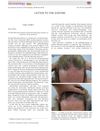
June 2018 in “Australasian Journal of Dermatology” Stopping sunscreen use on the forehead led to hair regrowth in a woman with frontal fibrosing alopecia.
 11 citations
,
January 2023 in “BioMed Research International”
11 citations
,
January 2023 in “BioMed Research International” This review discusses the use of microbial biosurfactants as a safer alternative to chemical surfactants in cosmetics due to their antibacterial, moisturizing, and low toxicity properties, but it reports no new clinical findings.
 10 citations
,
May 2017 in “CMAJ. Canadian Medical Association journal”
10 citations
,
May 2017 in “CMAJ. Canadian Medical Association journal” The boy had a fungal scalp infection called kerion, which was cured with oral antifungal medication.
9 citations
,
February 2025 in “Journal of Nanobiotechnology” In this study, researchers found that using bioinspired nanovesicles derived from inflammation memory-activated epidermal stem cells effectively promoted healing in diabetic wounds by reprogramming neutrophils to an anti-inflammatory phenotype in both laboratory and animal models.
 8 citations
,
April 1979 in “Journal of Cutaneous Pathology”
8 citations
,
April 1979 in “Journal of Cutaneous Pathology” This study observed that multinucleate giant cells were present in 31% of biopsy specimens from patients with male pattern alopecia but not in other alopecia types, suggesting a potential histologic marker for androgenetic alopecia.
 8 citations
,
May 2018 in “Primary Care: Clinics in Office Practice”
8 citations
,
May 2018 in “Primary Care: Clinics in Office Practice” This review details common symptoms of rheumatic diseases and how to differentiate them from other conditions based on patient history and physical examination.
 3 citations
,
September 2017 in “Pediatric Dermatology”
3 citations
,
September 2017 in “Pediatric Dermatology” This article discusses contact dermatitis linked to alopecia and hyperpigmentation, but it reports no new clinical results.
 2 citations
,
February 2009 in “Clinical and Experimental Dermatology”
2 citations
,
February 2009 in “Clinical and Experimental Dermatology” In this case study, a 51-year-old Japanese man was diagnosed with desmoplastic trichoepithelioma after histological examination of surgically excised facial plaques.
 1 citations
,
July 2018 in “Elsevier eBooks”
1 citations
,
July 2018 in “Elsevier eBooks” This review discusses the pathogenesis and clinical features of androgenetic alopecia, highlighting potential links to fibrosing alopecia and suggesting the need for combined therapeutic approaches; it reports no new clinical results.
June 2026 in “Morphology” This study found that IBA-1-immunopositive macrophages in rat skin during wound healing show varied morphometric characteristics and peak in numbers at 2, 6, and 15 days post-injury.
December 2025 in “International Journal of Molecular Sciences” In this study, O. forskahlii seed oil was found to promote hair growth in rats and exhibit anti-aging effects on human skin cells by enhancing fibroblast proliferation and inhibiting inflammation and enzyme activity, indicating potential for cosmetic use.