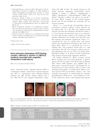
September 2021 in “Pediatrics in review” This case study describes a 7-month-old boy diagnosed with keratitis-ichthyosis-deafness syndrome due to a de novo GJB2 gene mutation, highlighting the challenges in treatment and eventual fatal outcome due to severe complications.
 11 citations
,
September 2011 in “British Journal of Dermatology”
11 citations
,
September 2011 in “British Journal of Dermatology” New ABCA12 gene mutations were linked to a skin condition with scaling and hair loss, and a treatment helped with hair loss in a related case.
16 citations
,
September 2015 in “International Journal of Molecular Sciences” In this study, a genetic analysis identified a pathogenic variant in the ALOXE3 gene associated with non-bullous congenital ichthyosiform erythroderma, and the patient's response to antifungal treatment highlights the risk of cutaneous fungal infections.
August 2025 in “Biomedicines” In this case report, half-siblings with bullous congenital ichthyosiform erythroderma were found to have a susceptibility to Trichophyton rubrum infection, successfully treated with oral terbinafine.
 October 2011 in “Journal of dermatology”
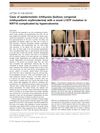
 A man with a rare skin condition and a new gene mutation developed high calcium levels due to his treatment.
5 citations
,
January 2011 in “Archives de Pédiatrie” This study illustrates the severe neonatal clinical presentation of Netherton syndrome, which can be fatal despite intensive care, highlighting a specific homozygous mutation (c.1431-12G > A) associated with lethal cases.
49 citations
,
January 2013 in “Dermatologic Therapy” This review discusses the varying neonatal presentations of Mendelian disorders of cornification (ichthyosis) based on phenotypic groups but reports no new clinical results; the authors suggest categorizing these presentations to guide diagnosis and treatment.
36 citations
,
September 2015 in “Orphanet Journal of Rare Diseases” This review discusses ichthyosis with confetti, highlighting its genetic basis, clinical features, diagnostic criteria, and current treatment options but reports no new clinical results.
34 citations
,
September 2010 in “Clinical and Experimental Dermatology” This study identified a new heterozygous mutation in the connexin 26 gene (c.263C>T; p.Ala88Val) in a premature neonate with KID syndrome, who later died from complications.
4 citations
,
April 1978 in “PubMed” This case study describes a six-month-old boy diagnosed with Netherton syndrome, featuring ichthyosiform erythroderma and alopecia, possibly linked to aminoaciduria.
November 2019 in “Harper's Textbook of Pediatric Dermatology” This article reviews Netherton syndrome, focusing on its genetic basis, clinical presentation, and treatment options, and reports no clinical results; the authors mention potential benefits of targeted therapies and gene therapy.
6 citations
,
January 2022 in “BMC Medical Genomics” This study identified eight mutations in five genes associated with different aspects of ichthyosis among Tunisian patients, enhancing understanding of its genetic and clinical diversity.
 January 2025 in “Clinical Dermatology Review”
 In this case report, a 16-year-old female with Netherton syndrome, a rare genetic disorder, exhibited symptoms such as skin issues, hair abnormalities, and elevated serum IgE levels. The diagnosis was supported by skin biopsy, and treatment included topical therapies, NB-UVB, and infliximab.

This chapter reviews various skin disorders classified as Mendelian disorders of cornification and reports no new clinical findings, highlighting the complexity of genetics involved in inherited ichthyoses.
3 citations
,
March 2019 in “European Journal of Dermatology” A specific gene mutation (Y449H in K10) was found in a patient with severe skin disorder.
 28 citations
,
April 1996 in “Cell biology international”
28 citations
,
April 1996 in “Cell biology international” This review discusses changes in keratin structure or gene expression that result in various skin disorders and reports no new clinical findings.
53 citations
,
September 2004 in “American journal of medical genetics. Part C, Seminars in medical genetics” This review discusses the range of diseases caused by mutations in keratin intermediate filament genes and presents no new clinical findings; the authors note the diverse phenotypes within this molecular category.
 7 citations
,
July 2014 in “BMJ case reports”
7 citations
,
July 2014 in “BMJ case reports” This article reviews the rare skin disorder ichthyosis with confetti, highlighting the potential for future therapies using revertant stem cells, and reports no new clinical results.
11 citations
,
January 2021 in “British Journal of Dermatology” This report describes a new case of syndromic ichthyosis caused by compound heterozygous mutations in AP1B1, detailing the associated clinical features and molecular consequences in the patient.
February 2025 in “Journal of Paediatrics and Child Health” In this case report, a late preterm male infant presented with a pathogenic TP63 gene variant, consistent with Rapp-Hodgkin Syndrome, showing symptoms such as ichthyosiform erythroderma, cleft palate, and ankyloblepharon, highlighting the complex management and diagnostic challenges in such cases.
October 2025 in “Indian Journal of Paediatric Dermatology” In this case report, a 6-year-old boy with Netherton syndrome was diagnosed using trichoscopy, which revealed characteristic hair shaft abnormalities such as bamboo, golf tee, and matchstick hairs.
November 2025 in “Вопросы современной педиатрии” In this case report, the researchers observed that combining growth hormone therapy with the biologic drug dupilumab effectively improved growth and health outcomes in a patient with Netherton syndrome and comorbid hypopituitarism, suggesting a multidisciplinary approach may be beneficial for managing such cases.
 January 2010 in “The Year book of perinatal/neonatal medicine”
 Early skin biopsy helps diagnose and manage severe skin conditions in babies.
 7 citations
,
January 1989 in “Leprosy Review”
7 citations
,
January 1989 in “Leprosy Review” This report describes a woman with borderline lepromatous leprosy who developed a serious skin reaction to dapsone; she recovered quickly after stopping dapsone and receiving corticosteroids.
27 citations
,
July 1997 in “PubMed” This study suggests that the harlequin ichthyosis mouse model closely resembles human type 2 harlequin ichthyosis, indicating its potential as a useful model for studying the human condition.
2 citations
,
April 2024 in “Anais Brasileiros de Dermatologia” Pre-existing skin conditions and drug reactions are the main causes of exfoliative erythroderma.
 April 2017 in “IOSR journal of dental and medical sciences”
 This abstract discusses Netherton Syndrome, a genetic disorder with a characteristic triad of symptoms caused by SPINK5 gene mutation, and reports no new clinical findings or treatment advances.
 March 2023 in “JAAD case reports”
 This article reviews the genetic foundations of keratins in maintaining epithelial tissue integrity and links specific keratin variants to diverse ichthyosis forms, without presenting new clinical findings.
 January 2024 in “JAAD case reports”
 Netherton syndrome can cause severe and chronic vulvovaginal symptoms that may improve with continuous oral contraceptives.