188 citations
,
June 1998 in “Molecular cell” This study found that mimicking the XPD point mutation in mice resulted in trichothiodystrophy-like symptoms, supporting the role of basal transcription and DNA repair defects in the disease.
49 citations
,
August 1999 in “Journal of Investigative Dermatology” In this study, transgenic mice expressing Msx-2 developed flaky skin with hyperproliferation and misalignment in epidermal cells, suggesting Msx-2 plays a role in skin and appendage growth control.
26 citations
,
October 1998 in “Experimental Dermatology” This study describes a co-dominant E410D mutation in keratin hHb6 associated with severe hair loss and extensive papules in homozygous individuals, with variable expression in heterozygous family members.
22 citations
,
May 2007 in “Molecular Biotechnology” 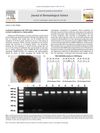 13 citations
,
November 2009 in “Journal of Dermatological Science”
13 citations
,
November 2009 in “Journal of Dermatological Science” This article discusses various dermatological studies cited by previous authors and reports no new clinical results.
 25 citations
,
August 2014 in “Endocrinology”
25 citations
,
August 2014 in “Endocrinology” This study created a humanized mouse model of hereditary vitamin D-resistant rickets that lacks alopecia, indicating the mutant receptor's potential to explore the syndrome's characteristics beyond vitamin D binding.
September 2026 in “British Journal of Dermatology” This study identified 11 genes associated with non-syndromic hereditary hypotrichosis in a Chinese cohort and proposed a preliminary framework for phenotype-driven candidate-gene prioritization to aid clinical evaluation.
126 citations
,
October 1998 in “Experimental Dermatology” This review provides an overview of the hairless gene in mice and humans, discussing its structure, expression, and implications for understanding skin physiology and human disorders related to gene disruption, but it reports no new empirical findings.
September 2025 in “Indian Journal of Dermatology” In this case report, researchers detailed a 22-year-old Turkish woman diagnosed with autosomal recessive woolly hair/hypotrichosis (ARWH/H), linked to a mutation in the LIPH gene, resulting in sparse, poorly growing, curly hair, highlighting the need for genetic consideration in similar hair conditions.
 52 citations
,
November 2003 in “Journal of Investigative Dermatology”
52 citations
,
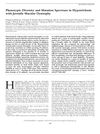
November 2003 in “Journal of Investigative Dermatology” In this study, mutations in the CDH3 gene were identified as the cause of hypotrichosis with juvenile macular dystrophy, and the researchers observed substantial phenotypic variability among affected individuals.
1 citations
,
March 2022 in “Journal of biological chemistry/The Journal of biological chemistry” This study found that HIF-P4H-2 function in FoxD1-lineage cells is crucial for normal hair follicle development and homeostasis in mice, implicating disrupted HIF, TGF-β, and Notch signaling pathways in associated defects.
 55 citations
,
November 2018 in “American journal of human genetics”
55 citations
,
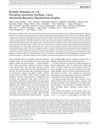
November 2018 in “American journal of human genetics” This study identified five mutations in the gene LSS in individuals with unexplained hypotrichosis simplex, highlighting a potential role of mislocalized LSS proteins in disrupting hair follicle biology.
June 2008 in “The Knowledge Bank (The Ohio State University)” This study found that deleting Smad2 and Smad3 in murine skin leads to severe skin abnormalities and cancerous lesions, similar to but more severe than those seen in Smad4 mutants, indicating the critical role of TGF-β signaling in skin development.
7 citations
,
February 2011 in “Journal of dermatology” This study identified a specific LIPH gene mutation (736T>A) as common in Japanese patients with autosomal recessive woolly hair/hypotrichosis, potentially indicating its role in the condition's manifestation within this population.
13 citations
,
August 2005 in “Journal of Investigative Dermatology Symposium Proceedings” This study describes a genetic mutation in the desmoglein 4 gene linked to localized autosomal recessive hypotrichosis in Pakistani families, showing similarities to animal models with similar hair loss conditions.
17 citations
,
May 2013 in “Journal of Investigative Dermatology” Mutations in β1 integrins cause embryonic death but have milder effects on skin.
November 2024 in “Biochemical and Biophysical Research Communications” In this study, researchers observed that mutant mice with a genetic hair loss condition exhibited significant differential expression of genes related to keratinization and hair follicle formation, providing insights into potential strategies for understanding and treating alopecia.
December 2004 in “PLoS ONE” In this study, the Foxn1(-/-) nude phenotype was associated with an altered regulation of epithelial progeny in skin, offering a valuable model for investigating stem cell niche maintenance and regulation.
30 citations
,
August 2005 in “British journal of dermatology/British journal of dermatology, Supplement” This study identified a novel CDH3 mutation associated with sparse hair and pigmentary macular changes in two siblings with hypotrichosis but no visual symptoms.
7 citations
,
September 2006 in “Molecular Carcinogenesis” This study observed that K5Cre +/+ transgenic mice develop a distinct phenotype characterized by wavy hair, curly whiskers, and an increased rate of papilloma malignant transformation.
 85 citations
,
June 2015 in “Scientific Reports”
85 citations
,
June 2015 in “Scientific Reports” This study applied semantic text-mining to identify phenotypes linked to over 6,000 diseases, demonstrating that these phenotypes can accurately identify known disease-associated genes, creating a human disease network based on phenotypic similarity.
 354 citations
,
February 2011 in “Genes & Development”
354 citations
,
February 2011 in “Genes & Development” This study found that abolishing H3K27me3 in mouse skin by targeting Ezh2 and Ezh1 affects hair follicle development and epidermal behavior, revealing functional differences between these tissues.
May 2023 in “Pharmaceuticals” In this in silico study, researchers analyzed nonsynonymous SNPs in the LIPH gene linked to hypotrichosis and identified three potentially harmful variants (W108R, C246S, and H248N) out of 215 total, using sequence- and architecture-based bioinformatics techniques to differentiate between harmful and benign SNPs.
 31 citations
,
September 2013 in “Stem Cells”
31 citations
,
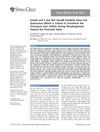
September 2013 in “Stem Cells” This study suggests that canonical BMP signaling, particularly involving Smad1 and Smad5, plays a critical role in hair follicle stem cell regulation and hair morphogenesis, with distinct roles from pSmad8.
 April 1974 in “Pediatric Research”
 This study found that hair from mice with the Naked trait mutation has significantly lower levels of glycine and tyrosine, suggesting a deficiency in a specific protein fraction.
July 2025 in “Clinical Case Reports” In this case report, a 17-year-old male with a specific TRPS1 gene mutation presented with sparse, soft hair, short thumbs and toes, misaligned teeth, and distinctive bone abnormalities in the fingers and toes as observed through X-ray analysis.
39 citations
,
December 2012 in “The American Journal of Human Genetics” This study identified mutations in the SNRPE gene that may disrupt hair growth, linking a spliceosome component to hereditary hair loss disorders.
57 citations
,
August 2002 in “American Journal Of Pathology” Cathepsin L deficiency causes hair and skin issues in mice.
37 citations
,
June 2000 in “Experimental dermatology” This study investigated a spontaneous mutation in mice resulting in hair abnormalities and elevated IgE levels, which resembles human Netherton's syndrome and monilethrix.
 6 citations
,
March 2016 in “PLoS ONE”
6 citations
,
March 2016 in “PLoS ONE” This study characterized hair from a patient with a ribosomopathy and identified distinct differences, including reduced hair thickness and lipid content, compared to family members.