 May 2021 in “International journal of developmental research”
 This review discusses the role of sex hormones, particularly estrogen and progesterone, in melasma pathogenesis and suggests that progesterone in oral contraceptives may help prevent melasma by regulating melanocyte proliferation.

Detailed history and physical examination are crucial for diagnosing hair loss.
 258 citations
,
July 2016 in “Reproductive Biology and Endocrinology”
258 citations
,
July 2016 in “Reproductive Biology and Endocrinology” This abstract reviews the characteristics and health risks associated with polycystic ovary syndrome and does not report new findings, highlighting the syndrome's multifactorial nature.
 57 citations
,
August 1995 in “British Journal of Dermatology”
57 citations
,
August 1995 in “British Journal of Dermatology” In this study, acne severity in females was strongly associated with inflammatory lesion count and moderately associated with androgens, especially DELTA 4 and DHEAS promoting acne and SHBG reducing it.
 7 citations
,
January 2010 in “Animal”
7 citations
,
January 2010 in “Animal” This review discusses studies on hair growth and protein synthesis in hair follicles, highlighting the differing responses of mohair and cashmere goat follicles to signaling molecules, biotin, and amino acids, but contains no new results.
 2 citations
,
April 2021 in “International Journal of Molecular Sciences”
2 citations
,
April 2021 in “International Journal of Molecular Sciences” This study found that the culture conditions, not species-specific differences, determined whether sika deer dermal papilla cells adopted a 3D spheroidal or 2D monolayer growth pattern, influencing their hair-inducing ability.
 March 2026 in “Physical Education Health and Social Sciences”
 In this randomized controlled trial, combining cinnamon and inositol led to significant improvements in metabolic and hormonal parameters, such as reduced LH, testosterone, fasting glucose, and ovarian ultrasound scores, in overweight women with PCOS, indicating superior benefits over either supplement alone.
 March 2014 in “Journal of The American Academy of Dermatology”
 The new topical product combined with finasteride significantly increased hair thickness without side effects.
 40 citations
,
December 2016 in “Journal of Ovarian Research”
40 citations
,
December 2016 in “Journal of Ovarian Research” In this study on rats, rutin showed dose-dependent improvements in hormonal, antioxidant, and lipid profiles related to polycystic ovary syndrome, with effects comparable to metformin.
 4 citations
,
April 2017 in “International journal of reproduction, contraception, obstetrics and gynecology”
4 citations
,
April 2017 in “International journal of reproduction, contraception, obstetrics and gynecology” This study found a 21-fold increased risk of metabolic syndrome associated with a higher waist-hip ratio in women with polycystic ovary syndrome, highlighting the need for focused management in obese patients.
 January 2014 in “Side effects of drugs annual”
 This review discusses the 2011 publications on the side effects of sex hormones and related compounds, without reporting new clinical results.
 27 citations
,
April 2017 in “European journal of endocrinology”
27 citations
,
April 2017 in “European journal of endocrinology” This retrospective study found that serum hormone levels and MRI detection of ovarian nodules contributed to distinguishing virilizing ovarian tumors from ovarian stromal hyperthecosis in postmenopausal women, though histopathology remains crucial for diagnosis.
 75 citations
,
November 1996 in “Fertility and Sterility”
75 citations
,
November 1996 in “Fertility and Sterility” This study found that finasteride effectively reduced hirsutism in women during 12 months of treatment, with some effects persisting in the majority after stopping the medication.
 January 2014 in “Anales Médicos de la Asociación Médica del Centro Médico ABC”
 This study suggests that a combination of topical minoxidil with oral finasteride and dutasteride may promote new hair growth in androgenetic alopecia, with minor safety concerns reported.
1 citations
,
January 2022 in “Springer eBooks”  July 2026 in “International Journal of Homoeopathic Sciences”
 In this study, a 42-year-old female with female pattern hair loss experienced reduced hair fall, improved hair density, normalized scalp oiliness, and increased confidence after four months of homeopathic treatment personalized to her symptoms, nutritional supplementation, and GroHair therapy.
 June 2023 in “Journal for international medical graduates”
 This study observed a significant association between smoking and an increased risk of hair loss, including male pattern baldness, and highlights the need for interventions at individual, community, and national levels to address smoking-related hair loss.
Male pattern baldness is a common hair loss in men caused by genetics and hormones, with treatments including drugs, hair transplants, and hair loss products.
 January 2006 in “Elsevier eBooks”
 Cats with Feline Symmetrical Alopecia can regrow hair with proper treatment based on the specific cause, including diet, medication, or stress management.
This article reviews pathologic mechanisms causing hair changes in women on hormonal contraceptives or pregnant and reports no new study results; hormonal effects on the hair cycle stages are suggested.
 110 citations
,
July 2010 in “Journal of The American Academy of Dermatology”
110 citations
,
July 2010 in “Journal of The American Academy of Dermatology” Hair loss linked to higher heart disease risk in both men and women.
 46 citations
,
October 2012 in “Dermatologic Clinics”
46 citations
,
October 2012 in “Dermatologic Clinics” This review discusses treatment options for female pattern hair loss, emphasizing the importance of early intervention and the benefits of combined therapies, but reports no new clinical results.
 35 citations
,
October 2006 in “Journal of Dermatology”
35 citations
,
October 2006 in “Journal of Dermatology” This study outlines the clinical features of androgenetic alopecia in Korean adolescents, finding milder symptoms compared to adults and a high occurrence of family history, with normal hormone levels.
 26 citations
,
April 2019 in “Journal of Cosmetic Dermatology”
26 citations
,
April 2019 in “Journal of Cosmetic Dermatology” This review discusses the potential of herbal treatments like Saw palmetto, Green tea, and Rosemary as alternatives to conventional drugs for androgenetic alopecia, noting that these herbs may inhibit the 5-alpha-reductase enzyme and reduce hair loss with fewer side effects.
 26 citations
,
October 2018 in “British Journal of Dermatology”
26 citations
,
October 2018 in “British Journal of Dermatology” This study found that high frequency use of sunscreen is associated with frontal fibrosing alopecia among women attending a specialist hair clinic in Australia.
 26 citations
,
June 2018 in “Australasian Journal of Dermatology”
26 citations
,
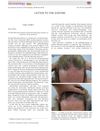
June 2018 in “Australasian Journal of Dermatology” Stopping sunscreen use on the forehead led to hair regrowth in a woman with frontal fibrosing alopecia.
 24 citations
,
September 2001 in “Journal of The American Academy of Dermatology”
24 citations
,
September 2001 in “Journal of The American Academy of Dermatology” Women's ovarian hormones and adrenal androgens change throughout life, affecting hair loss and health.
 10 citations
,
January 2009 in “Elsevier eBooks”
10 citations
,
January 2009 in “Elsevier eBooks” This review discusses the structure, functions, and growth cycle of human hair, emphasizing its reduced growth and protective roles, and reports no new research findings.
 9 citations
,
July 1995 in “Veterinary Clinics of North America: Small Animal Practice”
9 citations
,
July 1995 in “Veterinary Clinics of North America: Small Animal Practice” This review discusses causes of hair loss in cats, highlighting self-inflicted trauma due to flea allergy dermatitis, and presents no new clinical findings.
 5 citations
,
October 1984 in “The BMJ”
5 citations
,
October 1984 in “The BMJ” Up to 50% of scalp hair can be lost before it appears thin, and treatment is only needed for hair loss caused by diseases or deficiencies.