
The CDC reports 23 measles cases in unvaccinated US kids, new treatments for eosinophilic esophagitis and osteopenia are approved, poor sleep may cause migraines, atopic dermatitis could lead to asthma, migraines might increase Crohn's disease risk, cancer may raise heart disease risk, gout is linked to prostate issues, Cabo Verde is malaria-free, social factors and vitamin D affect dementia risk, smoking increases hair loss risk, certain drugs might lower thyroid disease risk in arthritis, noma is a neglected disease, and meal timing could impact heart health.
 January 2024 in “PloS one”
 This study found that rat hair-follicle-associated pluripotent stem cells can be successfully differentiated into beating atrial and ventricular cardiomyocytes by using specific combinations of growth factors and inhibitors in culture, demonstrating their potential to form functional myocardial fibers similar to adult heart cells.
 January 2024 in “Wiadomości Lekarskie”
 This research explores the impact of advanced technologies, such as machine learning and robotics, on cardiothoracic surgery, noting that innovations like artificial hearts and enhanced circulatory support systems may improve patient outcomes by aiding diagnostics, surgery planning, and postoperative care.
January 2024 in “E3S Web of Conferences” In this study, stray cats in Bogor exhibited skin and fur issues, abnormal respiratory and heart rates likely due to stress, increased eosinophils, low platelet counts suggesting parasitic infestation, and hyposthenuria in urine tests potentially linked to low water intake or fasting.
 October 2023 in “Deleted Journal”
 In this study, the researchers found that using computers and modern technologies can aid smoking cessation efforts, highlighting that smoking cessation medications and informed awareness can help reduce smoking and its associated harms, which include severe health risks like cancer and heart disease.
 January 2023 in “Brazilian Journals Editora eBooks”
 The document concludes that Passiflora incarnata may help with anxiety, healthcare workers need mental support, common bacteria cause hospital UTIs, telehealth for heart failure needs research, kids' screen time has increased, pregnant teens are mostly okay with their body image, diagnosing post-surgery tuberculosis is hard, older and severely ill people are more likely to have long COVID symptoms, and psychiatrists should be part of pain management teams.

This thesis found that desmoplakin mutations in cardiocutaneous syndrome are linked to dose-dependent disease severity and identified mechanisms by which KLHL24 mutations cause cardiomyopathy, with rescue experiments successfully preventing this phenotype in patient-derived heart tissues.
 October 2020 in “Benha Journal of Applied Sciences”
 This study found that in patients with androgenetic alopecia, cardiac troponin I levels positively correlated with age and certain heart functions, indicating possible cardiac involvement in the disease's progression.
April 2017 in “The journal of investigative dermatology/Journal of investigative dermatology” According to this study, human scalp hair follicles containing pluripotent stem cells demonstrated the ability to differentiate into cardiac muscle cells and other cell types, suggesting potential applications in heart and nerve regeneration.
April 2017 in “Journal of dermatological science” This study reported that human hair follicles containing pluripotent stem cells can differentiate into cardiac muscle and other cells, indicating their potential for future clinical applications in heart and nerve regeneration.
December 2016 in “Asian Pacific journal of cancer biology” This paper discusses the importance of early diagnosis and treatment of polycystic ovarian syndrome to potentially reduce long-term complications like diabetes, hypertension, and heart disease, but reports no new clinical outcomes.
 August 2016 in “PolyPublie (École Polytechnique de Montréal)”
 This study observed early cardiac effects in young minipigs following high-dose doxorubicin chemotherapy, with a decrease in heart function and changes in cardiac MRI measurements compared to controls.
 December 2015 in “Vascular Pharmacology”
 Different cells affect hair follicle blood vessels, endothelial cells react differently to inflammation and oxidized fats, and prasugrel better protects heart vessels during a procedure than clopidogrel.

In this study, researchers found that alopecia areata is linked to immune cell activation against hair follicle autoantigens and is associated with heart changes and cardiac marker alterations in humans and mice.
 January 2014 in “S. Karger AG eBooks”
 Type 2 diabetes in youth is increasing, with high treatment failure rates and more severe than Type 1; certain drugs can lower lipid levels effectively with varying side effects, and apples may benefit heart health like statins but with fewer side effects.
Testosterone, 4-hydroxyandrostenedione, and finasteride affect blood clotting differently in stressed heart conditions.
January 2005 in “mediaTUM – the media and publications repository of the Technical University Munich (Technical University Munich)” This study found that vitamin D regulation plays a crucial role in connecting metabolic and cardiovascular conditions, influencing gene expression related to these disorders in both kidney and heart tissues.
 October 1997 in “Baylor University Medical Center Proceedings”
 Obesity in the U.S. is largely influenced by diet and exercise, certain medications can improve heart procedures and hair growth, and major teaching hospitals have better patient outcomes.
 51 citations
,
January 2007 in “Animal Genetics”
51 citations
,
January 2007 in “Animal Genetics” This study identified the location of the genetic locus for the slick hair coat trait in cattle on bovine chromosome 20, which may contribute to heat tolerance.
22 citations
,
September 1993 in “Archives of Dermatology” This case report details a 4-year-old girl who developed a fever and widespread papular, pruritic rash resembling a heat rash, with a progression to thick, scaly patches but had sterile blood and urine cultures.
21 citations
,
June 2023 in “Proceedings of the National Academy of Sciences” This study found that human scalp hair significantly reduces solar radiation intake, with more tightly curled hair offering greater protection against heat gain compared to a naked scalp.
12 citations
,
April 2023 in “Molecular Pharmaceutics” This study demonstrated that a microarray patch can deliver antibodies in a controlled and prolonged manner, maintaining their functionality after manufacturing and heat exposure, with successful pharmacokinetic proof-of-concept in rats.
9 citations
,
October 1995 in “Clinical Dysmorphology” This study described a Scottish family with hidrotic ectodermal dysplasia featuring variable symptoms such as hypo/oligodontia, thin hair, and heat tolerance, and concluded they exhibited overlapping traits with Clouston syndrome.
 7 citations
,
May 2021 in “Applied sciences”
7 citations
,
May 2021 in “Applied sciences” This study investigated various proteins as eco-friendly hair perming agents for Asian hair and found that bovine serum albumin and keratin achieved perming results comparable to commercial products, while also increasing hair moisture, indicating a protective effect during heat styling.
5 citations
,
May 2025 in “Nature Communications” This study found that in mice, high-fat diets quickly reduce the skin's ability to transfer heat, while diets preventing obesity increase skin energy loss, suggesting the skin plays an active role in energy metabolism and lipid regulation.
4 citations
,
April 2022 in “Animals” This study found that environmental conditions significantly influenced rabbit coat quality, while dietary linseed oil supplementation changed the fatty acid profile but did not improve coat thickness or heat protection.
2 citations
,
August 2014 in “Journal of the American Academy of Dermatology” This case report details a Taiwanese woman with scleredema adultorum and diabetes mellitus experiencing loss of eccrine glands, which led to frequent heat strokes and anhidrosis despite treatment.
 2 citations
,
October 2006 in “International Journal of Dermatology”
2 citations
,
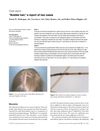
October 2006 in “International Journal of Dermatology” This study reports that discontinuing blow drying improved hair loss in two women with vacuolization in their hair shafts, suggesting a potential link between heat styling and alopecia.
1 citations
,
July 1935 in “Nature” This study found super-contraction in the guard hairs of fur-bearing animals, likely due to oxidation in living animals, primarily affecting white and red foxes without prior heat or chemical treatment.

In this summary, the researchers describe the Brazilian keratin treatment as a popular hair-straightening process that originated in Brazil in 2003 and has since gained global traction, particularly for smoothing and straightening curly or frizzy hair through a keratin-based product and heat application.