 8 citations
,
September 1993 in “British journal of dermatology/British journal of dermatology, Supplement”
8 citations
,
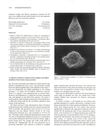
September 1993 in “British journal of dermatology/British journal of dermatology, Supplement” This study reports a new method for efficiently isolating hair papillae and follicle epithelium from human scalp specimens but presents no clinical results.
8 citations
,
February 2025 in “Cell Systems” This study developed a genetic toolbox to engineer Cutibacterium acnes for dermal applications, successfully creating a strain that secretes antioxidants to reduce oxidative stress in a UV stress model.
5 citations
,
February 2025 in “Cell Reports” In this study, inducible whole-body Acly-knockout mice revealed that ACLY is essential for skin homeostasis, as its deficiency led to increased sebum production and skin abnormalities, indicating a vital role for cytosolic acetyl-CoA synthesis in preserving skin barrier integrity and systemic lipid regulation.
5 citations
,
December 2022 in “Genes” This review discusses the host genetic factors influencing COVID-19 susceptibility and pathogenesis, highlighting genetic variations that affect viral entry and immune responses, but reports no new experimental results.
3 citations
,
November 2024 in “Saudi Pharmaceutical Journal” This review highlights significant health risks associated with anabolic-androgenic steroid use in women and reports no new research results, emphasizing the need for further understanding of their effects on female physiology.
 1 citations
,
May 2025 in “Natural Products and Bioprospecting”
1 citations
,
May 2025 in “Natural Products and Bioprospecting” In this study, PEVIII, a nanocomposite chitosan-coated vesicle containing both α-hederin and hederacoside C, demonstrated notable antibacterial activity against Pseudomonas aeruginosa in a keratitis model, showing significant lesion reduction, tissue improvement, and decreased bacterial load and inflammatory markers compared to other treatments.
 1 citations
,
January 2022 in “Journal of experimental and clinical medicine”
1 citations
,
January 2022 in “Journal of experimental and clinical medicine” This review examines the relationship between glycation, insulin resistance, and PCOS, discussing various treatments and highlighting M. oleifera and S. platensis as potential therapeutic agents, but reports no new clinical results.
November 2025 in “ACS Omega” This study found that incorporating Canavalia ensiformis lectin into alginate and carboxymethylcellulose films enhanced angiogenic factor expression, suggesting these biopolymer films could be an effective alternative for wound treatment.
 August 2024 in “Current Protocols”
 In this study, researchers described protocols using C3H/HeJ mice to reliably induce alopecia areata through full-thickness skin grafts or adoptive transfer of cultured lymphoid cells, offering valuable models for studying the disease and testing new drug therapies.
 835 citations
,
October 2008 in “Nature Genetics”
835 citations
,
October 2008 in “Nature Genetics” Lgr5 is a marker for active, long-lasting stem cells in mouse hair follicles.
 178 citations
,
October 2001 in “Genes & Development”
178 citations
,
October 2001 in “Genes & Development” This study found that the mammalian hairless gene encodes a corepressor protein that interacts with thyroid hormone receptors, providing insights into hair loss syndromes in humans and mice.
152 citations
,
April 2002 in “The journal of investigative dermatology/Journal of investigative dermatology” This study presents evidence that keratitis–ichthyosis–deafness syndrome is caused by a mutation in the connexin 26 gene, expanding the gene's known involvement in various disorders.
 109 citations
,
September 2011 in “Human molecular genetics online/Human molecular genetics”
109 citations
,
September 2011 in “Human molecular genetics online/Human molecular genetics” This review discusses keratin disorders and potential RNA interference therapeutics, reporting no new clinical findings but highlighting the promise of siRNA for future treatments.
 106 citations
,
March 2013 in “Nature Communications”
106 citations
,
March 2013 in “Nature Communications” This study found several microRNA-related genetic variants linked to epithelial ovarian cancer risk, with a notable association at the 17q21.31 region, suggesting potential new susceptibility genes.
89 citations
,
March 2001 in “Endocrine practice” This article provides diagnosis and treatment guidelines for hyperandrogenic disorders in women but reports no new clinical results; it offers a summary of accepted scientific information and suggestions for clinical practice.
71 citations
,
May 2006 in “The journal of investigative dermatology/Journal of investigative dermatology” In this study, researchers found that trichothiodystrophy hair brittleness is linked to abnormalities in sulfur content and structural organization, making it prone to breakage.
 67 citations
,
May 2014 in “International Journal of Molecular Sciences”
67 citations
,
May 2014 in “International Journal of Molecular Sciences” This review outlines the role of dermal fibroblasts in wound healing and highlights their potential in developing new cellular therapies, but reports no new clinical results.
63 citations
,
July 2018 in “The journal of investigative dermatology/Journal of investigative dermatology” In this review, the researchers reported that JAK inhibitors, originally approved by the FDA for other uses, have shown effectiveness in reversing hair loss in patients with moderate to severe alopecia areata, based on current preclinical and clinical studies.
40 citations
,
September 2024 in “Heliyon” This review discusses the role of bioceramics, highlighting their bactericidal activity, lack of side effects, and ability to release metallic ions for hard and soft tissue repair. The authors suggest that integrating bioceramics with other biomaterials could offer a cost-effective, efficient alternative for wound healing.
 36 citations
,
July 2016 in “Scientific reports”
36 citations
,
July 2016 in “Scientific reports” This study found that decision-making effects related to time of day and chronotype were only significant when using RNA-based chronotype measurements, indicating molecular clock differences may influence these behaviors.
 29 citations
,
May 2011 in “Journal of Cataract and Refractive Surgery”
29 citations
,
May 2011 in “Journal of Cataract and Refractive Surgery” This case report suggests a possible association between long-term finasteride use for male pattern baldness and the development of cataracts and intraoperative floppy-iris syndrome in a patient.
26 citations
,
September 2023 in “Journal of Allergy and Clinical Immunology” Regulatory T cells help prevent autoimmunity and have potential for treating autoimmune diseases.
 26 citations
,
March 1986 in “Clinical and Experimental Dermatology”
26 citations
,
March 1986 in “Clinical and Experimental Dermatology” Scalp hair grows at 0.37 mm/day, forearm hair at 0.18 mm/day, and thigh hair at 0.30 mm/day, with no significant differences found in people with certain hair conditions.
25 citations
,
November 2021 in “Toxins” This review discusses the use of bee venom in skin cosmetics and highlights safety concerns related to potential immune reactions, but it reports no new clinical results.
24 citations
,
July 2021 in “Pharmaceutics” This article reviews the JAK signaling pathway and the development of ruxolitinib cream as a targeted treatment for inflammatory skin diseases, reporting no new clinical results.
 23 citations
,
June 1996 in “Toxicology”
23 citations
,
June 1996 in “Toxicology” Older rats more affected by minoxidil's cardiotoxic effects than younger rats.
19 citations
,
October 2023 in “Bioengineering” This study reviewed the efficacy of mechanical fractionation techniques to produce tissue stromal vascular fraction (tSVF) and found that tSVF injections are particularly effective for conditions like osteoarthritis and wound healing, with centrifugation before fractionation improving isolation efficiency regardless of preparation method.
19 citations
,
July 2022 in “PNAS Nexus” This study identified a shared gene signature in scarring alopecia subtypes, with increased mast cell presence, suggesting similar treatment approaches may be effective across these hair loss disorders.
 19 citations
,
November 1993 in “Mammalian Genome”
19 citations
,
November 1993 in “Mammalian Genome” This study reports that transgene insertion in homozygous transgenic mice causes irreversible hair loss and impaired immune function, linked to interruption of the hairless locus on Chromosome 14.
16 citations
,
April 2025 in “Journal of the American Academy of Dermatology” In this study, an expert panel established a consensus guideline indicating that photobiomodulation is a safe and effective treatment for various conditions, including peripheral neuropathy and androgenic alopecia.