In this study of 374 children with patchy hair loss in Delta Egypt, researchers found that most cases were due to non-scarring causes, particularly alopecia areata, followed by infectious causes like tinea capitis; these conditions were more prevalent in school-aged children from rural areas.
This study in adult male albino rats reported that human umbilical cord blood-derived mesenchymal stem cells were more effective than minoxidil in promoting hair growth for androgenic alopecia, observing superior outcomes in hair follicle metrics.
In this study, among 30 patients with androgenetic alopecia, topical Minoxidil was effective alone or in combination with either oral or microneedling-applied Dutasteride, with the microneedling approach offering promising results and fewer side effects compared to oral Dutasteride.

This study found that sulfotransferase enzyme levels significantly impact the effectiveness of minoxidil in treating androgenetic alopecia, suggesting that testing for this enzyme could help identify potential responders before treatment.
This study found that both intradermal botulinum toxin A and intradermal minoxidil were equally effective for treating androgenetic alopecia, showing improvement in hair count with advantages like minimal invasiveness and absence of major side effects; minoxidil was also noted to be more cost-effective.
This study of Egyptian patients with alopecia areata found no significant difference in Staphylococcus epidermidis gene expression between patients and healthy controls but reported a negative correlation between Staphylococcus epidermidis expression and the severity of alopecia areata, suggesting potential involvement in disease severity.

In this study, both 5% and 10% topical minoxidil showed similar overall efficacy in treating male-pattern hair loss, though the 10% concentration resulted in greater improvement in frontal hair count but also more side effects.
This study found that combining intralesional PTX and corticosteroids may enhance treatment outcomes for alopecia areata, with PTX showing better long-term effects compared to corticosteroids alone.
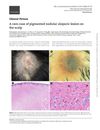
This study reported the case of a 30-year-old man with a bluish-grey scalp nodule that developed over a previously stable hairless plaque, revealing histopathological features consistent with epithelioid cell nests and spindle-shaped dermal melanocytes embedded in collagen.
 June 2023 in “QJM: An International Journal of Medicine”
 This study found that combining fractional CO2 laser treatment with platelet-rich plasma led to a statistically significant improvement in hair regrowth for male androgenetic alopecia, compared to using the laser treatment alone.
 June 2023 in “QJM: An International Journal of Medicine”
 This study found that injecting nanofat into the scalp significantly improved hair density and led to high patient satisfaction among 20 individuals with androgenic alopecia, with minimal side effects, although further research is necessary to refine the technique and confirm these results.
In this study, 30 patients with alopecia areata received intralesional methotrexate injections, resulting in significant hair regrowth and decreased levels of lesional TNF-α after three months, suggesting its effectiveness as a treatment.
 June 2023 in “QJM: An International Journal of Medicine”
 This study found that female pattern hair loss and acute telogen effluvium have distinct trichoscopic and histochemical characteristics, which may aid in their diagnosis and differentiation.
 October 2021 in “QJM: An International Journal of Medicine”
 This study found that patients with alopecia areata had significantly higher serum levels of interleukin-17 compared to healthy controls, suggesting a potential role for IL-17 in the disease's pathogenesis.

In this study on patchy alopecia areata treatment involving 20 patients, TCA (triamcinolone acetonide) injections showed a significantly better response and minimal side effects compared to superficial cryotherapy.
 October 2021 in “QJM: An International Journal of Medicine”
 This study found that four sessions of Intense Pulsed Light treatment significantly improved signs of photodamaged skin in adult female patients, as demonstrated by patient satisfaction and 3D camera assessments.
 October 2021 in “QJM: An International Journal of Medicine”
 This study found increased H2O2 levels and decreased E-cadherin levels in vitiligo patients compared to controls, suggesting oxidative stress and compromised cell adhesion may impact the pigmentary system in vitiligo-affected skin.
 October 2021 in “QJM: An International Journal of Medicine”
 In this study, low serum ferritin levels were significantly associated with premature graying of hair, while no significant difference in vitamin D levels was observed between affected individuals and healthy controls.
 October 2021 in “QJM: An International Journal of Medicine”
 This study demonstrated that decellularization of rat lungs effectively removed cellular material while preserving the 3D extracellular matrix, which may aid future human lung tissue engineering.
March 2020 in “QJM: An International Journal of Medicine” This study found that intradermal minoxidil 5% alone and with intralesional triamcinolone acetonide significantly reduced alopecia areata dermoscopic findings, while standard intralesional corticosteroids remain the main first-line treatment for patchy alopecia with less than 50% scalp involvement.
This case report describes a 62-year-old male with multiple warty dyskeratomas found on the scalp, chest, abdomen, and lower back, a rare presentation confirmed by histological findings consistent with warty dyskeratoma, as noted by the researchers.
This case study reports a 60-year-old woman's clinical findings related to hypothyroidism and elevated prolactin levels but does not present new research results.
October 2021 in “QJM: An International Journal of Medicine” This exploratory pilot study found that topical sildenafil and minoxidil both significantly increased hair counts in male patients with androgenic alopecia, with varying effects at different scalp regions.
October 2021 in “QJM: An International Journal of Medicine” This study suggests that altered levels of NRF2 may be important in the development of androgenetic alopecia in men.
October 2021 in “QJM: An International Journal of Medicine” This study concluded that smoking, stress, obesity, family history, exercise, hypertension, and unbalanced diet are significant non-genetic factors associated with androgenetic alopecia in Egyptian males.
October 2021 in “QJM: An International Journal of Medicine” This study found that N-acetyl-cysteine alone or combined with minoxidil improved hair parameters in men with early-onset androgenetic alopecia, with tolerable side effects.
October 2021 in “QJM: An International Journal of Medicine” This study found that injection of adipose-derived adult stem cells improved hair density, thickness, and reduced inflammation in women with female pattern hair loss over 24 weeks.
October 2021 in “QJM: An International Journal of Medicine” This study suggests that platelet-rich plasma injections may improve hair follicle health and promote growth in male albino rats with experimentally induced androgenetic alopecia.
October 2021 in “QJM: An International Journal of Medicine” In this pilot study, treatment with lyophilized platelet derived growth factors showed improvement in women with androgenetic alopecia, suggesting it may be a promising new therapy.
October 2021 in “QJM: An International Journal of Medicine” This study found that altered Nrf2 levels may play a significant role in the development of androgenetic alopecia in men.