 22 citations
,
May 2021 in “Nature Communications”
22 citations
,
May 2021 in “Nature Communications” This study found that in wound-induced hair neogenesis, African spiny mice and laboratory mice exhibit different morphogenetic field formation patterns related to tissue stiffness, suggesting evolutionary developmental biology advantages.
28 citations
,
September 2013 in “European Journal of Histochemistry” This study demonstrates a varied distribution of keratins in the epidermis of the Malayan pangolin, suggesting evolutionary adaptations related to their distinctive scales.
 December 2023 in “Expert Review of Endocrinology & Metabolism”
 In this study, researchers described hyperandrogenism as a condition resulting from excessive androgen production, which can lead to symptoms like acne, hirsutism, and hair loss, particularly relevant for dermatological evaluation and management in adult females.
41 citations
,
November 2019 in “Journal of Ultrasound in Medicine” This study found that 70-MHz ultrasound can detect early signs of hidradenitis suppurativa linked to severity, including hair follicle abnormalities and keratin fragmentation, aiding in diagnosis and management.
 67 citations
,
November 2002 in “Journal of The American Academy of Dermatology”
67 citations
,
November 2002 in “Journal of The American Academy of Dermatology” This review discusses diagnostic approaches for women with diffuse, nonscarring hair loss and reports no new clinical results.
63 citations
,
August 2022 in “Diagnostics” This review discusses hirsutism in women with PCOS who present with normal androgen levels and highlights diagnostic challenges, reporting no new clinical findings.
 6 citations
,
November 2017 in “Skin appendage disorders”
6 citations
,
November 2017 in “Skin appendage disorders” This study found that a new topical botanical lotion significantly increased hair density and improved quality of life in women with androgenetic alopecia over 24 weeks.
 January 2016 in “Elsevier eBooks”
 This chapter reviews trichoscopic criteria and diagnostic features for various hair and scalp conditions, emphasizing their utility in non-invasive diagnosis, but reports no new clinical results.
 1 citations
,
June 2017 in “JAMA Dermatology”
1 citations
,
June 2017 in “JAMA Dermatology” The document corrects a name misspelling, acknowledges a pioneer in hair transplantation, and notes a missing conflict of interest disclosure.
 12 citations
,
October 2012 in “Anais Brasileiros De Dermatologia”
12 citations
,
October 2012 in “Anais Brasileiros De Dermatologia” This study found that dermoscopy is an effective tool for diagnosing and monitoring androgenetic alopecia in women, as it helped identify common signs such as hair miniaturization and peripilar brown halo.
 June 2001 in “International Journal of Cosmetic Surgery and Aesthetic Dermatology”
 This guest editorial in the International Journal of Cosmetic Surgery and Aesthetic Dermatology discusses unspecified topics but reports no new research findings.
 13 citations
,
February 1999 in “International Journal of Cosmetic Science”
13 citations
,
February 1999 in “International Journal of Cosmetic Science” This study observed a higher incidence of telogen effluvium from July to October, suggesting a summer-related effect in populations above the Tropic of Cancer, possibly influenced by ultraviolet light.
 17 citations
,
March 2012 in “The Journal of Pathology”
17 citations
,
March 2012 in “The Journal of Pathology” This article argues that lineage labeling with genetic markers is the gold standard for identifying epithelial stem cells, contrary to the view that in vitro methods alone are sufficient.
 January 2024 in “Journal of health reports and technology”
 This study found a significant relationship between seborrheic dermatitis severity and androgenic alopecia patterns, suggesting potential benefits from treating dandruff symptoms in improving hair loss.
 April 2026 in “Research Square”
 In this study, trichoscopic examination revealed that variations in hair diameter were more common in certain types of alopecia affecting the frontal scalp, suggesting the importance of evaluating the entire scalp for accurate diagnoses, although limitations include a single center design and small sample size.
 September 1997 in “BioMed Research International”
 This review discusses the current understanding of the epidemiology, pathogenesis, clinical manifestations, and diagnosis of female pattern hair loss and reports no new research results.
October 1984 in “Kidney international” This case report describes a 23-year-old woman with a history of ambiguous genitalia and complex medical conditions, including a pelvic mass and hirsutism, observed from childhood to adulthood.
 4 citations
,
September 2012 in “Journal of Nanoscience and Nanotechnology”
4 citations
,
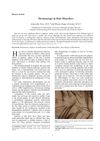
September 2012 in “Journal of Nanoscience and Nanotechnology” In this experimental study, there was no impact of the surrounding ferromagnetic film on the magnetization reversal processes in submicrometric antidot arrays, though a significant increase in coercivity was observed.
 October 2024 in “Journal of the Endocrine Society”
 In this case report, researchers described a postmenopausal woman with virilization symptoms who was diagnosed with a Leydig cell tumor in her ovary, and symptoms improved following tumor removal. The authors highlighted the diagnostic challenge of differentiating such cases from age-related hormonal changes.
 October 2024 in “Journal of the Endocrine Society”
 In this case study, a postmenopausal woman with symptoms of virilization was diagnosed with a rare ovarian Leydig cell tumor, and surgical removal led to a resolution of her hyperandrogenism and related symptoms, highlighting the importance of thorough differential diagnosis in postmenopausal hyperandrogenism.
 April 2016 in “Journal of The American Academy of Dermatology”
 A botanical lotion can increase scalp collagen and extend hair growth phase, potentially improving hair thinning issues.
1 citations
,
September 2023 in “Portuguese Journal of Dermatology and Venereology” This case report describes a 50-year-old man with folliculotropic mycosis fungoides stage IB, noting trichoscopic findings like dilated follicular openings, black dots, and dystrophic hairs, which are less commonly documented in this condition, suggesting trichoscopy could aid in early diagnosis.
 4 citations
,
January 2019 in “PubMed”
4 citations
,
January 2019 in “PubMed” This study found that women with female pattern hair loss had significant hormonal imbalances, specifically involving adrenal androgens, suggesting these may play a central role in the condition's development.
 2 citations
,
October 2014 in “International Journal of Trichology”
2 citations
,
October 2014 in “International Journal of Trichology” Low-level laser therapy may increase hair density in pattern hair loss.
June 2026 in “Clinical and Experimental Dermatology” This review identified various outcome measure instruments for assessing androgenetic alopecia but found inconsistent application across clinical trials, underscoring the need for standardized assessment methods.

This study reviews female hair loss conditions with a focus on diagnosis and treatment. It highlights female pattern hair loss as the most common form and emphasizes the need for personalized therapy, including topical minoxidil and, when appropriate, antiandrogen treatments.
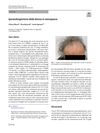 July 2022 in “L Endocrinologo”
 This case report describes a 77-year-old woman with female pattern hair loss and elevated testosterone levels, who showed no improvement with minoxidil and lacked adrenal tumors on imaging.
 July 2015 in “Cambridge University Press eBooks”
 The document concludes that treatments for female hair loss and excess body hair are available, but managing expectations is important.
 January 2015 in “Dermatology”
 The document covers various dermatological treatments and conditions.
 113 citations
,
March 2018 in “Biological reviews/Biological reviews of the Cambridge Philosophical Society”
113 citations
,
March 2018 in “Biological reviews/Biological reviews of the Cambridge Philosophical Society” This review examines the adaptive value and mechanisms of seasonal coat colour moulting in birds and mammals, highlighting the challenge of camouflage mismatch and the necessity for evolutionary adaptation under climate change.