July 2026 in “Journal of Investigative Dermatology” This study uncovered that bimatoprost, a prostaglandin analog, promotes hair growth by activating hair follicle progenitor cells through two pathways: the PTGFR-MAPK signaling axis and an unexpected IGF1R-PCAD-AKT signaling axis, suggesting new potential targets for treating hair disorders.
 April 2007 in “Nature Clinical Practice Urology”
 TICE salvage chemotherapy is effective for treating germ-cell tumors with poor prognosis.
 73 citations
,
March 2017 in “Scientific Reports”
73 citations
,
March 2017 in “Scientific Reports” This study demonstrates that bioengineered tooth germ autologously transplanted in a postnatal canine model can achieve functional tooth restoration, suggesting its potential for future clinical regenerative medicine.
 43 citations
,
October 1955 in “The journal of nutrition/The Journal of nutrition”
43 citations
,
October 1955 in “The journal of nutrition/The Journal of nutrition” This study found that male germ-free rats fed semisynthetic diets do not grow as rapidly as their conventional counterparts and require dietary biotin for normal metabolism and folic acid biosynthesis.
5 citations
,
January 2012 in “JBI Library of Systematic Reviews” This review discusses the fermented wheat germ extract Avemar as a potential adjunctive therapy in cancer treatment, noting promising laboratory results, but reports limited human trial evidence for its clinical effectiveness.
 256 citations
,
October 2013 in “Nature Communications”
256 citations
,
October 2013 in “Nature Communications” This study demonstrates that bioengineered lacrimal gland germs can successfully develop and restore tear production and ocular surface protection in a mouse model with lacrimal gland dysfunction.
 165 citations
,
October 2013 in “Nature Communications”
165 citations
,
October 2013 in “Nature Communications” This study demonstrates that bioengineered salivary gland transplants can fully regenerate gland function, producing saliva and restoring normal swallowing in salivary gland-defective mice, offering potential for xerostomia treatment.
47 citations
,
April 1978 in “Journal of Cutaneous Pathology” This study found that basal cell epithelioma resembles fetal primary epithelial germ based on specific cellular characteristics.
11 citations
,
November 2021 in “International journal of molecular sciences” In this study, germ-free male mice showed altered levels of certain neuroactive steroids in the brain and periphery, suggesting microbiota may influence neuroendocrine pathways that support brain functioning.
 10 citations
,
August 2020 in “Journal of Bioscience and Bioengineering”
10 citations
,
August 2020 in “Journal of Bioscience and Bioengineering” This study reports that using activated platelet-rich plasma releasate in the preparation of bioengineered hair follicle germs enhanced follicular gene expression and significantly improved hair regeneration in vitro.
 2 citations
,
December 2013 in “Current Oral Health Reports”
2 citations
,
December 2013 in “Current Oral Health Reports” This review discusses current developments in tooth regenerative therapy, including bioengineered tooth replacements, and emphasizes its potential to fully restore tooth function, but it presents no new clinical results.
 October 2025 in “Medicine”
 This case report presents a patient with idiopathic isolated ACTH deficiency and testicular germ cell tumor, with alopecia areata as an initial symptom, suggesting a potential link between these conditions.
October 2025 in “Journal of the Endocrine Society” This case report illustrates a rare instance of mixed germ cell tumor in the pituitary with hyperandrogenism, emphasizing the importance of thorough examination and hormone evaluation in identifying hormonal dysfunctions.
December 2014 in “ScholarSpace (University of Hawaii at Manoa)” In this study, researchers observed that HIF1α is expressed in germ cells throughout fetal and neonatal development, suggesting it may regulate telomerase activity and maintain the undifferentiated state of stem/progenitor cells.
 82 citations
,
August 2017 in “Cell Reports”
82 citations
,
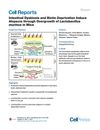
August 2017 in “Cell Reports” This study found that antibiotic-induced gut dysbiosis, particularly overgrowth of Lactobacillus murinus, can lead to hair loss in mice by depleting biotin.
 18 citations
,
October 2021 in “Frontiers in Physiology”
18 citations
,
October 2021 in “Frontiers in Physiology” This review summarizes recent research on the molecular properties and functions of L-PGDS and PGD2, but reports no new findings, highlighting their pathophysiological roles and guiding future studies.
15 citations
,
March 2015 in “PloS one” This study demonstrated that an AR-EGFP transgene can restore AR function and fertility in Sertoli cell-specific AR knockout mice, highlighting its potential use in understanding androgen receptor functions.
10 citations
,
September 2015 in “Folia Histochemica Et Cytobiologica” This study found that paternal exposure to finasteride in male rats may impair fertility and affect androgen-sensitive spermatogenesis in their male offspring.
 9 citations
,
January 2021 in “International Journal of Medical Sciences”
9 citations
,
January 2021 in “International Journal of Medical Sciences” This study found that Sox10 may play a role in early hair follicle development and cycling, as it is expressed in specific regions of the hair follicle during different phases of the hair cycle in mice.
8 citations
,
March 2015 in “International Journal of Oncology” This study successfully established Tsc2-deficient embryonic stem cells from Eker rats and found these cells have distinct gene expression compared to non-mutant cells, which could help identify new therapeutic targets for TSC-related pathogenesis.
7 citations
,
July 2018 in “Stem cell research” This study reported that reprogramming keratinocytes from plucked hair provides an easy, non-invasive, and efficient method for generating pluripotent iPSCs without the need for medical professionals or operating rooms.
3 citations
,
June 2022 in “Cells” This study reports improved methods for harvesting and processing keratinocytes from plucked human hair, enhancing their utility in generating donor-specific induced pluripotent stem cells more efficiently and reliably.
 2 citations
,
January 2014 in “Elsevier eBooks”
2 citations
,
January 2014 in “Elsevier eBooks” This review discusses the biology of spermatogenesis and male reproductive toxicology but reports no new research findings.
1 citations
,
August 2024 in “Pediatric Dermatology” In this report, researchers describe an unusual case of congenital pili multigemini, a hair follicle disorder, presenting on the eyebrow of a female infant, highlighting its rarity and atypical location.
 1 citations
,
May 2021 in “Cell Host & Microbe”
1 citations
,
May 2021 in “Cell Host & Microbe” This study reports that skin bacteria can accelerate hair follicle regeneration and improve wound healing through IL-1β signaling, by activating keratinocytes in a pathway involving IL1R/Myd88.
 1 citations
,
June 2010 in “Development”
1 citations
,
June 2010 in “Development” This review summarizes discussions from a 2010 stem cell biology meeting, covering the origin, behavior, and therapeutic potential of pluripotent and multipotent stem cells, without reporting new experimental findings.

In this study, researchers found that both minoxidil and finasteride, commonly used for treating androgenetic alopecia, pose risks to male reproductive health due to their endocrine-disrupting effects and impact on testicular morphology and function, suggesting the need for further research into their reproductive safety.
 September 2012 in “The Egyptian Journal of Histology”
 In this study, flutamide at therapeutic doses caused significant histological changes in the testes and epididymis of adult albino rats, reducing androgen receptor immunoreactivity and increasing estrogen receptor immunoreactivity.
June 2011 in “Portuguese National Funding Agency for Science, Research and Technology (RCAAP Project by FCT)” The researchers reported that both estrogen receptors ERα and ERβ are expressed in human testis, and identified two novel genes, Aven and Regucalcin, linked to estrogen and androgen regulation, which may be crucial for spermatogenesis.
1201 citations
,
January 2010 in “Science” This review discusses stem cells in the hair follicle, bone marrow, and intestinal epithelium and introduces a model where quiescent and cycling stem cells may coexists in "zoned" configurations.