11 citations
,
August 2022 in “Evidence-based Complementary and Alternative Medicine” This study found that methanolic extract of Eclipta alba leaves exhibited strong antibacterial effects against certain pathogens including methicillin-resistant Staphylococcus aureus, but it showed no activity against Mycobacterium tuberculosis, including drug-resistant strains.
10 citations
,
January 2022 in “Traditional and Integrative Medicine” This study observed that Citrus limon essential oil demonstrated significant anticancer activity against an MCF-7 breast cancer cell line, suggesting its potential as a complementary cancer treatment.
1 citations
,
April 2025 in “SABRAO Journal of Breeding and Genetics” Infected shallots have more diverse metabolites, with certain compounds indicating resistance to Fusarium disease.
3 citations
,
November 2024 in “Current Research in Microbial Sciences” This study found that extracts from the medicinal plants *Echinops echinatus* and *Tridax procumbens* displayed antimicrobial activity against several bacteria, including *Escherichia coli* and *Staphylococcus aureus*, and identified various compounds like flavonoids and terpenoids potentially responsible for these effects.
 2 citations
,
July 2020 in “International Journal for Research in Applied Science and Engineering Technology”
2 citations
,
July 2020 in “International Journal for Research in Applied Science and Engineering Technology” This study found that Pseudomonas DL7 completely degraded 600 mg/L of Sunset Yellow FCF in 48 hours at pH 9, indicating potential for biomineralization of this dye.

In this study, researchers analyzed the waters of Ladakh's hotsprings, identifying 27 bioactive compounds with potential health benefits, but emphasize that further clinical trials are needed to confirm their therapeutic efficacy and safety.
 January 2025 in “International Journal of Zoological Investigations”
 In laboratory tests, this study found that aqueous extracts of Myristica fragrans showed significant membrane stabilization, suggesting its potential as an anti-inflammatory agent, though further research is needed to confirm its pharmacological application.
December 2022 in “Journal of Natural Remedies” This study found that compounds extracted from Cucurbita maxima seeds at 50 °C for 2 hours demonstrated significant binding affinities against breast cancer-related proteins, suggesting potential anticancer activity needing further in vitro and in vivo evaluation.
 6 citations
,
February 2023 in “Plant and Soil”
6 citations
,
February 2023 in “Plant and Soil” This study found that volatile organic compounds from Bacillus subtilis strain WM13-24 enhanced root development in Arabidopsis and its host plant through auxin signaling.
November 2025 in “Wiley Interdisciplinary Reviews Forensic Science” This article reviews recent advancements in forensic hair testing, emphasizing its growing use for detecting past substance exposure, identifying emerging trends like micro-segmentation and hair scanning, and proposing standardized procedures to improve reliability and application in forensic toxicology.
 November 2024 in “International Journal of Plant and Environment”
 This study analyzed Sphenodesme involucrata var. paniculata leaves and found high carbohydrate and calcium content, along with several bioactive compounds, supporting their use in traditional medicine for their nutrient-rich properties.
March 2024 in “Molecules/Molecules online/Molecules annual” This study optimized the extraction process of bear grease through enzymatic hydrolysis and found that it was rich in unsaturated fatty acids, enhancing its hair growth-promoting properties in mice compared to traditional methods.
July 2023 in “LA Referencia (Red Federada de Repositorios Institucionales de Publicaciones Científicas)” This study evaluated the resin oil of Copaifera officinalis L., identifying 64 compounds and developing validated analytical methods for quality control, and formulated a stable pharmaceutical foam, laying groundwork for potential clinical applications of copaiba oil.
 April 2023 in “Clinical Chemistry and Laboratory Medicine”
 The document concludes that inflammation markers can be used in diabetes, vitamin D3 affects immune pathways, hyperthyroidism changes hormone levels, androgen levels help diagnose Adrenocortical Carcinoma, erectile dysfunction is linked to diabetes, hypogonadism is common in HIV-infected males, and hormones can be biomarkers for various conditions.
January 1990 in “Medical Entomology and Zoology” This study developed a faster method for analyzing fatty acid ethyl esters in hair to help detect alcohol consumption levels, showing potential for applications in forensic and clinical settings.
 20 citations
,
December 2011 in “Journal of inherited metabolic disease”
20 citations
,
December 2011 in “Journal of inherited metabolic disease” This study found that valproic acid may interfere with the leucine metabolic pathway by inhibiting 3-methylcrotonyl-CoA carboxylase and biotinidase, which could contribute to side effects like skin rash and hair loss in patients.
 8 citations
,
November 2024 in “Scientific Reports”
8 citations
,
November 2024 in “Scientific Reports” In this study, different drying methods for Hedychium spicatum rhizomes significantly affected the essential oil yield, antioxidant potential, and compound composition, with the HSOV30 method yielding the highest oil content, antioxidant activity, and specific compound levels such as 1,8-cineole and elemol.
 7 citations
,
February 2021 in “Legal Medicine”
7 citations
,
February 2021 in “Legal Medicine” This study reports two cases of fatal metformin intoxication with hair concentrations significantly higher than those in subjects under treatment, marking the first use of hair analysis for such cases.
 2 citations
,
February 2022 in “Research Square (Research Square)”
2 citations
,
February 2022 in “Research Square (Research Square)” This study found that the ethanolic root extract of Onosma dichroantha exhibits antioxidant activity and significant antimicrobial effects against 11 bacterial species.
 November 2025 in “Frontiers of Agricultural Science and Engineering”
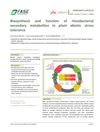
 This study observed that rhizobacterial strain RT3 significantly improved drought tolerance in lettuce by increasing survival rates and fresh biomass after rewatering, with metabolites such as proline and glycine enhancing stress resilience.
 7 citations
,
June 1989 in “Steroids”
7 citations
,
June 1989 in “Steroids” In this study, the synthesis of C-4 and C-6 bridged haptens of 11 alpha-hydroxyprogesterone revealed an unexpected formation of a C-4 substituted product using a 6-bromo derivative, contrary to prior reports.
 1 citations
,
June 2019 in “Food Research”
1 citations
,
June 2019 in “Food Research” In this study, tempeh oil rich in PUFAs, particularly from black soybean, significantly down-regulated MMP-9 gene expression in UVB-irradiated mice skin, indicating potential for use in preventing skin photoaging.
 February 2024 in “Digital Library of Theses and Dissertations (Universidade de São Paulo)”
 This study demonstrated that using a mass spectrometry imaging technique, researchers were able to visualize the incorporation of argan, avocado, and coconut oils into hair fibers, suggesting their potential in cosmetic and alopecia treatments by confirming oil absorption and fiber modification.
 60 citations
,
December 2005 in “Biomedical Papers”
60 citations
,
December 2005 in “Biomedical Papers” This article reviews hair analysis for drug detection and its applications in various fields, but reports no new research findings, emphasizing the need to consider the method's complexities and potential pitfalls.
 47 citations
,
January 2001 in “Journal of Investigative Dermatology”
47 citations
,
January 2001 in “Journal of Investigative Dermatology” High testosterone to epitestosterone ratio in hair could predict male-pattern baldness.
 27 citations
,
March 2022 in “Forensic Toxicology”
27 citations
,
March 2022 in “Forensic Toxicology” This review discusses micro-segmental hair analysis for forensic toxicology, emphasizing its potential to provide detailed drug distribution profiles and its application in investigations, while noting the method's limitations and future perspectives.
 25 citations
,
January 2006 in “British Journal of Dermatology”
25 citations
,
January 2006 in “British Journal of Dermatology” This study found that finasteride decreases DHT/T levels more significantly in the vertex scalp hair than in the occipital hair of patients with male pattern baldness.
 23 citations
,
June 2015 in “Clinica Chimica Acta”
23 citations
,
June 2015 in “Clinica Chimica Acta” In this study, researchers identified two potential urinary biomarkers, testosterone–glucuronide and 11α-hydroxyprogesterone, along with four candidate biomarkers, to help understand and diagnose polycystic ovary syndrome.
![Synthesis of 5,6,6-[2H3]Finasteride and Quantitative Determination of Finasteride in Human Plasma at Picogram Level by an Isotope-Dilution Mass Spectrometric Method](/images/assets/0026b639-99a8-455a-a986-c39aa65abfa9/small/2087.jpg) 20 citations
,
December 1995 in “Journal of Chromatography B: Biomedical Sciences and Applications”
20 citations
,
December 1995 in “Journal of Chromatography B: Biomedical Sciences and Applications” Accurate method measures finasteride levels in human plasma using gas chromatography-mass spectrometry.
 17 citations
,
August 2015 in “Journal of steroid biochemistry and molecular biology/The Journal of steroid biochemistry and molecular biology”
17 citations
,
August 2015 in “Journal of steroid biochemistry and molecular biology/The Journal of steroid biochemistry and molecular biology” This study concluded that the best approach for detecting Androsta-1,4,6-triene-3,17-dione administration in horses is monitoring the metabolites M1b or M4 in urine, detectable up to 77 hours post-administration.