 4 citations
,
September 2024 in “Jurnal Pengolahan Hasil Perikanan Indonesia”
4 citations
,
September 2024 in “Jurnal Pengolahan Hasil Perikanan Indonesia” In this study, researchers reported that compounds from Bruguiera gymnorhiza leaves showed anti-inflammatory potential in in silico analyses, with favorable drug properties and specific binding to the IKKβ receptor, suggesting possible development into anti-inflammatory drugs.
 4 citations
,
January 2024 in “Scientific Reports”
4 citations
,
January 2024 in “Scientific Reports” Pumpkin seeds may help expel parasites, but findings are retracted.
 4 citations
,
September 2022 in “Indian Journal of Pharmaceutical Education and Research”
4 citations
,
September 2022 in “Indian Journal of Pharmaceutical Education and Research” This study found that methanolic leaf extract of Plumbago zeylanica L. demonstrates strong thrombolytic and antioxidant activities and shows promise as a source of such agents.
 4 citations
,
March 2022 in “Frontiers in pharmacology”
4 citations
,
March 2022 in “Frontiers in pharmacology” This article reviews the botanical characteristics, traditional and modern medicinal uses, and market potential of Prunus mira, but reports no new clinical findings.
 4 citations
,
June 2021 in “Powder Technology”
4 citations
,
June 2021 in “Powder Technology” This study developed finasteride-containing granules using a method that improved follicular targeting for androgenic alopecia and reported potential for easy industrial production.
 4 citations
,
November 2018 in “Journal of pharmacological sciences”
4 citations
,
November 2018 in “Journal of pharmacological sciences” This study found that low-intensity exercise improved pain relief in aged rats through increased brain allopregnanolone levels, while high-intensity exercise was effective in both adult and aged rats via a different mechanism.
 4 citations
,
December 2017 in “International journal of research in ayurveda and pharmacy”
4 citations
,
December 2017 in “International journal of research in ayurveda and pharmacy” This review discusses the traditional and pharmacological uses of Cuscuta reflexa, but it reports no new clinical results, calling attention to its potential antihypertensive, antidiabetic, and antioxidant properties.
 4 citations
,
February 2017 in “Journal of Cutaneous Medicine and Surgery”
4 citations
,
February 2017 in “Journal of Cutaneous Medicine and Surgery” This study assessed the dermatologic potential of western red cedar, white spruce, birch, balsam poplar, and black spruce used in First Nations medicine, highlighting several active compounds relevant to dermatology, but noted a lack of high-quality evidence in existing research.
 4 citations
,
January 2015 in “Journal of microbial & biochemical technology”
4 citations
,
January 2015 in “Journal of microbial & biochemical technology” In this study, the researchers observed that biotin administration in biotin-deficient children with alopecia eliminated certain membrane proteins from their blood, suggesting that biotin might regulate these proteins' expression.
 4 citations
,
January 2014 in “RSC Advances”
4 citations
,
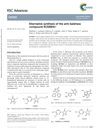
January 2014 in “RSC Advances” A new, less toxic and more efficient method to create the anti-baldness compound RU58841 was developed in 2014.
 4 citations
,
January 1994 in “Yakugaku zasshi”
4 citations
,
January 1994 in “Yakugaku zasshi” In this study, EPC-K, a compound with antioxidant and moisturizing effects, was found to decompose significantly under certain conditions, impacting its stability in quasi drug hair-growing products.
 3 citations
,
August 2021 in “Uro”
3 citations
,
August 2021 in “Uro” This review concludes that global literature supports the lipidosterolic extract of Serenoa repens as efficacious and safe for treating lower urinary tract symptoms, with some studies showing equivalence to common pharmacologic agents.
 3 citations
,
April 2021 in “GSC Biological and Pharmaceutical Sciences”
3 citations
,
April 2021 in “GSC Biological and Pharmaceutical Sciences” This review discusses the traditional uses and reported bioactivities of Elephantopus scaber, but provides no new experimental results; the authors call for more research on its anticancer potential.
 3 citations
,
February 2021 in “Molecules”
3 citations
,
February 2021 in “Molecules” In this study, researchers developed a sensitive assay to measure the inhibition of steroid 5-α reductase (5AR) by chemicals like finasteride and dutasteride, revealing species-specific differences in inhibitor efficacy between human and fish cell lines.
 3 citations
,
April 2019 in “bioRxiv (Cold Spring Harbor Laboratory)”
3 citations
,
April 2019 in “bioRxiv (Cold Spring Harbor Laboratory)” In this study, beta-caryophyllene enhanced wound healing in female mice by improving re-epithelialization, cell proliferation, and cell migration, suggesting potential benefits of essential oil compounds in inflammation reduction.
 3 citations
,
September 2018 in “MOJ Toxicology”
3 citations
,
September 2018 in “MOJ Toxicology” This review discusses the medicinal properties of Alpinia zerumbet Roxb. and highlights its potential for further research, but provides no new clinical results.
 3 citations
,
September 2016 in “Natural Product Communications”
3 citations
,
September 2016 in “Natural Product Communications” This study identified 8-hydroxy germacrene B from Curcuma aeruginosa as a highly potent in-vitro 5-alpha reductase inhibitor with significant anti-androgenic activity, while exhibiting mild cytotoxicity on prostate cancer cells without affecting human dermal papilla cells at tested concentrations.
 3 citations
,
August 2014 in “Steroids”
3 citations
,
August 2014 in “Steroids” Fermentation of Finasteride with Ocimum sanctum L. creates new metabolite that inhibits tyrosinase.
 2 citations
,
July 2025 in “Discover Chemistry.”
2 citations
,
July 2025 in “Discover Chemistry.” This study explored the optimization of phytochemicals from Alstonia boonei to develop potential 5-alpha reductase inhibitors for Benign Prostatic Hyperplasia, finding promising analogs with enhanced binding affinity and stability compared to Finasteride, warranting further experimental validation.

This study found that a combination of betulin and cytostatic Namitecan had a statistically significant synergistic effect on solid Ehrlich adenocarcinoma tumors in NMRI mice, and suggests a promising method for administering betulin in in vivo experiments despite its water insolubility.
 2 citations
,
January 2024 in “Journal of Pharmacognosy and Phytochemistry”
2 citations
,
January 2024 in “Journal of Pharmacognosy and Phytochemistry” The study highlights Teak's (Tectona grandis) diverse applications beyond high-quality timber, emphasizing its bioactive compounds' pharmacological potential in cancer treatment and other uses across traditional medicine, cosmetics, and biodiesel production.
 2 citations
,
May 2021 in “Molecules”
2 citations
,
May 2021 in “Molecules” This study reports that the metanephrine content was significantly higher in patients with alopecia areata compared to those without the condition.
 2 citations
,
December 2020 in “Phytomedicine plus”
2 citations
,
December 2020 in “Phytomedicine plus” In this study, researchers found that taking Saw palmetto and Pygeum africana supplements for five days altered the urinary steroid profile in a way that may interfere with the steroidal module of the Athlete Biological Passport.
 2 citations
,
April 2018 in “Natural Product Communications”
2 citations
,
April 2018 in “Natural Product Communications” This review summarizes the bioactive compounds and pharmacological functions of Cynomorium songaricum Rupr., emphasizing its potential in developing health-related products, and notes that further research is needed.
 2 citations
,
January 2018 in “International Journal of ChemTech Research”
2 citations
,
January 2018 in “International Journal of ChemTech Research” This study used phytochemical screening and FTIR spectroscopy with PCA to reveal slight chemical differences between two varieties of Eclipta alba, providing a method for their effective discrimination.
 2 citations
,
June 2016 in “Journal of skin and stem cell”
2 citations
,
June 2016 in “Journal of skin and stem cell” This study found that wet cupping blood differs significantly from venous blood in metabolite profiles, implying distinct biochemical pathways may be involved.
 2 citations
,
January 2013 in “Elsevier eBooks”
2 citations
,
January 2013 in “Elsevier eBooks” This chapter reviews the causes and underlying steroid pathways of hirsutism and virilization in women, detailing relevant conditions and laboratory assays without reporting new clinical results.
In this study, adolescents with depressive symptoms were found to have higher urinary excretion rates of certain steroid metabolites, including corticosterone and adrenal hormones, and a specific metabolite ratio was identified as a potential biomarker for distinguishing these patients from healthy controls.
 1 citations
,
January 2025 in “Frontiers in Pharmacology”
1 citations
,
January 2025 in “Frontiers in Pharmacology” This review discusses the therapeutic and pharmacological potential of total glucosides of paeony in dermatological treatment and notes the need for more rigorous scientific studies.
 1 citations
,
September 2024 in “African Journal of Biomedical Research”
1 citations
,
September 2024 in “African Journal of Biomedical Research” This review highlights the therapeutic potential of Curcuma longa and Dalbergia sissoo, noting their antioxidant, anti-inflammatory, and anticancer activities, but emphasizes the lack of studies on their combined effects and suggests future research could enhance therapeutic outcomes.