 42 citations
,
October 2009 in “The journal of investigative dermatology/Journal of investigative dermatology”
42 citations
,
October 2009 in “The journal of investigative dermatology/Journal of investigative dermatology” In this study, researchers identified two distinct homozygous mutations in the KRT85 gene among consanguineous Pakistani families with pure hair and nail ectodermal dysplasia, highlighting variations in severity and potential impacts on the K85 protein function.
15 citations
,
June 2012 in “British Journal of Dermatology” This study identified a novel KRT86 mutation associated with autosomal dominant monilethrix, expanding understanding of its genetic basis beyond known motifs.
3 citations
,
April 2020 in “American Journal of Case Reports” This case report describes the first instance of juvenile hemochromatosis type 2A associated with secondary hypothyroidism, linked to a novel mutation in the HJV gene.
175 citations
,
August 1997 in “Nature Genetics” 26 citations
,
April 2011 in “British Journal of Dermatology” This study identified novel mutations in the DSG4 gene in a Japanese patient with monilethrix, affecting protein interactions that may disrupt hair shaft structure.
 1 citations
,
November 2024 in “Diabetes Metabolic Syndrome and Obesity”
1 citations
,
November 2024 in “Diabetes Metabolic Syndrome and Obesity” In this study, researchers found that a specific genetic variant in the INSR gene is linked to severe insulin resistance and hyperandrogenemia in type A insulin resistance syndrome, suggesting the benefit of exon sequencing for accurate diagnosis and treatment.
This study found that in mice, the epidermal microenvironment reverses the oncogenic effects of GNAQQ209L in melanocytes, inhibiting their survival and proliferation through paracrine signals.
March 2021 in “Medico-Legal Update” In this study, no significant change in androgen receptor gene expression was found in females with recurrent spontaneous abortion, but a mutant genotype may offer some protection against the condition.
June 2020 in “The journal of investigative dermatology/Journal of investigative dermatology” This study found that rare damaging variants in the KRT82 gene, which affect hair shaft integrity, may contribute to the risk of alopecia areata.
412 citations
,
January 1998 in “Science” This study identified a missense mutation in the human hairless gene associated with a rare form of recessively inherited alopecia universalis, pinpointed on chromosome 8p12.
40 citations
,
September 2004 in “Biomacromolecules” In this study, molecular dynamics simulations indicated that the Glu413Lys mutation in human hair keratin significantly affects the stability of coiled coil structures, whereas Glu413Asp showed no impact on stability.
26 citations
,
October 1998 in “Experimental Dermatology” This study describes a co-dominant E410D mutation in keratin hHb6 associated with severe hair loss and extensive papules in homozygous individuals, with variable expression in heterozygous family members.
 23 citations
,
January 2014 in “International Journal of Biological Sciences”
23 citations
,
January 2014 in “International Journal of Biological Sciences” This study found that African American men with prostate cancer have higher rates of somatic and germline androgen receptor mutations than Caucasian American men, which may contribute to ethnic differences in disease progression and outcomes.
 2 citations
,
July 2015 in “Archives of Dermatological Research”
2 citations
,
July 2015 in “Archives of Dermatological Research” This study reports the first familial case of alopecia linked to a novel homozygous variant in the DSP gene, which did not coincide with heart abnormalities despite prior associations.
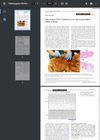 May 2024 in “Animal genetics”
 The researchers investigated a Maine Coon cat with suspected classical Ehlers-Danlos Syndrome and discovered a heterozygous deletion in the COL5A1 gene, underscoring the value of whole-genome sequencing for precise veterinary diagnostics.
 1 citations
,
May 2023 in “Frontiers in endocrinology”
1 citations
,
May 2023 in “Frontiers in endocrinology” The researchers reported that the novel MBTPS2 variant p.Glu172Asp found in a male proband is likely pathogenic, consistent with osteogenesis imperfecta symptoms and molecular signatures, including disrupted fatty acid metabolism and collagen production.
 December 2023 in “American journal of medical genetics. Part A”
 In this study, researchers identified compound heterozygous variants in the MBTPS1 gene associated with ectodermal dysplasia features in a 14-year-old female, broadening the known disorder spectrum linked to these genetic mutations.
This study found that the survival and proliferation of mouse melanocytes expressing the GNAQQ209L oncogene were impaired by interactions with the epidermal microenvironment, suggesting a possible mechanism for the rarity of these mutations in epidermal melanomas.
74 citations
,
October 2012 in “The American Journal of Human Genetics” This study found that loss-of-function mutations in the HOXC13 gene cause autosomal-recessive pure hair and nail ectodermal dysplasia, emphasizing its role in hair and nail development.
 19 citations
,
May 2006 in “Clinical and Experimental Dermatology”
19 citations
,
May 2006 in “Clinical and Experimental Dermatology” This study identified a novel insertion mutation in the hairless gene that may contribute to the development of congenital atrichia with papular lesions in a Pakistani family.
 February 2026 in “Frontiers in Medicine”
 In this case report, a three-generation family with Gorlin-Goltz syndrome showed a heterozygous PTCH1 splice-donor variant associated with the disease, and two affected relatives benefited from individualized, side-effect-guided dosing of the drug sonidegib, experiencing regression of basal cell carcinoma lesions.
 5 citations
,
December 2017 in “The Journal of Dermatology”
5 citations
,
December 2017 in “The Journal of Dermatology” This report describes a unique case of Schöpf–Schulz–Passarge syndrome in a Taiwanese man linked to a previously unreported homozygous WNT 10A mutation, underscoring its role in ectodermal dysplasia.
78 citations
,
May 2012 in “Journal of Investigative Dermatology” A specific gene mutation causes woolly hair and hair loss.
 28 citations
,
March 2010 in “British Journal of Dermatology”
28 citations
,
March 2010 in “British Journal of Dermatology” This abstract contains only supplementary material information and reports no new research findings.
September 1997 in “Clinical and Experimental Dermatology”  September 2016 in “Journal of Dermatological Science”
 This study identified that in Japanese patients with autosomal recessive woolly hair/hypotrichosis, the c.736T > A LIPH mutation is associated with a mild phenotype, while the c.742C > A mutation may lead to severe baldness.
3 citations
,
January 2013 in “Dermatology” This study identified novel compound heterozygous mutations in the hairless gene among a non-consanguineous Chinese family with congenital atrichia, illustrating phenotypic variations due to founder or modifier genes.
47 citations
,
September 2002 in “Journal of Bone and Mineral Research” This study found that a specific VDR amino acid substitution in children with hereditary vitamin D-resistant rickets disrupts ligand binding and gene activation but does not impair hair follicle development.
 7 citations
,
January 2019 in “Australasian Journal of Dermatology”
7 citations
,
January 2019 in “Australasian Journal of Dermatology” In this study, the CYP 21A2 gene p.V281L mutation was associated with an increased susceptibility to familial frontal fibrosing alopecia, suggesting an antigen-driven mechanism linked to certain human leukocyte antigen haplotypes.

This study in a nine-year-old boy from Lebanon identified a gene mutation (c.1066dup p.(Arg356Profs*16)) associated with a rare inborn error of immunity, characterized by craniosynostosis, jaundice, and several other symptoms, expanding the known genotypic and phenotypic spectrum of this condition.