 199 citations
,
April 2010 in “Nature”
199 citations
,
April 2010 in “Nature” A gene called APCDD1, which controls hair growth, is found to be faulty in a type of hair loss called hereditary hypotrichosis simplex.
121 citations
,
June 2009 in “Journal of Cellular Biochemistry” In this study, human hair follicle pluripotent stem cells transplanted into severed mouse sciatic nerves differentiated into Schwann cells and supported nerve regeneration, offering a promising alternative to embryonic or iPS cells for regenerative medicine.
 74 citations
,
September 2006 in “Cell Cycle”
74 citations
,
September 2006 in “Cell Cycle” This review examines the role of Hairless, a nuclear receptor corepressor, in regulating Wnt signaling during hair cycling and reports no new clinical results.
 72 citations
,
November 2012 in “PloS one”
72 citations
,
November 2012 in “PloS one” This study found that dysregulation of the folliculin-p0071 interaction may lead to changes in cell adhesion and signaling, contributing to conditions like emphysema and renal cell carcinoma.
 59 citations
,
April 2016 in “Cell Reports”
59 citations
,
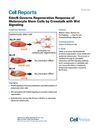
April 2016 in “Cell Reports” This study demonstrated that EdnrB signaling promotes melanocyte stem cell proliferation and differentiation, enhancing hair and epidermal melanocyte regeneration, especially under conditions of active Wnt signaling.
 37 citations
,
January 2009 in “The Journal of Dermatology”
37 citations
,
January 2009 in “The Journal of Dermatology” In this study, hair follicle stem cells from ND-GFP transgenic mice were observed to be pluripotent, effectively repairing peripheral nerve and spinal cord injuries in mouse models.
 35 citations
,
October 2017 in “Signal Transduction and Targeted Therapy”
35 citations
,
October 2017 in “Signal Transduction and Targeted Therapy” This study found that fibromodulin significantly reduces scar formation and boosts scar strength in rodent and porcine models, suggesting potential for FMOD-based therapies in cutaneous wound repair.
 34 citations
,
December 2009 in “The International Journal of Developmental Biology”
34 citations
,
December 2009 in “The International Journal of Developmental Biology” In this study, thymosin beta4 over-expression in transgenic mice was linked to accelerated hair growth and abnormal tooth development, suggesting roles in hair and tooth physiology.
 25 citations
,
August 2010 in “Acta Biomaterialia”
25 citations
,
August 2010 in “Acta Biomaterialia” This study achieved a first by successfully forming large quantities of dermal papilla spheroidal microtissues, which retained their hair induction potential, using a micropatterned culture system.
 23 citations
,
January 2021 in “Scientific Reports”
23 citations
,
January 2021 in “Scientific Reports” In this study, hair follicle germs containing vascular endothelial cells showed improved hair regeneration and morphogenesis-related gene expression in mice, suggesting a promising strategy for hair regenerative medicine.
 17 citations
,
April 2007 in “Kidney international”
17 citations
,
April 2007 in “Kidney international” This study found that 1,25 dihydroxyvitamin D3 significantly increased the expression and activity of vasculoprotective natriuretic peptide receptor-A in cultured inner medullary collecting duct cells, suggesting a potential mechanistic role in cardiovascular and renal benefits.
12 citations
,
July 2004 in “Molecular genetics and genomics” This study identifies a new mutation in the Scd1 gene in a strain of Kunming mice, causing skin and hair defects with the mildest impact among similar mutations.
 8 citations
,
September 2022 in “Human genomics”
8 citations
,
September 2022 in “Human genomics” This study identified a coexpression network and key genes associated with thyroid eye disease, potentially aiding in its treatment and diagnosis.
4 citations
,
December 2024 in “Protein & Cell” MultiKano accurately identifies cell types in complex data better than existing methods.
4 citations
,
December 2023 in “Medicine” This study found that the genes MYLK and CALD1 were expressed at lower levels in bladder cancer and osteosarcoma tissues compared to normal tissues, and their expression levels appeared to correlate with poorer survival outcomes, suggesting they may be important in disease progression and prognosis.
 3 citations
,
September 2020 in “Molecular Brain”
3 citations
,
September 2020 in “Molecular Brain” This study reports that Elvitegravir, a drug currently approved for other uses, shows potential as a neuro- and mitoprotective agent by attenuating mitochondrial damage caused by NMDA receptors in primary mouse cortical neurons.
 3 citations
,
March 2020 in “Cumhuriyet Dental Journal”
3 citations
,
March 2020 in “Cumhuriyet Dental Journal” This article reviews the use of mesenchymal stem cells and biomimetic scaffolds in regenerative medicine, highlighting promising in vitro and in vivo outcomes, but it reports no new clinical results.
 3 citations
,
January 2020 in “PubMed”
3 citations
,
January 2020 in “PubMed” This study found that using insulin-like growth factor 1 with bone marrow-derived mesenchymal stem cells in a collagen-chitosan scaffold enhanced wound healing and hair follicle regeneration in rats.
This study found that the protein Formin 2 helps regulate cell-to-cell transport in thale cress by stabilizing actin filaments at plasmodesmata, with its absence leading to increased permeability and vulnerability to viral infections.
 1 citations
,
June 2017 in “Nature Reviews Immunology”
1 citations
,
June 2017 in “Nature Reviews Immunology” Immune cells called Treg cells are essential for hair growth and regeneration.
 May 2026 in “International Journal of Molecular Sciences”
 In this study, a new formulation of human placental extract showed antioxidant and neurite outgrowth activities, significantly reduced hair graying in mice, and alleviated neuropathy symptoms, suggesting potential therapeutic benefits.
February 2026 in “ACS Omega” This study developed a multifunctional hydrogel, QTMP-Gel, which significantly accelerated wound healing in an oral mucositis hamster model by providing antioxidant and antibacterial effects, reducing inflammation, and controlling infection.
June 2025 in “Cell Metabolism” This study found that dietary serine levels influence hair follicle stem cells' ability to balance hair regeneration and wound repair, offering insights for potential interventions to accelerate wound healing.
 March 2025 in “International Journal of Molecular Sciences”
 This study established a Krt24-CreERT2 mouse line targeting outer bulge hair follicle stem cells, finding these cells crucial for hair follicle development and repair, particularly following ionizing radiation exposure.

This study found that the Lim-homeodomain transcription factor Lhx2 regulates Sonic Hedgehog signaling during early retinal neurogenesis in mice by controlling the expression of pathway genes in retinal progenitor cells.
This study found that the survival and proliferation of mouse melanocytes expressing the GNAQQ209L oncogene were impaired by interactions with the epidermal microenvironment, suggesting a possible mechanism for the rarity of these mutations in epidermal melanomas.
This study found that GNAQQ209L expression in mouse melanocytes led to reduced survival in the interfollicular epidermis due to paracrine signaling, while GNAQQ209L boosted survival in a different microenvironment.
January 1972 in “Open PRAIRIE (South Dakota State University)” This research explored potential mechanisms for the toxicity of mimosine but did not identify a conclusive reason for its adverse effects.
 52 citations
,
June 1981 in “International Journal of Dermatology”
52 citations
,
June 1981 in “International Journal of Dermatology” Oral retinoids are effective for severe skin conditions but require careful use due to side effects.
August 2025 in “International Journal of Molecular Sciences” This study found that arginine vasotocin is evolutionarily conserved across diverse taxa and may play roles in neuroendocrine, immune, and stress signaling, with potential antimicrobial applications.